The latest U.S. tariff measures affect far more than customs duties. They require importers to rethink landed-cost assumptions, pricing, sourcing, and supply chain strategy before the next purchase order is approved.
Every purchase order is built on a series of assumptions.
Your procurement team assumes a factory cost.
Finance assumes a target margin.
Sales assumes a selling price.
Operations assumes inventory will arrive within budget.
When trade policy changes, every one of those assumptions deserves another look.
That is why the latest U.S. tariff measures represent more than another customs update. They have changed the economics behind importing from China and much of Asia, making it essential for businesses to revisit how they calculate the true cost of every shipment.
The companies that adapt quickly won’t simply avoid unexpected costs. They’ll make better business decisions before products ever leave the factory.
The Biggest Mistake Importers Will Make
Whenever new tariffs are announced, the first question is almost always:
“What’s the new tariff rate?”
It’s an understandable question.
It’s also the wrong place to stop.
A tariff percentage is only one component of the total cost of importing a product.
Yet many businesses immediately update a spreadsheet, add the new duty percentage, and assume they understand the financial impact.
They don’t.
The real question isn’t “What is the tariff?”
It’s “How has this changed the economics of this purchase order?”
That distinction may determine whether a shipment remains profitable—or quietly erodes margin before it even reaches a U.S. distribution center.
Why Landed Cost Has Become a Strategic Decision
For years, many companies treated landed cost as an accounting exercise completed after sourcing decisions had already been made.
Today’s trade environment no longer allows that.
Landed cost has become a strategic management tool.
It influences supplier selection, customer pricing, inventory planning, cash flow, and long-term sourcing decisions.
The latest tariff measures make that even more important because the published duty rate rarely tells the whole story.
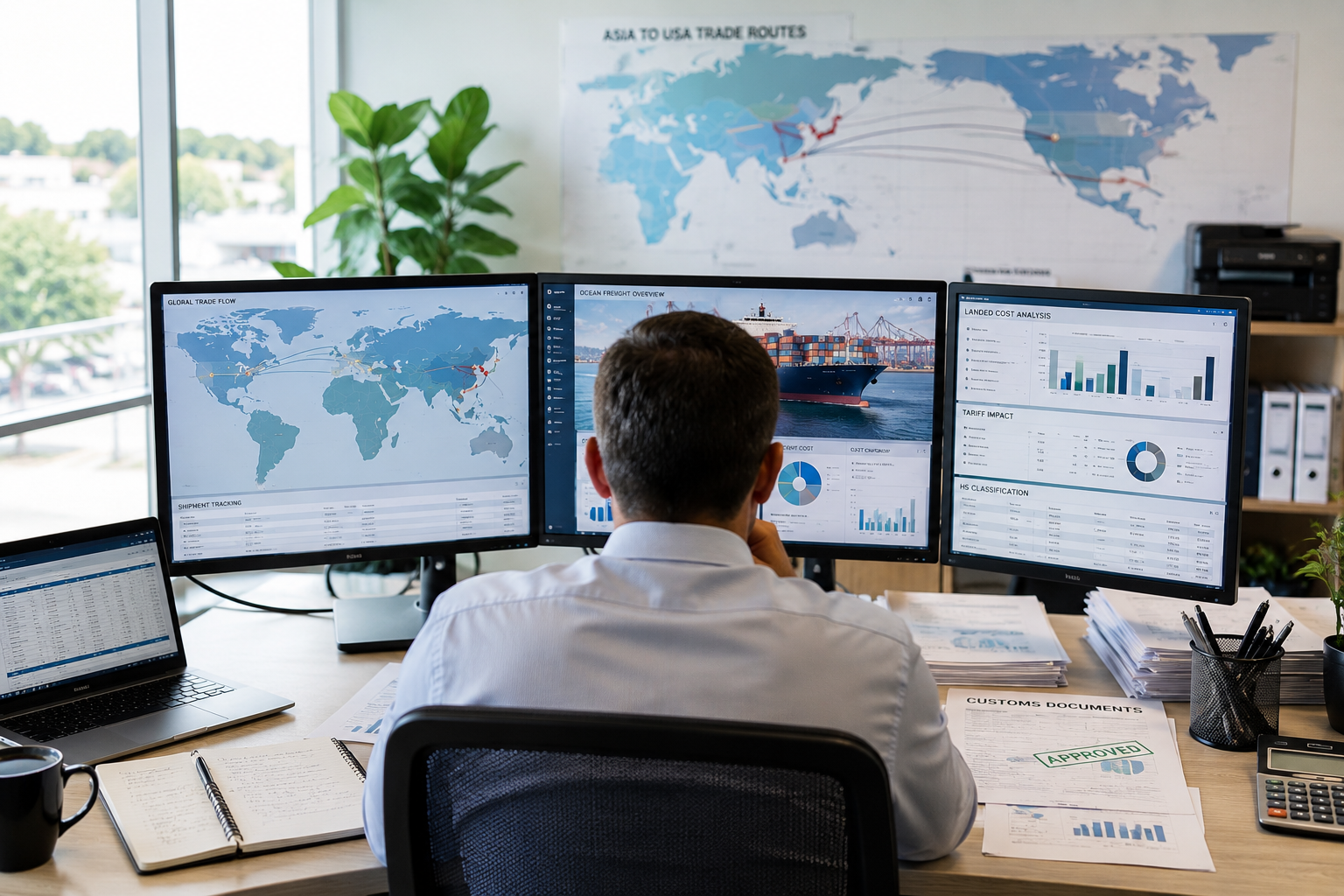
Depending on the product, importers may also need to account for existing Section 301 duties, Section 232 duties, anti-dumping or countervailing duties, customs processing fees, ocean freight, inland transportation, warehousing, financing costs, insurance, and inventory carrying expenses.
Viewed separately, each cost appears manageable.
Viewed together, they determine whether a product still delivers the margin your business expects.
That’s why experienced importers don’t focus on tariff percentages.
They focus on total landed cost.
The Lesson Every Executive Should Take from This Tariff Update
The biggest lesson isn’t about customs.
It’s about decision-making.
Every significant change in trade policy creates two types of businesses.
The first reacts after costs increase.
The second recalculates before making the next decision.
The difference is subtle, but financially significant.
Reactive companies discover shrinking margins after shipments arrive.
Strategic companies validate their assumptions before approving production.
They ask questions such as:
- Has our landed-cost model been updated using the latest tariff structure?
- Are these duties cumulative with existing trade measures?
- Have we confirmed our HS classifications are accurate?
- Does our country-of-origin documentation still support our customs position?
- Does this product still achieve our required margin?
Notice that none of these are logistics questions.
They’re business questions.
Logistics simply provides part of the answer.
Four Areas Every Importer Should Reevaluate
The latest tariff measures are an opportunity to challenge assumptions that may have gone unquestioned for years.
1. Sourcing Strategy
A higher tariff doesn’t automatically mean it’s time to leave China.
Nor does it automatically make another country a better option.
The right decision depends on supplier capability, quality, production reliability, freight costs, inventory strategy, and total landed cost—not a single duty percentage.
2. Product Classification
An inaccurate HS classification doesn’t just affect customs compliance.
It affects profitability.
Even small classification differences can materially change duty exposure, making periodic reviews a valuable risk-management exercise.
3. Inventory Planning
Changes in landed cost affect more than purchasing.
They influence reorder points, safety stock, warehouse utilization, working capital, and customer pricing.
Inventory strategies built on outdated assumptions can become expensive long before anyone notices.
4. Supply Chain Coordination
One of the most common weaknesses exposed during periods of regulatory change is organizational silos.
Procurement negotiates suppliers.
Finance models costs.
Operations manages inventory.
Logistics arranges transportation.
Customs ensures compliance.
But the shipment doesn’t experience those functions separately.
Neither should your decision-making.
According to Anton Tombu, Business Development Director at XCT Logistics, the strongest supply chains evaluate sourcing, freight, customs, warehousing, and inventory as one connected system rather than a series of independent transactions. That integrated approach gives businesses a clearer understanding of how policy changes affect the total cost of bringing products to market.
Better Questions Lead to Better Decisions
Trade policy rarely provides certainty.
It requires adaptability.
That means asking better questions before approving capital commitments.
Instead of asking:
“How much is the new tariff?”
Consider asking:
- What is our true landed cost today?
- Which assumptions in our pricing model have changed?
- Where could additional duties compound existing costs?
- Does our sourcing strategy still align with our profitability goals?
- Are there opportunities to improve routing, consolidation, or inventory planning before this shipment moves?
Those questions shift the conversation from reacting to tariffs toward managing business performance.
And that’s where the greatest opportunity often exists.
As Anton Tombu frequently advises importers, the objective isn’t simply to understand a tariff update—it’s to understand how that update changes the economics of every purchasing decision. Reviewing landed cost before purchase orders are finalized gives businesses more flexibility to adjust sourcing, routing, inventory positioning, or fulfillment strategies while those decisions are still within their control.
The Bottom Line
Trade policy will continue to evolve.
Tariffs will change.
Exclusions will be added and removed.
Manufacturing strategies across Asia will continue to shift.
The businesses that consistently outperform won’t be those that predict every government announcement.
They’ll be the ones with disciplined decision-making processes that adapt whenever those announcements change the financial reality of importing.
That’s the real story behind the latest U.S. tariff measures.
They aren’t simply changing duty rates.
They’re changing how successful importers evaluate risk, protect margins, and make sourcing decisions.
For companies importing from China and across Asia, this is an opportunity to revisit assumptions before they become expensive mistakes. The businesses that take the time to validate their landed-cost models today will be in a far stronger position to navigate whatever trade policy brings next.
#SupplyChain #ChinaImports #Tariffs #LandedCost #CustomsCompliance #InternationalTrade #LogisticsStrategy