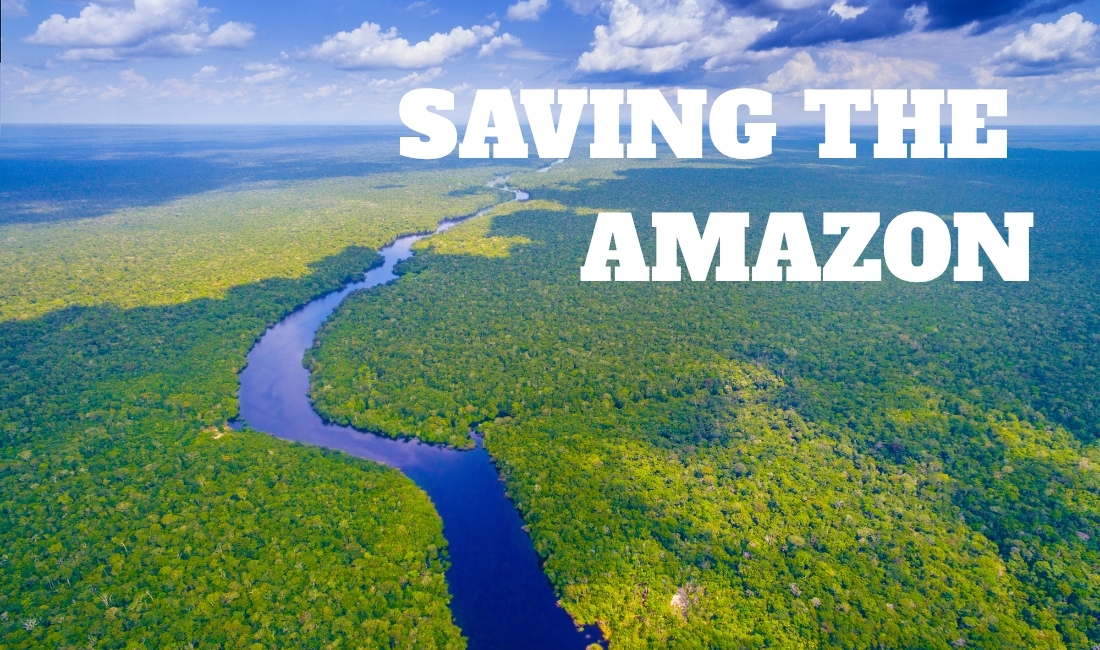
In a conversation hosted by American Community Media with ethnic media journalists, National Geographic Explorer Dr. Rosa Vásquez Espinoza explains why the future of the Amazon—and humanity—depends on bridging Indigenous knowledge and modern science.
Long before scientists warned that the Amazon was nearing a climate tipping point, Indigenous communities understood a simpler truth: when the forest can no longer breathe, neither can we.
For generations, the rainforest has been more than an ecosystem. It has been an ancestor, a teacher, and a living partner in humanity’s survival. Its rivers have carried stories as faithfully as they have carried water. Its towering trees have sheltered not only extraordinary biodiversity but also knowledge passed from one generation to the next—knowledge that modern science is only beginning to understand.
Today, as climate change accelerates and biodiversity disappears at alarming rates, those ancient teachings are finding new relevance.
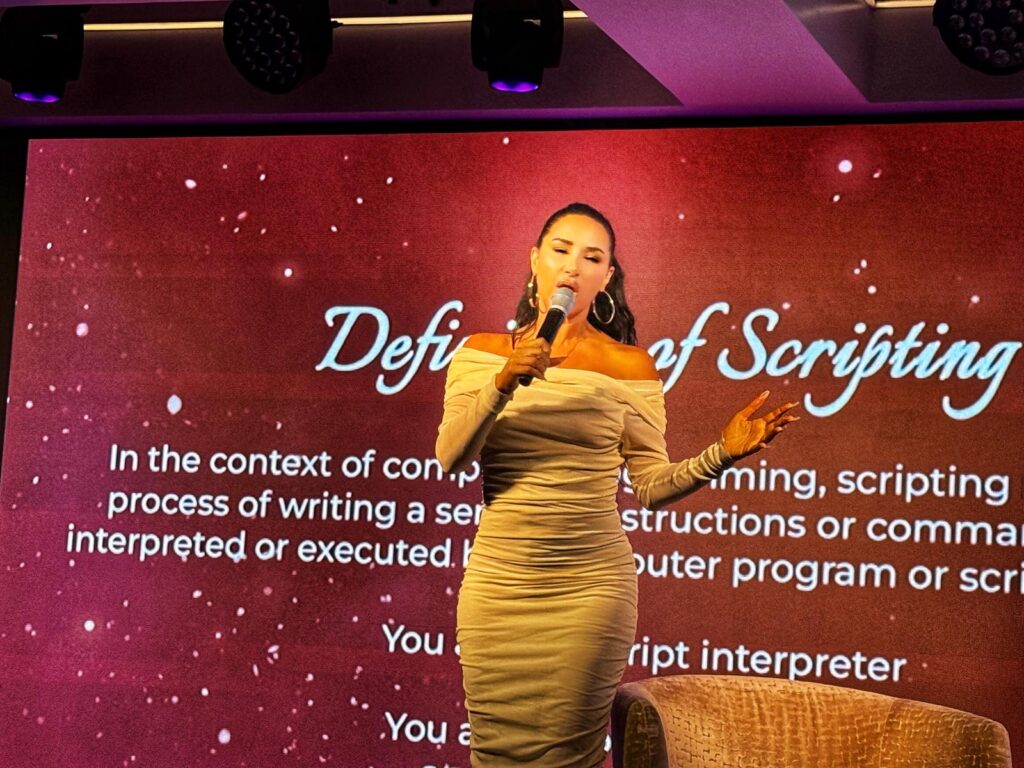
That was the central message of a recent conversation hosted by American Community Media (ACOM), where ethnic media journalists from across the United States gathered to explore the future of one of the world’s most important ecosystems. Moderated by ACOM Associate Editor Pilar Marrero, the briefing featured Dr. Rosa Vásquez Espinoza—a Peruvian chemical biologist, National Geographic Explorer, founder of Amazon Research Internacional, and author of The Spirit of the Rainforest. Together, they examined how Indigenous wisdom and modern science are increasingly converging in the effort to protect the Amazon.
Marrero opened the discussion by reminding participants that the Amazon is home to roughly ten percent of the planet’s known biodiversity. It regulates global climate systems, produces freshwater, and supports millions of people, yet faces mounting pressure from deforestation, mining, habitat loss, and climate change. Scientists warn that parts of the rainforest are approaching ecological tipping points whose consequences would extend far beyond South America.
Yet Dr. Vásquez Espinoza offered something more than another warning about environmental decline.
She offered a different way of seeing the world.
Growing up as a descendant of Indigenous Andean people, she learned that nature was never something separate from humanity. Many Indigenous traditions teach that after death, ancestors may return to the natural world—as trees, rivers, bees, or other living beings. Whether understood spiritually or symbolically, the belief reflects a deeper truth: people and nature exist in relationship, each depending on the other for survival.
“If I have the right to healthy forests and clean water,” she explained, “then the plants and animals around me do too.”
That understanding shapes how many Indigenous communities harvest food, care for ecosystems, and pass knowledge from one generation to another. The goal is never simply to take from the land but to ensure there is enough for nature to regenerate and for future generations to thrive.
Those ideas may sound philosophical, but Dr. Vásquez Espinoza suggested they also challenge modern science to think differently.
Biology draws clear lines between living and nonliving things. Physics, however, reminds us that everything—from people to rivers to rocks—is composed of the same atoms in constant motion. Rather than debating where life begins or ends, she encouraged listeners to ask a more meaningful question: How should we relate to the natural world if our own well-being depends on its health?
That perspective naturally led to the growing Rights of Nature movement.
Unlike traditional environmental laws, which often respond only after damage has occurred, the movement seeks legal recognition that rivers, forests, and ecosystems possess inherent rights worthy of protection. Dr. Vásquez Espinoza noted that corporations already enjoy forms of legal personhood in many judicial systems, while nature itself often has no comparable legal standing.
Environmental laws, she argued, have been largely reactive.
The climate crisis demands something more.
“We need to be regenerative from today,” she said, explaining that protecting nature requires preventing harm rather than merely responding to it after the fact. For Indigenous communities, this way of thinking is not new. It has guided relationships with forests, rivers, and wildlife for centuries.
Perhaps nowhere does that philosophy become more tangible than in one tiny creature that most people have never heard of.
The stingless bee.
When Pilar Marrero admitted she had never encountered the species before reading The Spirit of the Rainforest, many participants nodded in agreement.
Yet these remarkable bees have existed since the age of dinosaurs, quietly pollinating tropical forests for more than 65 million years. Native throughout Latin America, Africa, Asia, and Australia, they play a vital role in sustaining crops such as coffee, cacao, avocados, and blueberries. Indigenous communities have also treasured their medicinal honey for generations.
For Dr. Vásquez Espinoza, the stingless bee became more than a scientific curiosity.
It became a symbol of everything the modern world risks overlooking.
It was the COVID-19 pandemic that transformed Dr. Rosa Vásquez Espinoza’s curiosity about stingless bees into a scientific mission.
As the virus spread through remote Amazonian communities, Indigenous leaders from different regions—many of whom had never interacted with one another—shared a striking observation. They were relying on stingless bee honey to ease the symptoms of infection. The consistency of those accounts prompted Dr. Vásquez Espinoza and her team to conduct the first chemical analysis of the honey in Peru, hoping to understand the science behind a remedy that Indigenous communities had trusted for generations.
What fascinated her most, however, extended far beyond chemistry.
While documenting the bees for National Geographic, she watched Indigenous beekeepers care for their hives with remarkable patience and respect. The relationship was not transactional. The bees were not simply producing honey; they were sustaining forests, pollinating crops, supporting livelihoods, preserving cultural traditions, and creating opportunities for women and young people within their communities.
“In that interaction,” she reflected, “I got to see what humans and nature can be like if we really try.”
The tiny stingless bee became a powerful metaphor for the Amazon itself.
Its value could not be measured by a single product or scientific discovery. Like the rainforest, its importance lay in the countless connections it sustained—connections that often remain invisible until they begin to disappear.
That lesson echoed throughout the briefing as the conversation shifted to a question many readers of ethnic media might naturally ask: Why should communities living thousands of miles from the Amazon care about what happens there?
For Dr. Vásquez Espinoza, distance is an illusion.
Whether someone lives in California, New York, Lagos, Manila, or Mexico City, daily life is already shaped by the rainforest. The Amazon helps regulate rainfall, influences weather systems, and supports global food production. Coffee, cacao, acai, medicines derived from rainforest plants, and countless natural materials that reach homes around the world all carry a connection to the forest. Even people who may never set foot in the Amazon depend on the ecological balance it helps maintain.
Her challenge to the audience was both practical and personal.
Before purchasing a product, ask where it came from.
Before dismissing a traditional practice, ask what generations of observation might have taught the people who preserved it.
Those simple questions, she suggested, can reshape how we think about both consumption and conservation.
For immigrant communities, that message resonates on another level.
Across cultures, ancestral knowledge has often traveled quietly—from grandparents to grandchildren, from kitchens to gardens, from stories to everyday rituals. Herbal remedies, farming traditions, and ecological practices have sometimes been dismissed as old-fashioned, only to be rediscovered years later through scientific research.
The Amazon tells a remarkably similar story.
For too long, Indigenous knowledge was treated as something separate from science. Yet throughout the briefing, Dr. Vásquez Espinoza described a future in which those worlds strengthen one another rather than compete. Scientific research can validate traditional practices, while Indigenous knowledge offers generations of careful observation that no laboratory could reproduce overnight.
It is not a question of choosing one over the other.
It is about recognizing that humanity’s greatest challenges demand every form of knowledge available.
That philosophy also offers a hopeful path forward in a time when environmental news is often dominated by crisis.
The Amazon’s future will depend on scientific innovation. It will require stronger environmental protections and international cooperation. But it will also depend on something less tangible and equally important: humility.
The humility to acknowledge that some of the answers we seek today have been safeguarded for centuries by communities that the modern world too often overlooked.
As the conversation drew to a close, Dr. Vásquez Espinoza left listeners with a message that reached beyond conservation.
Protecting the Amazon is not simply about saving trees.
It is about protecting relationships—between people and nature, between science and tradition, and between generations entrusted with caring for a shared home.
Perhaps that is why the conversation felt so relevant to the diverse audiences served by ethnic media.
Whether the story begins in the Amazon, the Andes, Africa, Asia, or neighborhoods across the United States, immigrant communities understand what it means to carry wisdom across generations. They know that traditions are not relics of the past but living guides that continue to shape identity, resilience, and hope.
The rainforest, Dr. Vásquez Espinoza reminded us, is much the same.
It is more than the world’s largest tropical forest.
It is a living archive of knowledge, resilience, and possibility.
And as humanity searches for solutions to an increasingly uncertain future, we may discover that our greatest breakthroughs will come not from choosing between ancient wisdom and modern science but from allowing them to walk forward together.
In the end, the conversation hosted by American Community Media was about far more than the Amazon. It was a reminder that listening—to nature, to science, and to the voices of Indigenous communities—is not only an act of respect. It may be one of the most important investments we can make in our collective future.
#AmazonRainforest #IndigenousKnowledge #ClimateAction #EnvironmentalJustice #Biodiversity #EthnicMedia #ImmigrantMagazine #ScienceAndCulture #RightsOfNature #ClimateResilience