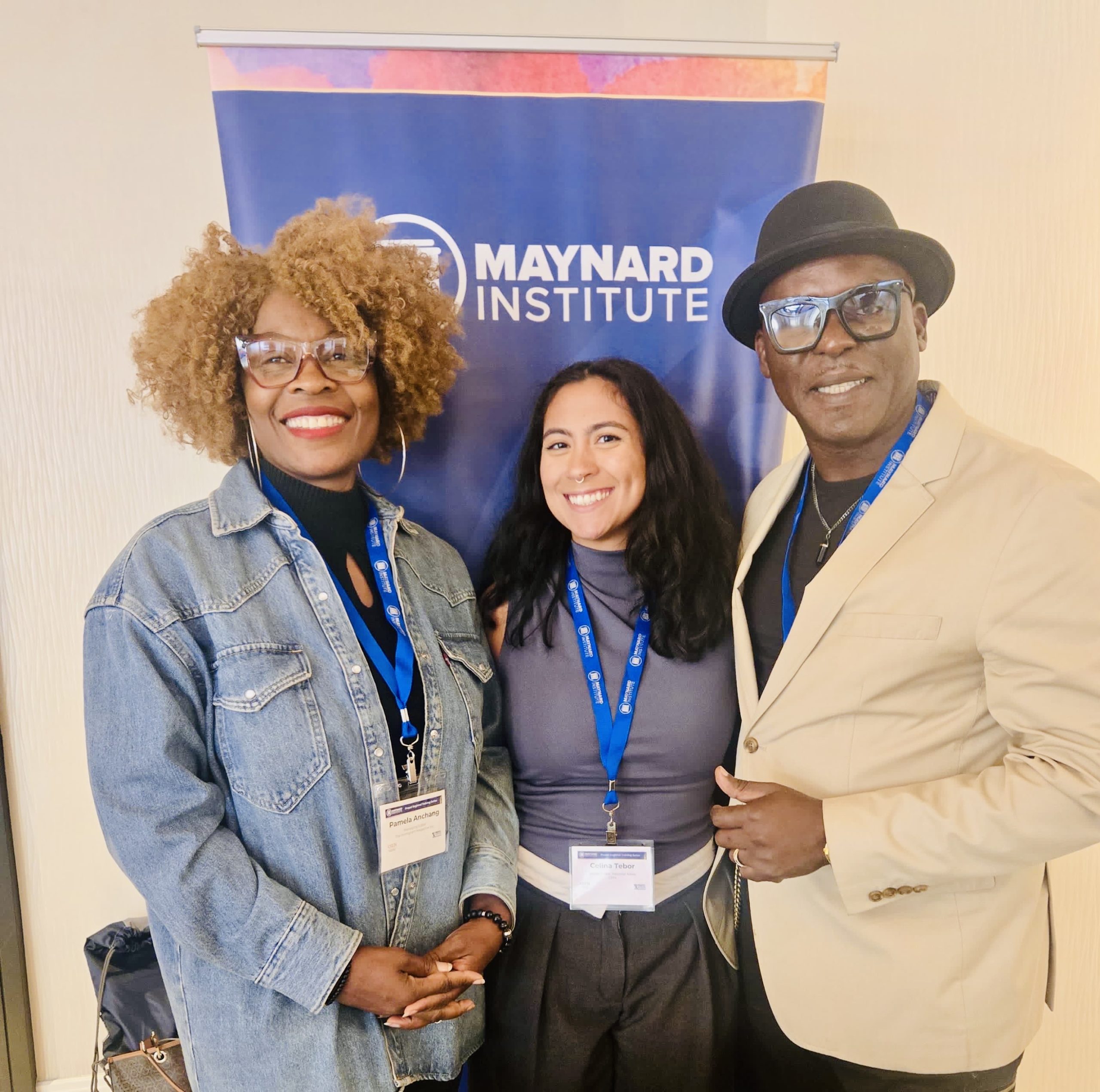
L-R: Pamela Anchang, Celina Tebor, and Charles Anchang
An unexpected conversation at a journalism training in California connected publisher Charles Anchang to a witness of Cameroon’s 1986 Lake Nyos tragedy—and set him on a search for a family whose story reaches back four decades.
Magazine, The Immigrant Experience, By Charles Anchang | Co-Publisher, The Immigrant Magazine Inc.
“My dad worked for the Peace Corps in Cameroon.”
It was a casual remark over lunch at a journalism training in Burbank, California. But what came next caught me completely by surprise.
Her father had witnessed the aftermath of the 1986 Lake Nyos disaster, one of the deadliest tragedies in Cameroon’s history.
Nearly 1,700 people died. Entire families were wiped out. In some homes, not a single family member survived.
It is hard to imagine such a loss.
And here I was, forty years later, thousands of miles from home, sitting across from the daughter of a man who had witnessed the aftermath of that tragedy.
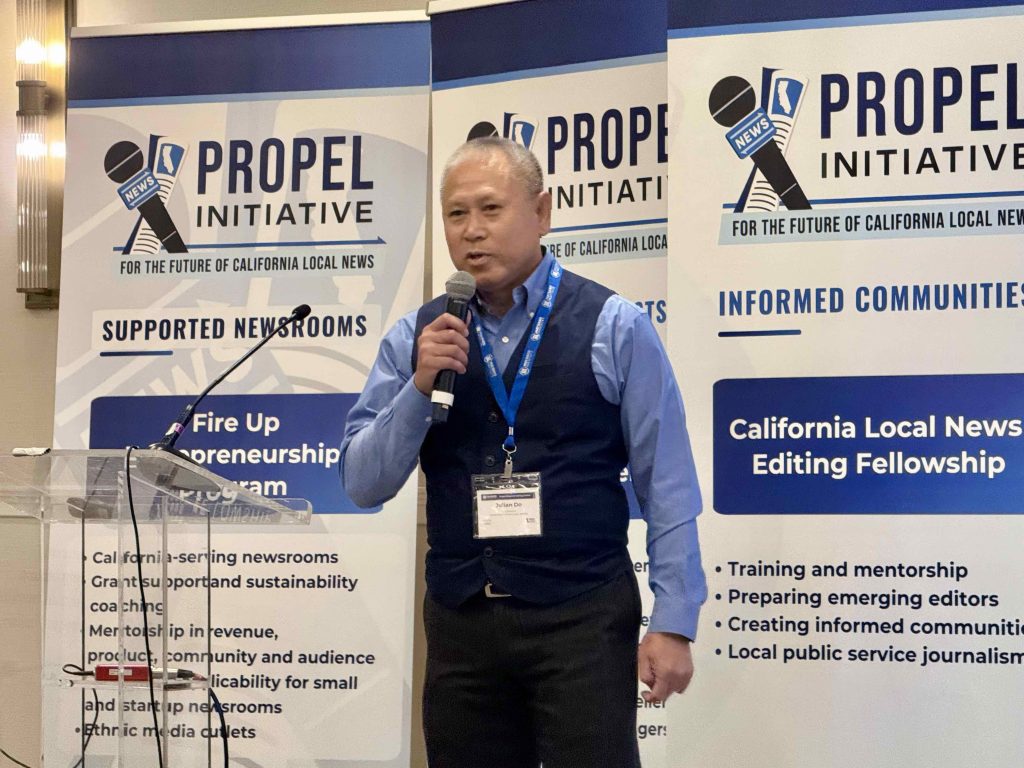
Her name was Celina Tebor, a senior editor on CNN’s National Team. My wife and publishing partner, Pamela Anchang, and I had met her while attending the Maynard Institute’s Propel journalism training.
As co-publishers of The Immigrant Magazine, we had come to Burbank to learn, exchange ideas, and connect with fellow journalists.
I had no idea that one of those connections would lead me back to Cameroon—and eventually to a family I now hope to find.
The Maynard Institute’s Propel Training: More Than a Conference
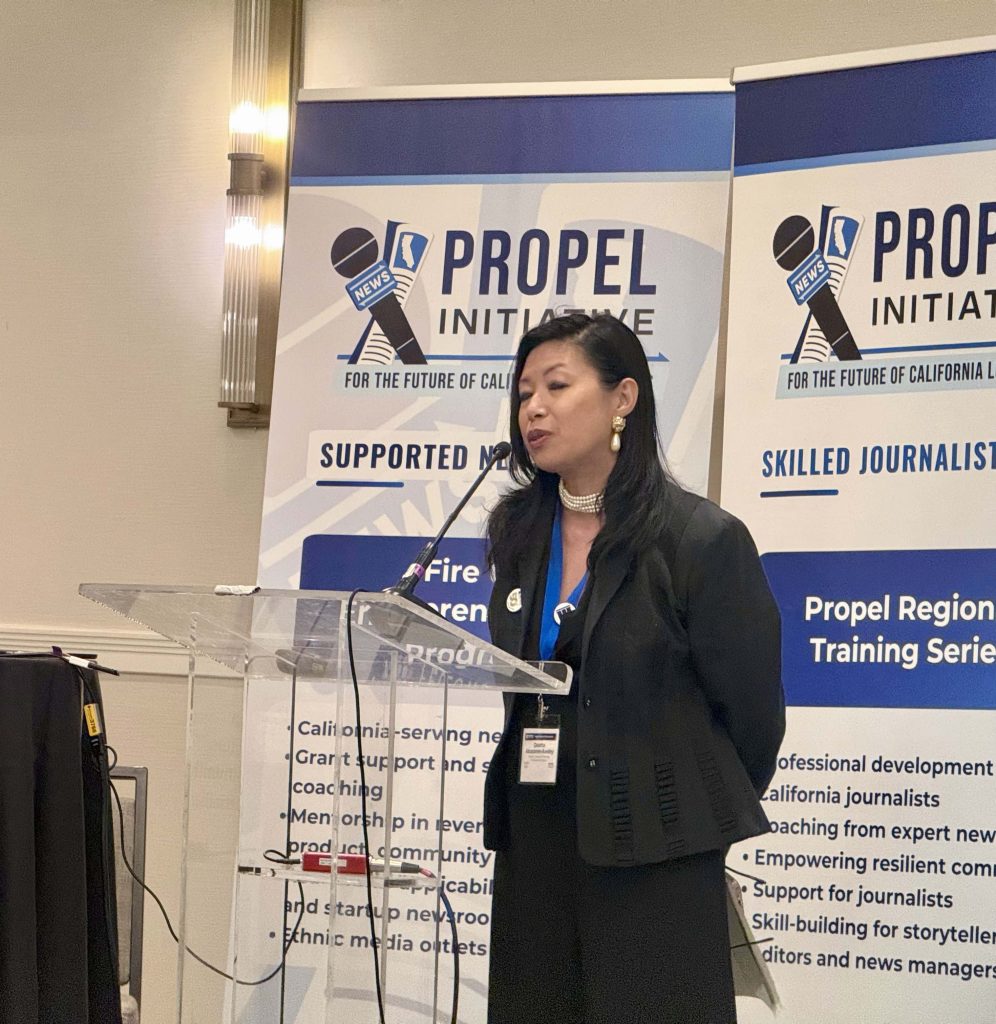
The training, held October 22–24, 2026, in Burbank, brought together journalists, editors, and media managers from across California.
Organized by the Maynard Institute for Journalism Education, the Propel Initiative works with American Community Media, California Black Media, and Latino Media Collaborative to strengthen news organizations serving California’s diverse communities.
The Burbank program also involved California State University, Northridge’s Department of Journalism and the Tom and Ethel Bradley Center.
For Pamela and me, the opportunity came at a meaningful time.
Anyone who runs an independent publication knows that journalism is only part of the work. There are stories to assign, articles to edit, people to manage, deadlines to meet, audiences to reach, and a business to sustain.
And in smaller media organizations, you often find yourself doing several of those jobs at once.
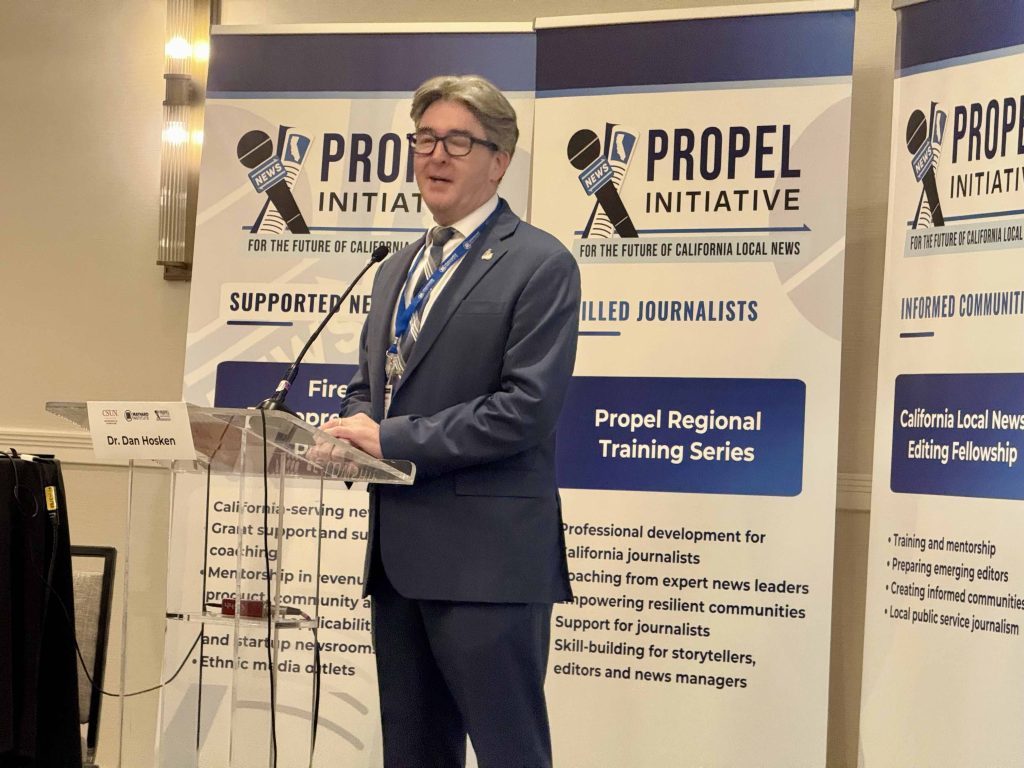
That is why opportunities like Propel matter.
The tuition-free training, with needs-based travel assistance, was designed to make professional development accessible to emerging, mid-career, and student editors and managers across different media backgrounds.
Its focus was practical: how to become better editors, stronger managers, and more effective leaders at a time when news organizations are facing enormous pressures.
The curriculum included sessions on The Manager’s Mindset to Meet This Moment, Fault Lines in Management, Managing the Big Project, and Editing Techniques You Need Every Day.
Other topics addressed navigating difficult conversations, immigration and ICE coverage, journalism and imperiled civil rights, ethical use of artificial intelligence in sourcing and editing, and the role of community-centered, student-led media.
These were subjects close to the work we do at The Immigrant Magazine.
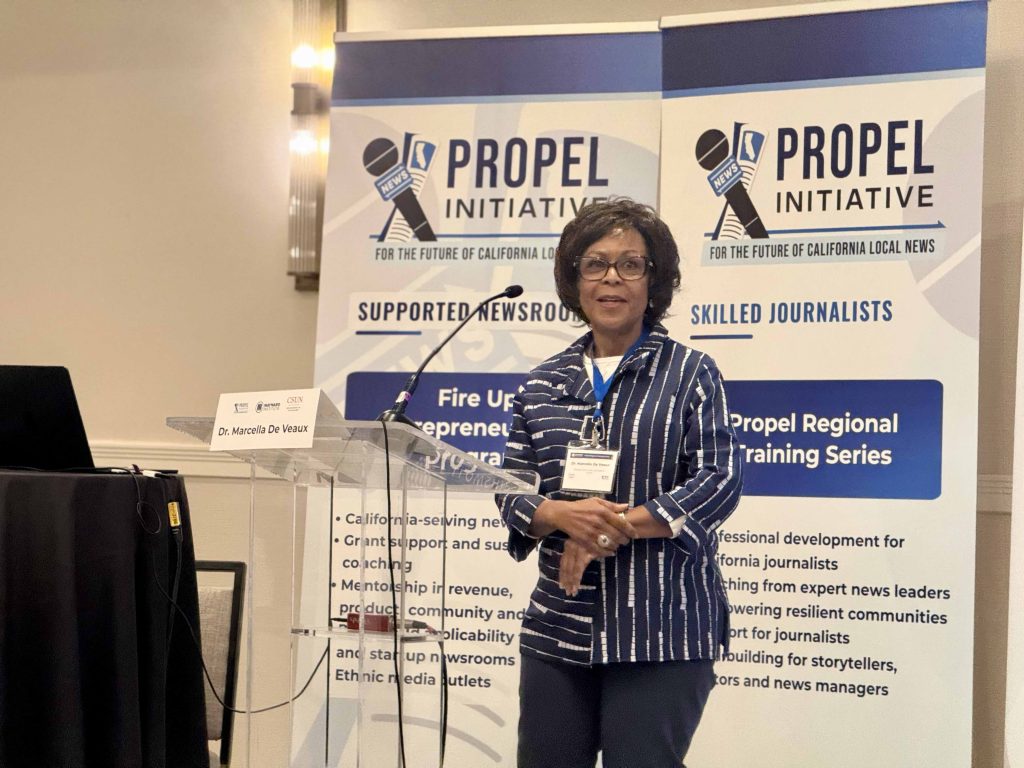
When immigration enforcement affects families, reporting requires more than repeating an official announcement. People need accurate information, context, and an understanding of how developments may affect their lives.
The discussion around artificial intelligence is just as relevant. AI can help smaller newsrooms save time and manage their workloads, but it also raises serious questions about accuracy, transparency, and the responsibilities of editors.
We cannot allow technology to replace human judgment or the responsibility to verify information before publishing it.
The program also included hands-on workshops, customized coaching, a regional news leaders roundtable, and opportunities to meet fellow journalists beyond the formal sessions.
I have always believed there is value in learning from people who face the same challenges you do. Sometimes another editor has already figured out how to handle a problem that has been keeping you awake at night.
And sometimes, a conversation has nothing to do with newsroom management or editing until it suddenly becomes the beginning of a story.
That was our experience with Celina.
Lake Nyos: A Tragedy Cameroon Has Never Forgotten
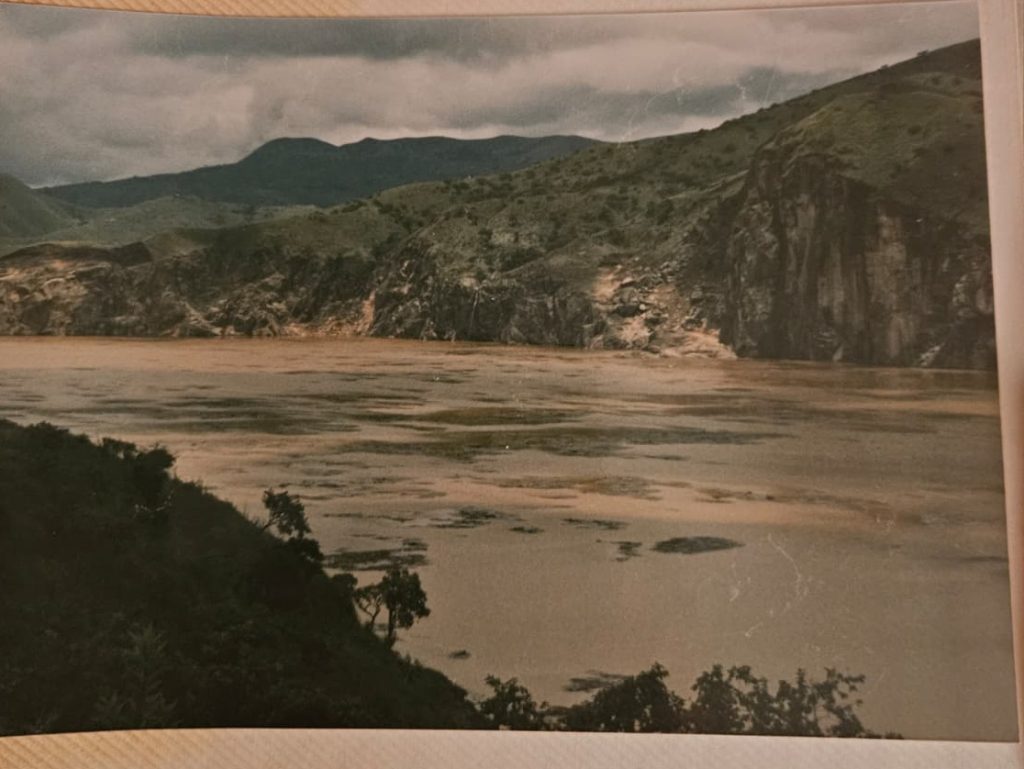
Archival photograph courtesy of Steve Tebor
An archival view of Lake Nyos in Cameroon, site of the devastating 1986 disaster that claimed approximately 1,700 lives. Archival photograph courtesy of Steve Tebor.
On August 21, 1986, a deadly cloud of carbon dioxide escaped from Lake Nyos in Cameroon’s Northwest Region, spreading through surrounding valleys and villages.
Approximately 1,700 people lost their lives. Thousands of animals also died.
The scale of the devastation was almost impossible to comprehend.
Families who had gone to sleep the night before never woke up. In some households, parents, children, and other relatives all perished.
For Cameroonians, Lake Nyos remains one of the most painful events in our country’s history.
I remember the questions people asked afterward.
How could so many people die without warning? What had happened beneath the lake? Could something like this happen again?
I also remember the rumors. Some believed a bomb had been responsible for the deaths. There was so much confusion about how an entire community could be devastated by something no one could see.
Scientific investigations later established that the disaster was caused by a sudden release of carbon dioxide that had accumulated in the lake’s deep waters. The gas flowed into low-lying communities, creating deadly conditions for people and animals.
The science explains how the disaster happened.
But it does not tell us everything about the people who died, the families who survived, or the memories carried by those who witnessed its aftermath.
That is what made my encounter with Celina so extraordinary.
Her father had been there afterward.
And he had a story to tell.
A Connection to Kom and Memories of My Father
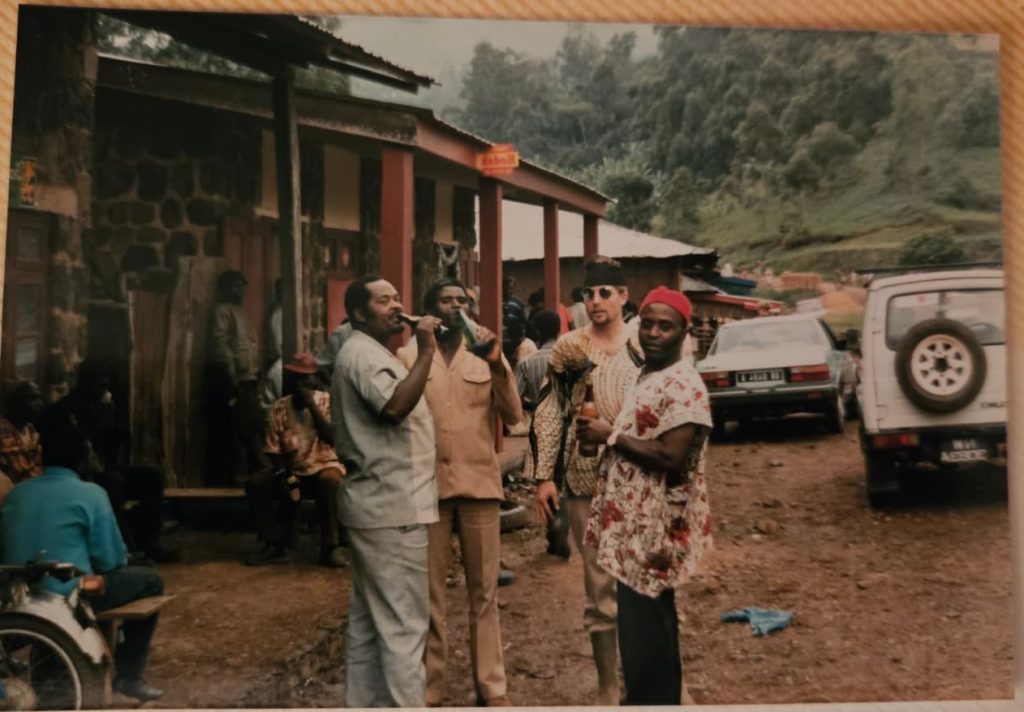
As Celina shared more about her father’s years in Cameroon, I learned that Steven Tebor had spent time in Fundong, in Kom, my ancestral home.
That made the connection even more personal.
I was born in Njinikom and grew up in Bamenda and Yaoundé. Although my family was living in Yaoundé when the Lake Nyos tragedy occurred, our ties to Kom have always been important to us.
My father, Dr. Joseph Anchang Nayouh Ngongwikuo, was a professor of American literature at the University of Yaoundé and the School of Journalism.
He earned his PhD at Illinois State University and wrote Taboo Love, a novel about the Kom Palace.
My father passed away in 1996.
As I listened to Celina, I found myself thinking about him.
The Lake Nyos disaster had troubled him deeply. He cared about our people, our history, and the events that shaped our communities.
I could only imagine the conversation he would have had with Steven.
I wished he were still here.
It was remarkable enough to meet someone in California whose father had lived in Cameroon. Discovering that he knew my ancestral region and had witnessed the aftermath of Lake Nyos made me want to hear everything he could remember.
Celina kindly connected us.
Steven Tebor’s Memories of Lake Nyos
I sent Steven a message introducing myself.
“Hi Steven. My name is Charles Anchang, the CEO of The Immigrant Magazine Inc. I am Cameroonian from Kom, and I met with Celina, your daughter. I can’t wait to talk to you about Lake Nyos.”
Steven responded warmly and wanted to know where in Kom I was from.
Our exchanges soon turned to the tragedy.
When I asked about his experience, he replied:
“Wow, really! It was a bit overwhelming. I have a degree in geology, so I was intrigued with the lake.”
His geological background had given him a particular interest in understanding what happened.
Steven described visiting communities in the Nyos Valley and documenting where people had died and where others survived.
He recalled plotting the locations on a topographic map provided by USGS and connecting the points to trace how the deadly gas had moved throughout the valley.
He remembered devastating losses in Cha, Subum, and Nyos, including areas where very few people survived.
These are recollections from forty years ago, and the numbers and locations must be checked against established historical records.
But I was especially interested in the possibility that his maps and field notes might still exist.
What could they tell us about his observations? Are there photographs showing places that surviving families might recognize? Could local residents help identify the people and locations he documented?
Steven had already shared photographs from his time in Cameroon, including images connected to the Lake Nyos area.
He recalled one compound where approximately 23 people died, although the exact location and identities associated with the photograph remain to be established.
There was much I wanted to explore.
Then our conversation took another turn.
Steven mentioned Peter Akuo.
Who Was Peter Akuo, and Where Is His Family Today?
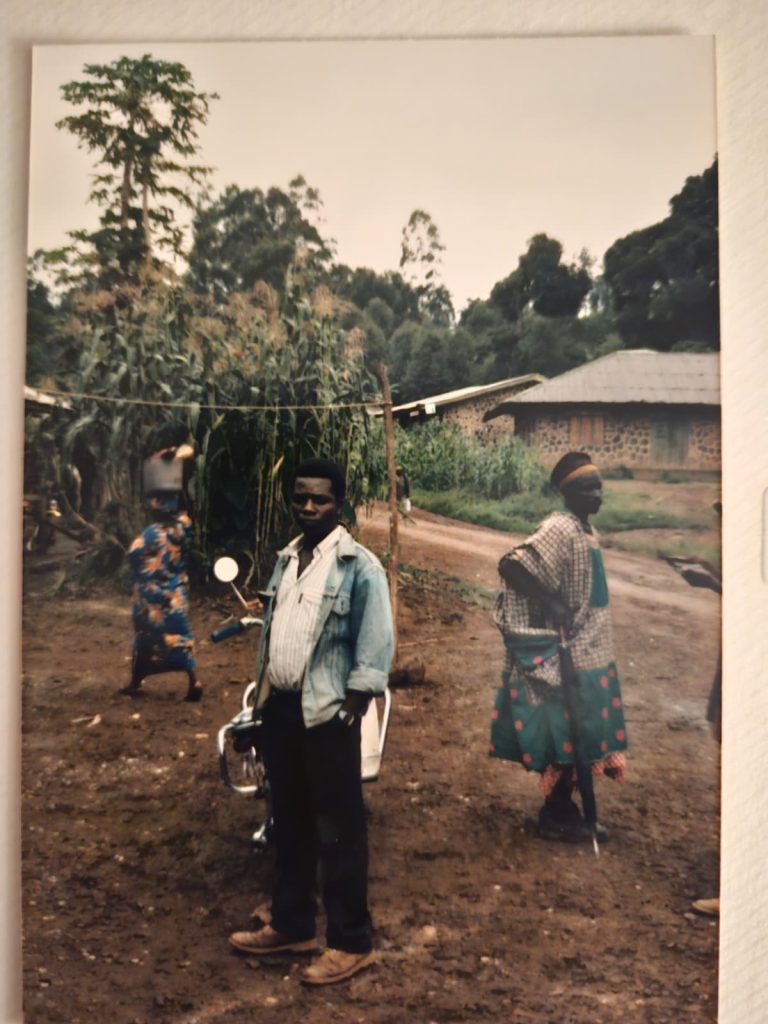
Steve remembered a man named Peter Akuo who lived in Njinikom, in the valley below the town.
According to Steve, Peter had a wife and several children. When Peter’s younger brother died, he took responsibility for his brother’s widow and her children, bringing the two family units together into one household.
Steven estimated that the household included between four and six children.
He also remembered a Peace Corps volunteer named Tom who lived with Peter while working on a cooperative development project.
Steve recalled that the project encountered difficulties after money intended for the cooperative was taken.
As we exchanged messages, I became increasingly curious about Peter’s family.
Where are his children today?
Are any of them still living in Njinikom? Did they move elsewhere in Cameroon? Have some settled abroad?
And whatever happened to Tom?
Steve shared a photograph identified as Peter Akuo at his compound.
I kept thinking about that picture.
What if Peter’s children or grandchildren have never seen it?
What if someone recognizes the photograph and remembers Steve or Tom?
I do not yet know what became of Peter or his family. Nor have we established whether their circumstances were connected to the Lake Nyos disaster. Peter and Tom had no relationship to the disaster.
But the questions are worth pursuing.
I want to find Peter Akuo’s surviving relatives and, if possible, reconnect them with Steven Tebor.
Perhaps Peter’s children remember the Peace Corps volunteers who stayed in their community. Perhaps they have photographs and memories of their own.
Or perhaps there are people who could help us piece together what happened to the family in the decades since Steve knew them.
I hope we find out.
A Story That Brought Me Back Home
I have lived away from Cameroon for many years, but my connection to Kom has never left me.
The memories of my childhood, my father, and the people and places that shaped my early life are still very much a part of who I am.
That is why this encounter meant so much.
Through The Immigrant Magazine, Pamela and I have spent years documenting the experiences of people who leave their homelands and build lives elsewhere.
We have heard stories of sacrifice, struggle, achievement, family, and belonging.
But this time, a story found its way into my own family history.
A man I had never met remembered communities connected to my ancestral home. His daughter happened to attend the same journalism training as my wife and me.
And now, a photograph and a few names may help us reconnect people who have not been in touch for decades.
It is a small world, indeed.
What the Propel Training Made Possible
I have thought about our experience in Burbank quite a bit since returning home.
The Maynard Institute’s Propel training gave us an opportunity to strengthen skills that are essential to running a publication. It also brought together journalists from different backgrounds, newsrooms, and communities.
That second part should never be underestimated.
Independent publishers do not always have opportunities to spend time with colleagues from larger media organizations or with others facing similar challenges in their own communities.
Programs like Propel help bridge that gap.
The Maynard Institute’s investment in leadership, editing, ethical journalism, and stronger news organizations is especially important for community-serving media.
Our audiences need journalists who are well trained, connected, and able to respond responsibly to the issues affecting their lives.
I am grateful to the Maynard Institute and its partners: American Community Media, California Black Media, and Latino Media Collaborative for making this opportunity possible.
Our appreciation also goes to California State University, Northridge’s Department of Journalism, the Tom and Ethel Bradley Center, and the trainers and organizers who contributed to the Burbank gathering.
I hope more independent journalists will have opportunities to participate in future programs.
You can learn more about the Maynard Institute’s Propel Initiative and its work to support journalists and news leaders.
Pamela and I came to Burbank hoping to learn and connect with colleagues.
We did both.
But I certainly did not expect to leave with a connection to Lake Nyos, memories of my father, and a new reason to reach out to people in my ancestral community.
Help Us Find Peter Akuo’s Family
This is where I hope our readers, particularly Cameroonians at home and across the diaspora, can help.
We are looking for information about Peter Akuo, who lived in Njinikom during the 1980s, his wife and children, his late brother’s family, and any surviving relatives or descendants.
If you lived in Njinikom, Fundong, or surrounding communities during that period, knew Peter’s family, or have photographs and memories connected to Lake Nyos, please reach out.
We also hope to document Steven Tebor’s photographs, recollections, and any original maps or field notes he may still possess.
Please contact: The Immigrant Magazine
We will carefully review the information shared and respect the privacy of families who may be identified.
I do not know where this search will lead.
But somewhere, there may be someone who remembers Peter Akuo, his children, or the Peace Corps volunteers who once lived and worked in their community.
Perhaps someone will recognize a face in Steven’s photograph.
I hope we find them.
And to think, it all started over lunch at a journalism training in Burbank.
#MaynardInstitute #PropelInitiative #LakeNyos #Cameroon #JournalismTraining #CameroonianDiaspora #ImmigrantStories #CommunityJournalism #IndependentMedia #TheImmigrantMagazine