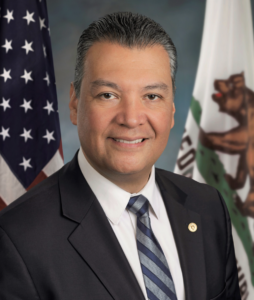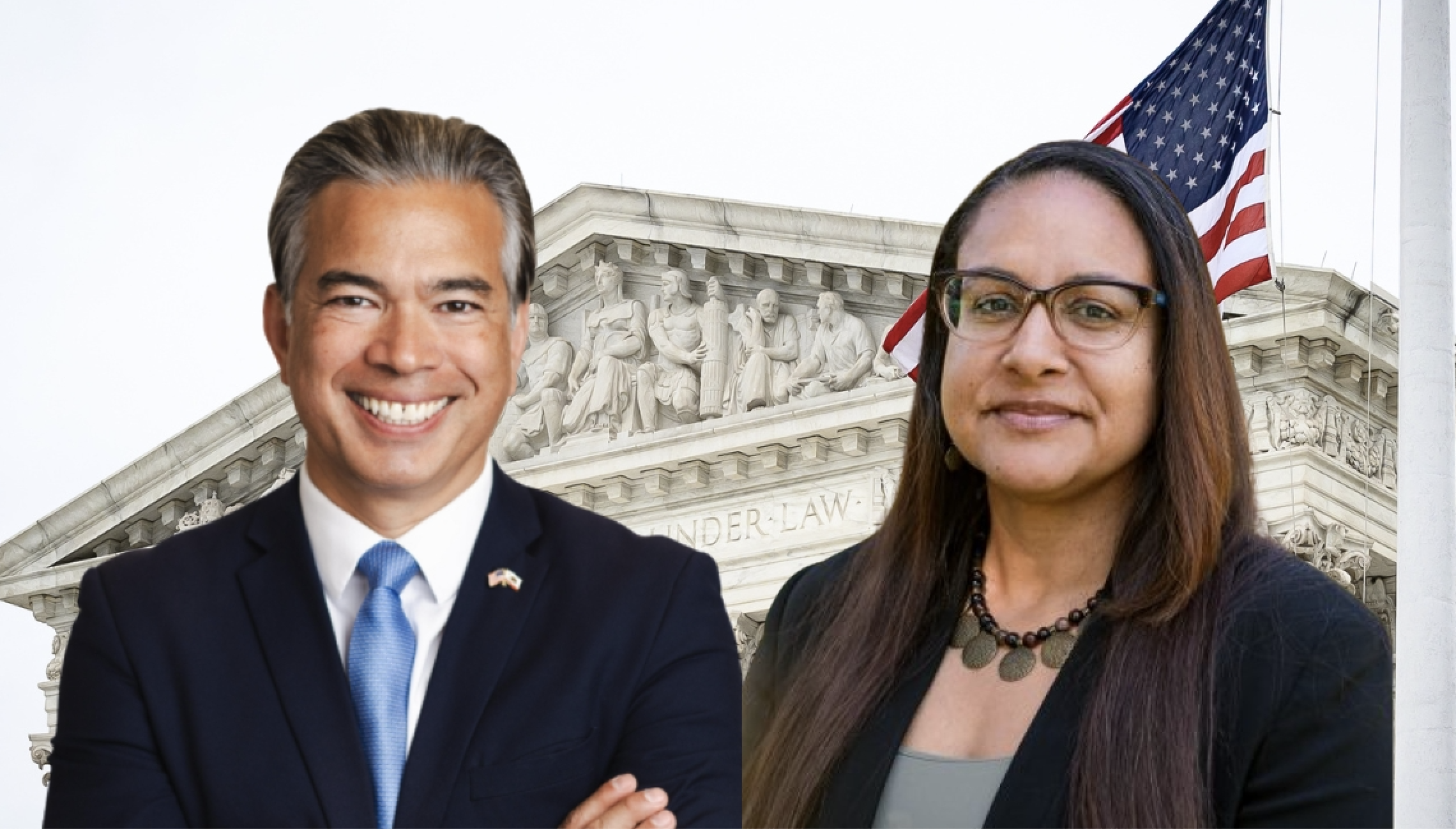
As California challenges the new federal rule, Attorney General Rob Bonta and Health Secretary Kim Johnson urge immigrant families to get advice about their own circumstances before giving up food or health care benefits.
The new public charge rule does not apply to every immigrant or every benefit. If you are worried about your family’s health care or food assistance, do not give it up because of a rumor. Speak with a qualified immigration legal service provider about your circumstances first.
That was the clearest message for families to emerge from a September 24 American Community Media (ACOM) briefing on the rule and California’s lawsuit against it. California Health and Human Services Agency Secretary Kim Johnson told ethnic media reporters that fear was already changing decisions in homes across the state. People who might still qualify for help were leaving programs or choosing not to apply because they worried about their immigration future.
“All across California,” Johnson said; she was hearing concern about health, food, and what the changes could mean for families. ACOM Associate Editor Pilar Marrero, who moderated the statewide conversation, asked Johnson to explain what people were experiencing and what they should understand before withdrawing from benefits. California Attorney General Rob A. Bonta joined the briefing to discuss the state’s legal challenge.
Their roles were different, but the urgency connected them. Bonta is asking a court to block the federal government’s public charge change. Johnson is trying to reach families who must make decisions while the case is still being fought.
Public charge is a test used in certain immigration decisions about admission to the United States or lawful permanent residence—a green card. The Trump administration’s change took effect September 18, after it rescinded a narrower 2022 regulation. California and other states argue in their lawsuit that the new approach is unlawful and harmful. The lawsuit is ongoing; filing it did not automatically pause the rule. www.uscis.gov
For a parent, the first question may be more immediate than any court case: Can my child still see a doctor? Can we accept help buying groceries? Will this hurt my green card application?
There is no responsible answer that fits every household. There is, however, a place to begin: public charge does not apply to everyone, and one family member’s eligibility for a benefit is not the same question as another family member’s immigration application. Those questions need to be considered together by someone qualified to advise on immigration law.
Fear is already keeping people away
Johnson described what officials call a chilling effect. Under an earlier public charge policy, she said, people who were eligible for services stopped using them or stayed away from the application process because they feared what might happen later.
The effect can reach children. A child may qualify for a benefit while a parent, facing uncertainty about their own status or application, decides it is safer for the whole family to go without. The family may make that sacrifice without knowing whether public charge applies to the parent’s case or how the child’s benefit would be treated.
Johnson said California has seen declines and disenrollment in Medi-Cal, which provides health coverage to eligible residents, and CalFresh, which helps eligible households buy food. She was careful about the cause: public charge is not the only federal change affecting families. Other policies may alter eligibility or requirements on different dates. But she said some people are withdrawing even before changes that might affect them take effect.
That is why the distinction between losing eligibility and leaving out of fear matters. Someone who no longer qualifies may need help finding another source of care or food. Someone who still qualifies could lose essential support because of information that was incomplete or wrong.
“Before an individual makes a terribly hard decision” to leave health or food assistance, Johnson urged them to consult a trusted expert about whether public charge applies to their particular circumstances.
What California is fighting in court
Bonta told the briefing that he believes California has a strong legal case. “We believe we have the facts and the law on our side,” he said. He expressed confidence even if the challenge reaches the U.S. Supreme Court, though he said it could be resolved before then. That is the attorney general’s position in an unresolved lawsuit, rather than a court ruling on the rule.
His concern centered in part on families whose members have different immigration statuses. Bonta argued that, under the new approach, benefits a U.S. citizen child lawfully receives could be held against a parent seeking legal status. He said the government should not punish families for obtaining help their children are entitled to receive. California is asking the court to strike down the rule and related guidance.
The possibility Bonta described is frightening. It also needs to be reported carefully: it does not mean that every child’s benefit will affect every parent’s application. A family’s immigration category, the type of application, and the benefit involved all matter. A legal professional can help a parent assess those facts without asking a child to go without care based on a general warning.
Who may be outside the public charge test?
One of Johnson’s strongest points was that public charge does not apply to all immigrants. Refugees, people granted asylum, and certain other humanitarian immigrants are exempt from the public charge ground of inadmissibility. People renewing a green card or applying for citizenship generally are not subject to a new public charge test as part of those applications. The test is relevant to certain people seeking admission or a green card, with exceptions that depend on the person’s immigration category.
This is why a message circulating in a group chat—“everyone should stop using Medi-Cal”—can do real harm. It cannot account for the different people and statuses within one household. It also cannot tell a family whether a particular program has changed, whether they still qualify, or whether that program matters to a pending immigration application.
A reporter asked Johnson whether medical benefits could affect a green card interview or approval. She did not offer a universal yes or no. She urged people to bring that question to an immigration legal service provider who could examine their circumstances.
That answer may feel frustrating when a family wants certainty today. But a broad promise could be just as damaging as a broad warning. The safe first step is to identify the right question for the right expert.
A county benefits worker can explain Medi-Cal or CalFresh eligibility and help someone understand a notice about their coverage. A qualified immigration legal provider can assess how the public charge rule relates to an immigration case. Johnson emphasized that benefits staff should not be expected to provide individual immigration law advice.
California also funds some services with state money and offers resources that differ from federal programs. Depending on a family’s situation, those distinctions may matter. They are another reason to check the details before walking away from assistance.
Find help you can trust
At the briefing, a reporter raised another fear familiar to many immigrant communities: people who pose as attorneys or offer false promises when a rule changes. Johnson directed residents to the California Department of Social Services’ public charge contact list, which connects people with immigration legal service organizations for public charge questions. www.cdss.ca.gov
She also described the work of community health workers, navigators, and promotoras. These trusted local messengers can help residents understand services, read changing notices, and find the right place to ask for help. Their value is especially clear when a family is receiving information in several languages or hearing conflicting advice from people it trusts.
Johnson acknowledged that trust in government is itself part of the challenge. Some residents do not separate federal, state and county agencies. Fear of one agency may keep them from approaching another for help. That is why relationships with community organizations matter: people need somewhere they can bring a question without being dismissed for asking it.
Reporters also asked whether personal information provided to benefit programs could be shared with federal authorities. Johnson said agencies have made information available about data sharing and referred to separate California litigation concerning access to benefit recipients’ information for immigration enforcement. Families are entitled to ask how a specific program handles their data. They should receive a clear answer, rather than a blanket reassurance or an alarming claim without evidence.
Several changes are happening at once
Public charge is not the only reason families may be hearing about changes to Medi-Cal or CalFresh. Johnson discussed other federal policies that affect health and food assistance, some on different implementation schedules. A notice about renewed eligibility, for example, is not automatically a notice that public charge applies to the recipient.
When a reporter asked about the possible effect of people losing coverage, Johnson said California expects more strain as patients delay care and turn to emergency rooms when their needs become urgent. The state is working to reduce the harm from broader federal changes, she said, but it cannot replace every affected federal dollar.
These are questions of funding and policy for officials. Inside a home, they are concerned about whether a parent keeps an appointment, whether groceries last until payday, and whether a child receives care when they need it.
Johnson pointed to resources that families can use as they work through those questions, including California’s universal school meals and community food banks. Asked about mental health support, she highlighted 988, which connects people in crisis to trained counselors. None of these resources replaces individual legal advice about public charge. They can, however, help a family meet immediate needs while it seeks that advice.
Bonta’s lawsuit will determine whether California succeeds in blocking the federal rule. Families do not have to wait for a court decision to seek a reliable answer about their own situation.
If you are considering leaving Medi-Cal, CalFresh, or another benefit because of public charge, first find out whether the rule applies to you, what benefit is involved, and whose immigration application concerns you. A California public charge legal service organization can help you work through those questions. Your family’s decision deserves facts specific to your family—not fear passed from one worried household to another.
#PublicCharge #ImmigrantFamilies #CaliforniaImmigrants #MediCal #CalFresh #ImmigrationResources #ImmigrantVoices