
A sea of Black men, women and children covered every bit of open space on the National Mall during the 20th anniversary of the Million Man March, held on Saturday, Oct. 10 here in the District.
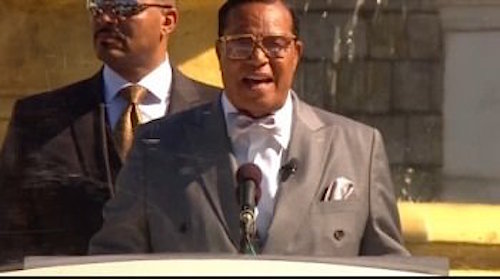
But when the man behind the march, the Honorable Minister Louis Farrakhan, stepped to the podium, his message may have come as a surprise to those accustomed to hearing him include controversy in his conversation.
“We’re here because there’s no justice in this land – not for us,” he said. “Those who continue to suffer the most, the indigenous people of America, those whose ancestors were brought here as burden bearers in chains, we are the ones still seeking civil rights and the human right of self-determination.”
He emphasized the irony of the gathering taking place on grounds that once served as a marketplace for a bustling slave trade industry.
“This massive house behind me, the White House, was built on the backs and blood of slaves. I believe the spirits of our ancestors are pleased that we have come together in peace with one single goal: achieving long-denied justice and refusing to accept anything less,” Farrakhan said.
During his almost two-hour address, the Minister spoke to the often similar challenges facing Black women, other ethnicities, veterans and Black gays and lesbians. And he said that they all have a place with him and other Muslims across the U.S.
“Some have questioned why I’m talking to those of other races, why I’m talking to women, why I’m talking to our gay brothers and sisters,” he said. “We are all suffering. What good is life if one is not free? There must come a time when we’re willing to say enough is enough and then be willing to do whatever it takes to bring about the change that will secure our freedom.”
Farrakhan described Blacks in America as being “seeds who have yet to be placed in their proper environment so they can burst and grow.”
“If we only understood our real nature, then we could open ourselves up to the limitless possibilities that the Creator has placed within us,” he said.
Then he pointed to America’s centuries-long refusal to treat Blacks and Native Americans in particular as equal citizens and commented on its impact.
“Just like Pharaoh and Egypt brought about their own demise, I believe that America can only escape the consequences of its mistreatment of Blacks for so long,” he said. “Thomas Jefferson recognized that in his early versions of the Declaration of Independence in which he advocated for the end of slavery. But he was shouted down because the politics of the situation would not allow it.”
“It’s clear that America does not have the heart to do the right thing – it’s just not in their [whites] nature. But the rumblings are clear, and like a sleeping volcano, an eruption is about to occur in this land. And so we’ve gathered today to show our dissatisfaction.”
In many ways, Farrakhan spoke not to white America, but to those who continue to suffer because of disenfranchisement, inadequate housing, subpar education and generations of poverty.
Those who joined him on stage included Latina women, Muslim leaders from Haiti and the Dominican Republic, spokespersons for Palestine and the families of Black men and women killed by those representing the police.
The program also acknowledged the late Marion Barry, who gave his full support as D.C. mayor during the original march in 1995. Barry’s son, Marion Christopher Barry, and wife, Cora Masters Barry, paid a special tribute to the District’s beloved “Mayor for Life.”
Afterwards, the hundreds of thousands participating in the March gave the late Barry a round of thunderous applause.
Farrakhan said it would be wrong to describe Oct. 10th as simply “a day.”
“This is a movement – not just one day on the calendar. The elders like myself have to begin to pass down the torch to tomorrow’s leaders. We have a program and an agenda in place. We need to put aside our minor differences if we want real justice. But it will require integrity, selflessness and sacrifice.”
Farrakhan met Sunday with a select group of Black men in D.C. to continue developing a comprehensive strategy and roadmap going forward from Saturday’s event.
While details will be shared in the coming weeks, Farrakhan’s plan appears to piggyback a document prepared during the Million Family March which included inviting women to the table and the public event.
Those invited to Sunday’s meeting included leadership from the national organization the 100 Black Men of America, Inc.