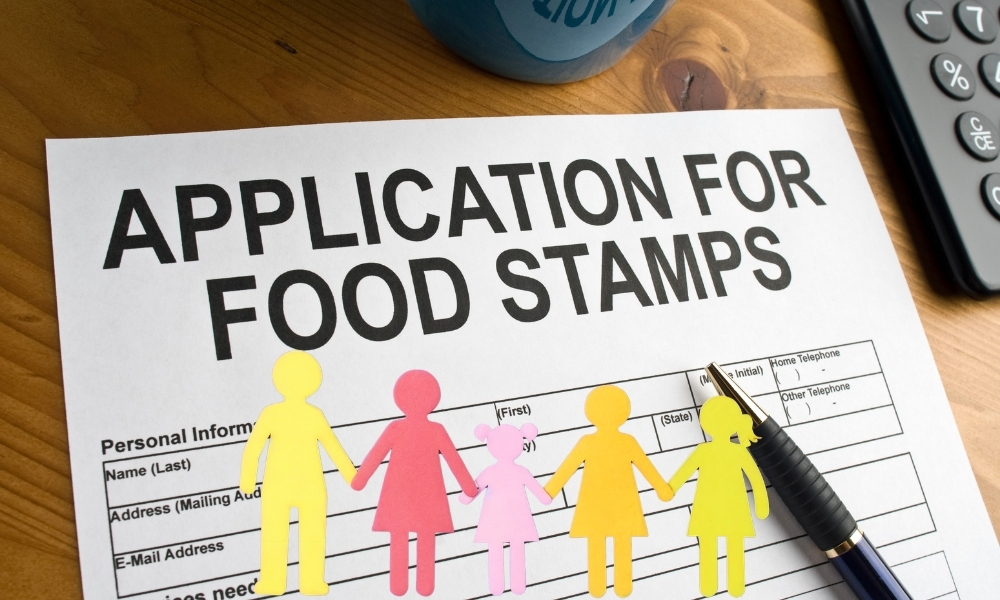
As new public charge rules approach, immigrant families face urgent questions about green cards, Medicaid, CHIP and SNAP—who is affected, what benefits may still be safe to use, and what families should do now.
There are policies that determine who qualifies for a benefit, who may enter the country, or who can remain. Then there are policies whose influence travels much farther than the words written on the page.
Public charge is becoming one of them.
Before the new rule even takes effect, immigrant families are confronting an unsettling calculation: Could taking a child to the doctor affect a parent’s immigration future? Could accepting help with groceries become evidence against someone seeking a green card? Could information given to one government agency somehow find its way to immigration enforcement?
For many households, the legal answer may be different from the answer fear supplies.
That gap matters because immigrant families are rarely made up of a single immigration status. One household can include a naturalized U.S. citizen, a green card holder, an undocumented parent, and U.S.-born children. A benefit may legally belong to one family member while another fears that accepting it could endanger the entire household.
When fear outruns fact, children can lose health care, families can lose food assistance, and parents may decide that staying invisible feels safer than asking for help.
That was the deeper concern at the center of a recent conversation between American Community Media (ACOM) and ethnic media, where immigration, health, and nutrition experts examined the new public charge rule scheduled to take effect September 18 and the broader climate of uncertainty surrounding public benefits.
The briefing was hosted by Sunita Sohrabji, health editor at American Community Media and co-producer of ACOM’s Friday news briefings with Pilar Marrero. Joining the discussion were Xiao Wang, co-founder and CEO of Boundless Immigration; Joan Alker, executive director of Georgetown University’s Center for Children and Families and a research professor at the McCourt School of Public Policy; and Dr. Giridhar Mallya, a public health physician and senior policy officer at the Robert Wood Johnson Foundation.
Their expertise covered different systems—immigration adjudication, Medicaid and CHIP, and SNAP—but their warnings converged around one reality: the number of people formally subjected to a public charge determination may be far smaller than the number of people whose behavior is changed by fear of it.
“The fear is bigger than the rule,” Wang told the briefing.
Public charge itself is not new. The concept has existed in U.S. immigration law since the 19th century and has long allowed the government to consider whether certain immigrants seeking admission or permanent residency are likely to become dependent on government support.
What changes from administration to administration is how that principle is defined and applied.
The Department of Homeland Security’s 2026 final rule, effective September 18, rescinds the Biden administration’s 2022 public charge framework and gives immigration officials broader latitude to consider an applicant’s circumstances. Under the new rule, affected applications for admission made on or after September 18, and adjustment-of-status applications postmarked or electronically submitted on or after that date, fall under the new framework. Benefits received before September 18 are to be considered under the 2022 standard.
Wang explained to ethnic media reporters that immigration officers evaluating affected cases will look at the “totality of circumstances”—including factors such as age, health, family status, financial resources, assets, education, and skills.
For an immigrant trying to build a life in the United States, that shift is not merely technical.
A clearer threshold allows a family to know what documents to gather and what standard it must meet. Greater discretion introduces uncertainty into a process already defined by paperwork, waiting periods, and enormous personal stakes.
Wang predicted that applications could become more complicated and outcomes more difficult to anticipate. He recalled that during the earlier expanded public charge period, some green card applications became dramatically larger as families attempted to document financial stability and demonstrate that they were unlikely to depend on public assistance.
The policy primarily affects certain people seeking lawful permanent residency, including many family-based applicants inside and outside the United States. But Wang emphasized that significant statutory exemptions remain, including for refugees and asylees, certain survivors of trafficking and qualifying crimes, special immigrant juveniles, and certain applicants protected under the Violence Against Women Act.
Public charge also does not apply to naturalization in the same way. A lawful permanent resident seeking U.S. citizenship is not subjected to a new public charge determination simply because that person used benefits for which they were eligible.
For families already preparing an affected application, timing matters. The final rule states that adjustment-of-status applications postmarked or electronically submitted before September 18 remain outside the new framework.
That deadline makes trustworthy legal guidance especially important.
It also makes misinformation particularly dangerous.
Families hearing the words “public charge” may assume that any contact with a public program is risky. But benefit eligibility and immigration consequences can depend on the specific program, the person receiving it, immigration status, state law, and individual circumstances. A benefit received by one household member should not simply be assumed to have the same immigration consequence for another.
That distinction became especially important when the discussion turned to family sponsorship.
One issue raised during the conversation reflected a familiar reality across immigrant communities: a naturalized U.S. citizen may be sponsoring a parent or relative from another country and wondering whose finances the government is actually examining.
Wang discussed the sponsor’s financial obligations and explained that, depending on the circumstances, income or assets connected to the intending immigrant can also become relevant.
The exchange underscored a distinction easily lost in community conversations: the financial requirements attached to sponsorship and the government’s public charge determination are related parts of the immigration process, but they are not the same legal inquiry.
That is precisely why broad warnings circulating through social media or family networks can be so damaging. Immigration law often turns on details, and families should seek qualified advice before giving up benefits or changing an immigration strategy.
The same complexity follows families into the health care system.
Joan Alker told the briefing that roughly one in four children in the United States lives in a mixed-status family, meaning immigration or citizenship status can differ among members of the same household. Many of those children are U.S. citizens.
Medicaid and the Children’s Health Insurance Program, or CHIP, are central to the health of American children. Yet enrollment has been falling sharply.
Georgetown University’s Center for Children and Families reported in May that 2 million fewer children were enrolled in Medicaid and CHIP as of April 2026 than in January 2025. The center noted that the decline was occurring before many of the Medicaid cuts enacted in 2025 had fully taken effect.
The number demands context. A decline in enrollment does not by itself tell researchers exactly how many children became uninsured or why every child left the programs. But the scale of the loss is troubling, particularly as families navigate a broader atmosphere of immigration anxiety.
Alker pointed during the briefing to aggressive immigration enforcement, fears about government data sharing, and policy changes affecting access to Medicaid. Parents who are themselves undocumented may wonder whether enrolling an eligible U.S.-citizen child in health coverage could expose the family to risks they do not fully understand.
Those concerns surfaced repeatedly in the conversation with ethnic media.
Could an undocumented parent apply for benefits for an eligible U.S.-born child without creating immigration consequences? Could families withdrawing from health coverage become more vulnerable to debt? What happens in communities where enrolling eligible children in public insurance was difficult even before immigration enforcement intensified? And how do trusted local organizations reassure families when the rules themselves are changing?
The questions exposed a fundamental problem: a public program can exist, a child can qualify for it, and fear can still make that benefit unreachable.
For a parent, the consequences become painfully real when a child develops asthma, needs stitches, or breaks a bone.
Without insurance, families may delay preventive care or avoid the doctor until a manageable condition becomes an emergency. Once that happens, an emergency-room bill can destabilize a household already living close to the financial edge.
Alker also pointed to the longer arc of childhood health coverage: access to medical care can influence not only whether a child receives treatment today, but also health, education, and economic well-being later in life.
A child who cannot breathe comfortably because asthma medication has become inaccessible is not thinking about federal immigration regulations. That child is trying to get through the school day.
And the same is true of hunger.
Dr. Giridhar Mallya opened his portion of the briefing with a stark assessment: public charge, he said, threatens to make an already difficult situation worse.
SNAP—the Supplemental Nutrition Assistance Program—is one of the country’s largest nutrition supports, serving millions of low-income households, including children, seniors, people with disabilities, and adults who work but still cannot cover basic food costs.
Mallya underscored one fact often obscured in public debate: undocumented immigrants are not eligible for SNAP.
But a household is not a legal category.
An undocumented parent may have a U.S.-citizen child. Another family member may be a permanent resident. Eligibility can differ from person to person under the same roof.
That is where a policy directed at one immigrant can alter the behavior of an entire family.
The Center on Budget and Policy Priorities, using USDA and state data, estimates that nationwide SNAP participation fell by more than 4.5 million people—about 11 percent—between July 2025 and April 2026. Based on available state data, the organization estimates that the decline likely includes more than 1.5 million children.
Mallya stressed that public charge is only one part of a much larger story. SNAP has also been affected by changes enacted in 2025, including expanded work requirements, restrictions affecting some lawfully present immigrants, and significant new financial responsibilities for states.
For families, those changes land at the grocery store.
For children, they also land in the classroom.
Hunger makes concentration harder. It can affect attention, emotional regulation, and the energy children need to learn. Mallya described food insecurity as having both immediate and potentially long-term consequences for children’s development and health.
School meal programs remain critical, but they cannot replace a household food budget. Children eat after school. They eat on weekends. They need food during holidays and summer breaks.
And even school meals are connected to the larger benefits system.
As Mallya explained, SNAP participation can help automatically establish eligibility for free or reduced-price school meals. When that connection disappears, some families may have to complete additional paperwork and provide separate documentation to obtain meals their children may still qualify for.
For a family accustomed to navigating government forms, another application may be an inconvenience. For an immigrant household already managing visa documents, income verification, unfamiliar institutions, translation needs, and fear of immigration consequences, another form can become a serious barrier.
That concern surfaced repeatedly during the ACOM conversation.
Ethnic media reporters pressed the speakers on how communities can navigate increasingly complicated eligibility rules, particularly when families may not understand the distinction between benefits received by a child and benefits received by an immigrant parent.
They raised concerns about communities where outreach workers once had to go door to door just to persuade eligible families to enroll children in health coverage—and what happens to that fragile trust when immigration enforcement becomes more visible.
They asked about differences among states, about undocumented parents and citizen children, about school meals, medical debt, and what happens when people who qualify for assistance become too afraid to apply.
Eventually, the conversation arrived at a question no regulation can answer by itself:
What should immigrant families do when the fear itself is real?
The speakers did not dismiss that fear.
Mallya urged families to remain connected to trusted community health centers, immigrant-rights organizations, and institutions that have longstanding relationships with immigrant communities. Alker encouraged parents to reach out to pediatricians, school nurses, community health workers, and other trusted providers when a child needs care.
Wang added another warning: uncertainty creates opportunities for exploitation. Immigrants searching urgently for answers can become vulnerable to people who present themselves as immigration experts without being qualified to provide legal advice.
His recommendation was practical: verify who is advising you and seek help from qualified immigration attorneys or properly authorized nonprofit immigration-service providers.
That may be among the most important lessons from the briefing.
Do not allow rumor to become policy inside your home.
Before dropping health coverage for a child, find out whether the public charge rule actually applies to your situation. Before giving up food assistance, determine who in the household is receiving the benefit and seek reliable guidance about whether it has any bearing on an immigration application. Before assuming one family’s experience applies to another, get advice based on the immigration category and circumstances involved.
Because the greatest reach of public charge may not ultimately be measured only by green cards approved or denied.
It may also be measured by people who never enter a clinic, children who lose insurance despite remaining eligible, groceries that disappear from a family table, or a school meal application that never gets completed.
There is the rule itself—and then there is the shadow the rule casts.
The formal policy reaches specific immigration applications. Its shadow can reach far deeper, into mixed-status households, community clinics, schools, and kitchens where families are trying to understand what is safe.
That is also where ethnic media becomes indispensable.
The role of community journalism in this moment is not simply to announce that public charge is changing. It is to translate: to separate who is affected from who is exempt; distinguish an immigrant parent’s status from a citizen child’s eligibility; explain the difference between sponsorship requirements and public charge; and identify where uncertainty remains and professional guidance is necessary.
Most of all, ethnic media must help ensure that fear does not travel farther than the facts.
Because a government does not always have to formally take a benefit away for a family to lose it.
Sometimes uncertainty gets there first.
#PublicCharge #ImmigrantFamilies #ImmigrantVoices #ImmigrationPolicy #Medicaid #SNAP #CHIP #GreenCard #HealthEquity