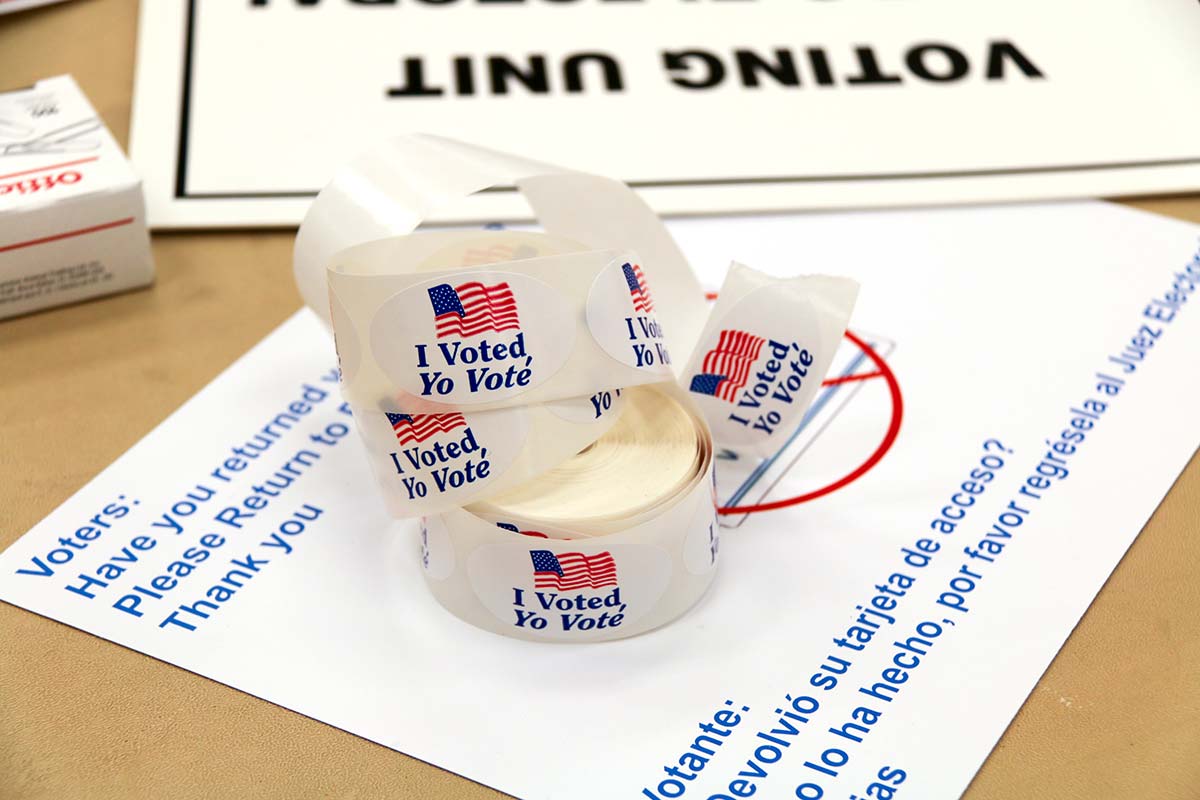
Ahead of the 2026 midterms, Latino voters are challenging assumptions about Trump, Democrats, and party loyalty.
Magazine, The Immigrant Experience
There is a habit in American politics of discovering Latino voters only when they move.
When they vote Democratic, they are described as a dependable base. When they shift Republican, analysts announce a historic realignment. When they drift again, the headlines change just as quickly: Latinos are coming back. Latinos are leaving. Latinos are turning right. Latinos are moving left.
But in homes across the country, voters are not speaking in those tidy political categories.
They are talking about rent.
They are talking about grocery bills that feel heavier each month, wages that do not stretch far enough, health care costs, housing, the future of their children, and whether immigration enforcement is making their neighborhoods safer or simply more fearful.
That was the deeper story that surfaced during an August 28 national briefing hosted by American Community Media (ACOM) in conversation with ethnic media from across the country. The gathering marked the launch of a new ACOM series examining America’s changing electorate ahead of the 2026 midterm elections, beginning with one of the most closely watched questions in American politics: What is happening with the Latino vote?
Journalist Pilar Marrero moderated the discussion, joined by Mike Madrid, Republican political strategist, co-founder of the Lincoln Project and author of The Latino Century; Maria Isabel Di Franco Quiñones, senior research director at Equis Research; Eli Valentin, assistant dean of graduate and leadership studies at Virginia Union University’s W. Franklin Richardson Graduate Center and author of Politicking in the Barrio; and Clarissa Martinez de Castro, vice president of the Latino Vote Initiative at UnidosUS.
Around them, ethnic media journalists logged in from publications and outlets serving Latino, Asian, immigrant and multilingual communities. Their questions came from the places where national political analysis often arrives late: neighborhoods, local newsrooms, immigrant families, working-class communities, and voters who do not necessarily experience politics as ideology, but as consequence.
The question hanging over the conversation was unavoidable.
Donald Trump made significant gains among Latino voters in 2024. For Republicans, those gains became evidence that a political transformation had taken place. For Democrats, they became a warning that a constituency long treated as reliably blue could no longer be assumed.
But two years later, the picture looks far more unsettled.
Di Franco Quiñones offered one of the briefing’s clearest reframings: what many called a realignment may be better understood as de-alignment.
She acknowledged that after 2024, even researchers closely tracking Latino voting patterns were asking whether something historic had happened. The shift toward Trump was real. But when researchers looked beyond one election and toward partisan identification over time, another story emerged.
Latino voters were not necessarily becoming Republicans.
Many were becoming less attached to Democrats.
More were identifying as independents. Some supported Republican candidates without embracing the Republican Party itself. Others had grown frustrated enough with both parties to move from one election to the next without the inherited loyalties that once shaped American political identity.
In Equis Research’s latest polling, Di Franco Quiñones said roughly 14 percent of Latino voters who supported Trump in 2024 now said they would support a Democrat in November 2026. Another 10 percent remained undecided.
That is meaningful movement.
But it is not the same as a homecoming.
A voter walking away from Trump is not necessarily walking back into the arms of the Democratic Party. That distinction became one of the most important themes of the briefing.
Madrid pushed it even further.
He argued that 2024 did not create this political instability. It merely made it impossible to ignore. In his view, the movement had been building since at least 2016, when younger Latino voters and working-class voters were already showing signs of discomfort with traditional Democratic politics.
By 2020, Madrid said, the warning signs were visible. Yet political institutions continued to interpret Latino voters through old assumptions.
For him, the mistake was not only Democratic.
Republicans, too, overstated what Trump’s gains meant when they spoke of a new multiethnic MAGA working-class majority.
The evidence, Madrid argued, did not point to a mass ideological conversion. It pointed to something more disruptive: voters increasingly untethered from party institutions.
He was deliberate in his language. Latinos may now be moving away from Republicans, he said, but that does not automatically mean they are moving toward Democrats.
That distinction matters because political parties often confuse rejection with loyalty.
Latino voters may be saying no before they say yes.
And for families living close to the economic edge, that no can come quickly.
Martinez de Castro reminded the briefing that the Latino electorate has long contained a swing element. She traced that pattern back decades, noting that Hispanic voters historically showed a willingness to split tickets and judge candidates individually.
For years, Republicans often failed to engage Latino voters at all—or antagonized them—while Democrats benefited from that distance. But benefiting from support, she suggested, is not the same as earning permanent allegiance.
Once Republicans began campaigning more intentionally in Hispanic communities, the weakness of that assumption became more visible.
There was another factor too: disappointment.
Promises made to Latino communities were not always followed by results. And each election introduces millions of younger voters with no personal memory of the old party relationships.
Martinez de Castro said that in every cycle, roughly 20 to 25 percent of Latinos going to the polls are new to the electorate.
That means every election contains a political generation being introduced to the parties for the first time.
They are not inheriting loyalty.
They are evaluating performance.
And increasingly, they are doing so through the lens of economic survival.
According to the UnidosUS research discussed during the briefing, four of the five leading concerns among Hispanic voters are pocketbook issues: cost of living, wages and jobs, housing costs and health care. Immigration ranks fifth. Martinez de Castro also noted that roughly eight in ten Hispanic working adults are part of the working class.
Those numbers explain more than any ideological label can.
For many Latino families, economics is not a policy category.
It is the supermarket receipt folded into a purse.
It is the rent notice waiting on the kitchen counter.
It is two jobs and still not enough.
It is the parent wondering whether a child’s doctor visit can wait another week.
It is the paycheck that disappears before the month does.
This is the kitchen-table arithmetic of American life, and it has no party registration.
Valentin gave that reality another name: a material movement before an ideological one.
In discussing the rise of progressive and Democratic Socialist candidates among some Latino voters, particularly in New York, Valentin urged caution against assuming that support for a candidate reflects full identification with a political ideology.
A Latino voter can support a democratic socialist without becoming a democratic socialist.
A working-class voter can support a populist Republican without becoming MAGA.
A voter can choose the candidate who speaks most clearly to rent, wages, housing and economic frustration without changing the label they use to describe themselves.
“Policy preference and ideological identity,” Valentin argued, are not the same thing.
He described much of the current movement as a form of repudiation—a rejection of political establishments that voters believe are not responding to the material conditions of their lives.
That idea helps explain why some Latino voters have supported insurgent candidates against longtime Latino officeholders in New York.
The simplistic interpretation would be that Latino voters are abandoning Latino representation.
Valentin argued otherwise.
Voters may instead be saying that representation alone is no longer enough.
Identity matters. But delivery matters too.
A surname does not pay the rent.
Symbolic inclusion does not lower the grocery bill.
And political familiarity does not guarantee trust.
The ethnic media journalists listening to the panel seemed to understand that tension instinctively.
Their questions kept returning to the distance between political messaging and community reality.
One journalist asked whether eligible Latino citizens who do not vote might continue to stay home—and what could reverse that pattern. Another asked what, exactly, was driving Latino dissatisfaction with Democrats. Another questioned whether Trump’s immigration enforcement policies could accelerate movement away from Republicans.
From Peninsula 360 Press came a question that cut through the polling language entirely:
Many people are afraid to vote. What would be the key message to encourage voters, and how can we reassure them?
That question carried the weight of lived community experience.
It reminded the briefing that political participation is not only about persuasion. For some families, especially in immigrant communities touched by aggressive enforcement, it can also be about fear, trust and whether civic spaces still feel safe.
Immigration, too, resisted easy political categorization.
For years, Latino voters were reduced to a single-issue stereotype: immigration.
Now, in some political circles, the pendulum has swung too far in the opposite direction, toward another false assumption—that because economic issues rank first, Latino voters no longer care about immigration.
Martinez de Castro rejected both.
Economic concerns dominate, but immigration remains deeply relevant, particularly when enforcement reaches into workplaces, neighborhoods and mixed-status families.
In the briefing chat, she noted that as of May, 30 percent of Hispanic voters said immigration enforcement was hurting their local economy.
That finding exposes another false divide.
For immigrant communities, immigration and economics are not always separate.
When a worker disappears from a job site, the economic effect is local.
When families avoid businesses, schools or public spaces out of fear, the economic effect is local.
When employers lose workers, when households lose income, when communities retreat inward, policy becomes something felt not only at the border but on the block.
The question, then, is not whether Latino voters care about immigration or the economy.
It is how those experiences overlap.
Di Franco Quiñones also pointed to research suggesting that voters respond better to practical language than ideological slogans. Asked about “Abolish ICE,” she said a “back to basics” approach tested more effectively—one focused on safety, opportunity, removing serious threats and protecting hardworking people rather than beginning with institutional language.
That may be one of the clearest lessons for both parties.
Speak to people before speaking to factions.
Do not confuse activist vocabulary with community vocabulary.
Do not mistake a campaign message for a relationship.
And do not arrive in a neighborhood only when there is an election to win.
The briefing repeatedly returned to the question of turnout, particularly among irregular voters—the very voters who helped fuel Trump’s gains in 2024.
Di Franco Quiñones noted that these voters may now be among the most politically fluid, yet they are also less likely to participate consistently in a midterm election.
That creates an uncertainty that no party can solve with demographic arithmetic.
The Latino electorate is younger than the country overall. It is economically diverse but disproportionately working class. It includes families whose roots stretch back generations and citizens who are entering their first election. It includes conservatives, progressives, independents and voters who reject all those labels.
It is also not static.
That may be the point Washington still struggles most to understand.
The Latino vote is not a possession.
It cannot be inherited, reclaimed or permanently captured.
It can only be earned.
Near the end of the briefing conversation, Martinez de Castro offered an observation about successful political approaches: speak in real terms about economic pain and solutions, and meet people in the spaces where they are.
That may prove more important than any argument about whether Latino voters are moving left or right.
Because the deeper movement is away from being taken for granted.
Away from being spoken about instead of spoken with.
Away from political identities that ask for loyalty without demonstrating understanding.
For both Republicans and Democrats, the message from this ACOM conversation was less comforting than a realignment narrative—but far more useful.
Latino voters are watching.
They are comparing promises to paychecks.
They are measuring rhetoric against what happens in their neighborhoods.
They are listening for who understands lo cotidiano—the everyday realities of work, family, belonging and survival.
And they are increasingly comfortable making every party earn the next vote.
That is not political confusion.
It is political power.
#LatinoVote #LatinoVoters #Election2026 #Midterms2026 #ImmigrantVoices #EthnicMedia #LatinoPoliticalPower #WorkingFamilies #VotingRights #AmericanDemocracy