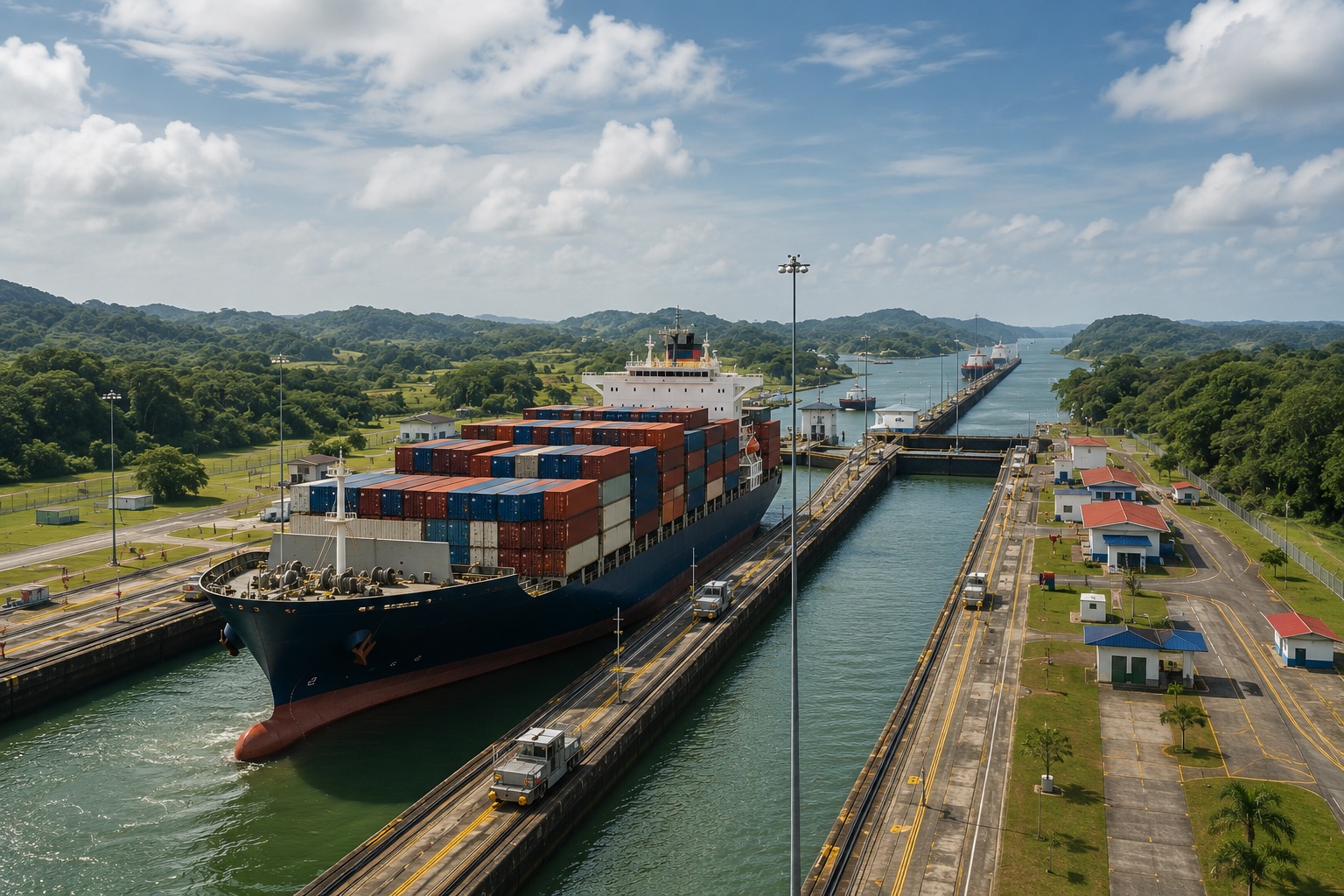
AI-Generated Image
A U.S. importer preparing Q4 inventory from China can do almost everything right.
Production is on schedule. Purchase orders are confirmed. Containers are booked. The receiving team is planning around an expected arrival at an East Coast or Gulf Coast distribution point.
Then the transportation assumptions begin to move.
The Panama Canal reduces available transit slots.
A carrier adjusts its canal surcharge.
Draft restrictions remain in play.
And suddenly a routine shipment is showing up in more conversations. Finance wants to understand the cost exposure. Sales wants to know whether inventory will arrive in time. Operations wants to know what the backup plan is.
The question is no longer simply:
What is our ocean freight rate?
It becomes:
At what point does staying with this route create more cost and business risk than changing it?
That is the decision importers should be preparing for now.
What the Panama Canal Authority Announced
On August 20, the Panama Canal Authority announced additional operating measures in response to reduced precipitation in the canal watershed.
Beginning September 3, 2026, daily availability at the Neopanamax Locks will fall to nine slots and Panamax availability to 25, for a combined 34. Beginning September 15, Panamax availability falls to 23, bringing the combined daily total to 32.
According to the source material based on ACP Advisory to Shipping A-29-2026, rainfall across the canal watershed from May through August was 34% below the historical average, while watershed inflows were 44% below average.
For importers, the takeaway is straightforward:
Canal capacity is tightening as Q4 approaches.
That deserves attention.
But it does not mean another late-2023 canal crisis is already underway.
The real question is what would have to change before the economics of the route stop working.
The Risk Is Concentrated, Not Universal
The greatest direct exposure is on cargo using all-water services from Asia to the U.S. East Coast and Gulf Coast through Panama.
That includes services calling at ports such as New York/New Jersey, Savannah, Charleston, Norfolk, and Houston.
Cargo moving directly across the Pacific to West Coast gateways such as Los Angeles, Long Beach, Oakland, Seattle, Tacoma, Vancouver, or Prince Rupert does not face the same direct Panama Canal exposure.
That distinction matters.
A global shipping headline can make a problem sound universal when the commercial risk is actually concentrated on specific lanes.
Instead of reconsidering every shipment, importers should identify the following:
- Which Q4 purchase orders are moving through Panama?
- Which SKUs would hurt the business most if they arrived late?
- Which shipments are tied to promotions, launches, or important customer commitments?
- Which containers have a commercially viable West Coast alternative?
A company does not need a new strategy for every container.
It needs to know which inventory deserves protection.
Cost Pressure Is Already Showing Up
The first visible commercial impact is on cost.
MSC announced on August 12 that it would revise its Panama Canal Surcharge for shipments from Southeast Asia, China, Korea, and Japan to the U.S. East Coast and Gulf Coast, effective September 12.
The revised charges are:
- $149 per 20-foot container
- $297 per 40-foot container
- $376 per 45-foot container
The timing matters.
MSC announced the adjustment before the ACP’s August 20 announcement, so the surcharge should not be described as a direct result of the latest slot reduction. It is better viewed as evidence that carriers were already responding commercially to canal operating conditions.
For a high-volume importer, those charges can add up quickly.
But the surcharge itself may not be the biggest financial risk.
Imagine a container holding inventory for a national promotion. A few hundred dollars in additional freight is frustrating.
Missing the selling window is something else entirely.
The same five-day delay could barely matter for a slow-moving SKU with two months of inventory on hand.
That is why transportation cost cannot be evaluated in isolation.
The Better Question Is Not “Should We Reroute?”
The better question is:
When does the expected cost of staying on the current route become greater than the cost of an alternative?
Consider two options.
One container remains on an all-water service to the East Coast.
Another enters through Los Angeles or Long Beach and moves inland by rail or truck.
The West Coast option may look more expensive on the freight quote.
But that comparison changes if the East Coast option begins carrying a meaningful risk of stockout, missed sales, customer penalties, or emergency replenishment.
A more useful decision equation is:
Ocean freight + surcharges + inland transportation + inventory carrying cost + expected delay cost + stockout exposure
That is closer to the true business cost of the route.
And it is the number that should drive the decision.
Why 32 Daily Slots Matter
The 2023 drought provides a useful benchmark.
Earlier in that disruption, canal capacity was also around 32 vessels per day. The more serious pressure developed later, when reservation availability moved toward 24–25 slots and waiting times increased significantly.
That sequence matters.
Thirty-two is not insignificant.
But it is also not the same as the more restrictive conditions that developed later in the 2023 drought cycle.
That gives importers room to prepare without exaggerating today’s conditions.
And preparation matters because the difficult logistics calls rarely happen when markets are calm.
They happen when inventory is already late, customers are asking questions, and every alternative suddenly costs more.
Four Signals Should Drive the Decision
Importers do not need to follow every canal statistic.
They need to watch the variables that can change their own economics.
1. Available Transit Slots
Thirty-two daily slots is the key September benchmark.
If availability falls materially below that level, capacity risk deserves another review.
2. Vessel Draft
Drafting is equally important.
The ACP postponed planned Neopanamax draft adjustments, including a 47.5-foot restriction that was pushed to October 1.
Fewer available slots are one issue.
Fewer slots combined with tighter effective vessel capacity would create a more serious commercial problem.
3. Actual Container-Service Reliability
Importers should watch the service carrying their freight, not simply the overall number of vessels near Panama.
Are schedules slipping?
Is space becoming harder to secure?
Are cutoffs changing?
Is cargo being rolled?
Those operational signals matter more to a supply chain director than a dramatic congestion headline.
4. Inventory Exposure
This may be the most important indicator of all.
A five-day delay means something very different for routine replenishment than for inventory supporting a major promotion or customer commitment.
Routing decisions therefore need to move beyond the lane.
They should reach the purchase order and SKU level.
One Route Does Not Have to Fit Every Shipment
A contingency plan does not mean abandoning Panama.
It may mean treating inventory differently based on business importance.
Protect: High-margin, promotional, time-sensitive, or stockout-risk inventory.
Maintain: Standard replenishment with comfortable inventory coverage.
Optimize: Lower-priority cargo where transportation economics matter more than speed.
That creates flexibility without overreacting.
Anton Tombu, Business Development Director at XCT Logistics, works with importers to look at those choices across the full shipment—from Asia origin planning and ocean routing to customs coordination, U.S. gateways, inland transportation, warehousing, and inventory requirements.
The goal is not to change routes because the market feels uncertain.
It is to understand when a different route actually makes better business sense.
Set the Triggers Before Conditions Become Urgent
A strong Q4 plan should define the conditions that trigger another routing review.
Capacity trigger: Panama announces another meaningful reduction below the September 32-slot level.
Draft trigger: Additional restrictions begin reducing effective vessel capacity.
Reliability trigger: Actual container-service delays move beyond the company’s tolerance.
Cost trigger: Canal-related charges materially change the East Coast versus West Coast landed-cost comparison.
Inventory trigger: A critical SKU falls below a predetermined level of coverage.
Those triggers will not be the same for every importer.
A retailer preparing for a holiday promotion has a different risk tolerance from a wholesaler holding eight weeks of replenishment inventory.
That is why the answer cannot come from the canal alone.
It has to come from the economics of the business.
The Bottom Line
Panama Canal restrictions deserve close attention heading into Q4.
But the current evidence does not support treating this as a repeat of the most restrictive phase of 2023.
What we know is clear:
Rainfall and watershed inflows are well below historical averages.
Available transit slots are being reduced.
Draft remains an important variable.
And carrier cost pressure has already appeared.
That gives importers something valuable:
time.
Time to identify which inventory is exposed.
Time to understand what an alternative gateway would cost.
Time to decide what conditions would cause the company to act.
The strongest supply chain decisions are not made by reacting fastest to a headline.
They are made early enough to keep several good options open.
Before committing the next wave of Q4 shipments, it may be worth pressure-testing the economics with Anton Tombu, Business Development Director at XCT Logistics—especially if your current Asia-to-U.S. strategy depends heavily on Panama.
A confidential supply chain review can help determine whether the current route still makes sense, which inventory may deserve additional protection, and what alternatives should be ready if conditions change.