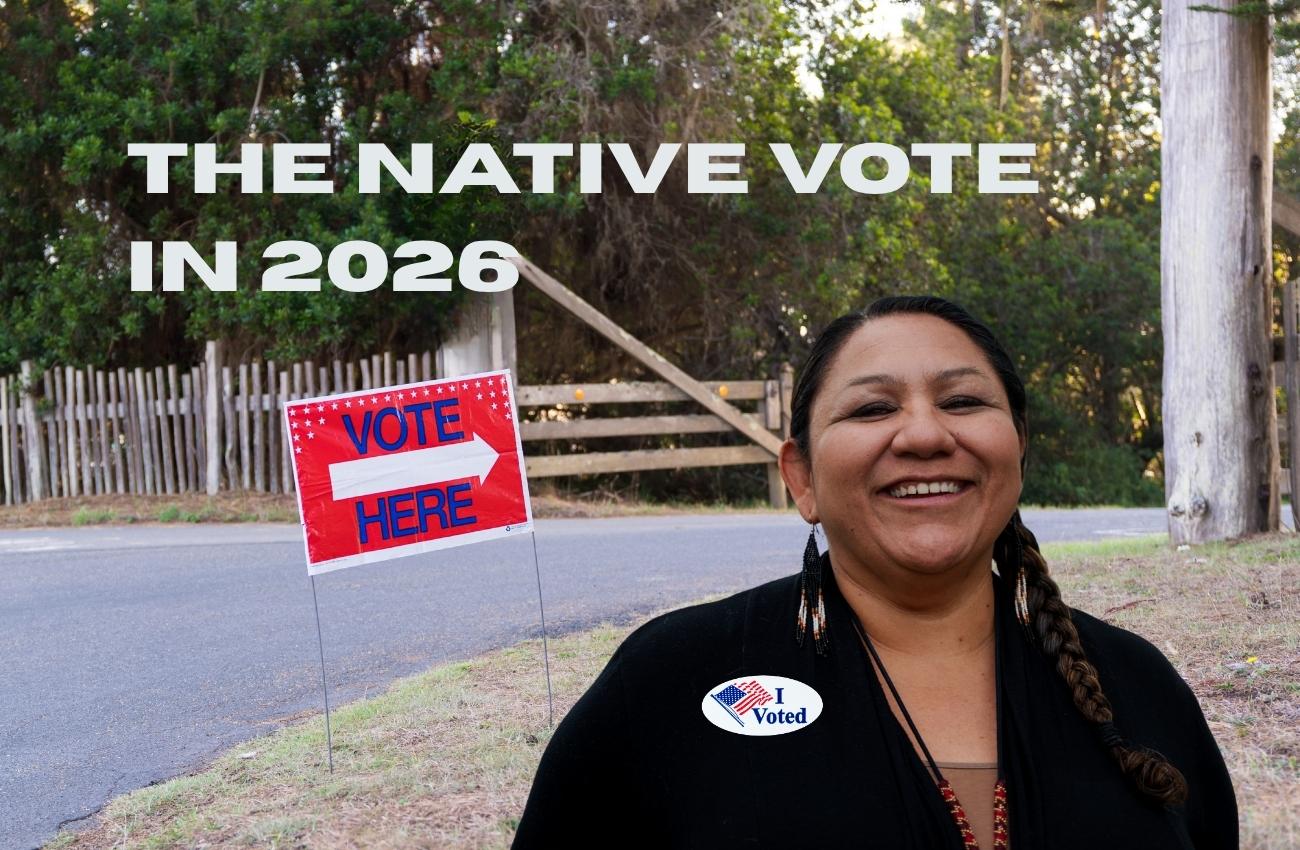
Voting barriers, rising Native leaders, and demands for real representation are shaping the 2026 midterms. Are candidates listening?
Magazine, The Immigrant Experience
Before Sage Phillips found her confidence in Maine’s State House, she felt afraid.
She and a colleague had traveled to Augusta to advocate for their communities. They knew what mattered to their people. Yet entering a government building carried the weight of a history in which Native families had too often experienced government power through the loss of land, children, and the freedom to determine their own future.
Then Phillips looked around and saw the building differently.
“This is the people’s house,” she recalled realizing. “We have a voice here, and this matters.”
That realization would become an invitation to other young people: come into the room, understand what is happening, and help shape what comes next.
As the 2026 midterms approach, Native communities are asking questions that reach well beyond party politics. Will tribal nations’ authority be respected? Can voters reach a polling place without spending hours on the road? Will their children learn their own history in school? Will candidates return to listen after the votes have been counted?
These questions belong in any honest conversation about America’s future. For those who have come here seeking opportunity, understanding this country also means learning about the peoples whose homelands we now call home.
An American Community Media (ACOM) briefing brought those concerns into conversation as part of its series on America’s changing electorate. Moderator Pilar Marrero was joined by Michael Roberts, president and CEO of First Nations Development Institute; Melissa Z. Rogers, professor of politics and policy at Claremont Graduate University; Judith LeBlanc, a citizen of the Caddo Tribe of Oklahoma and executive director of Native Organizers Alliance; and Phillips, a Penobscot Nation citizen and co-leader of the Wabanaki Policy Youth Initiative.
Together, they described an electorate whose influence can be consequential, but whose concerns too often disappear from national coverage.
Roberts began with that absence.
Native people, he explained, are frequently overlooked in political research, campaign outreach, and public discussion. When their votes finally become a headline, the reporting may rest on samples too limited to capture the communities being described.
He pointed to the competing stories told about Native voters after the 2024 presidential election. His organization’s research found that approximately 57 percent of surveyed Native voters supported Kamala Harris, challenging widely circulated exit-poll accounts suggesting overwhelming support for Donald Trump.
First Nations’ published findings describe a poll that expanded its Native sample and asked screening questions about tribal membership and family identification. Nearly eight in 10 respondents said tribal issues influenced their vote. The findings underscore why the way people are counted and questioned matters to the story that follows. www.firstnations.org
When a community is poorly represented in the research, its priorities can be misunderstood. Candidates may campaign on assumptions. Journalists may repeat them. The people themselves are left correcting a story they had little opportunity to tell.
Roberts urged reporters to look beyond a single image of the Native voter. Different nations, regions, and experiences shape what people need from government. Republican or Democrat is only part of that picture.
So is the distinction often drawn between economic concerns and cultural concerns.
Native families worry about grocery bills, housing costs, and the economy, he said. They also care about sovereignty, land, language, and traditions.
These priorities live together. A parent can worry about paying the rent while wondering whether a child will have the chance to learn an ancestral language. Both are questions about what a family can carry into the future.
Marrero then turned to Rogers and asked about the “cost of voting.”
It is a phrase that can sound technical until someone explains what it means in daily life.
It can mean finding a car. Paying for gas. Taking time away from work. Arranging care for a child or an elder. Traveling to update a registration and making another trip to cast a ballot.
Rogers described a historical example involving Duck Valley Reservation residents who faced a roughly 100-mile journey each way to reach the county seat in Elko, Nevada.
For a voter with reliable transportation and a flexible schedule, that trip is demanding. For someone without either, it can stand between the right to vote and the ability to exercise it.
Her research, informed by Native voting-rights organizations working on the ground, found that participation increases when registration and polling services are brought onto tribal lands.
People also gain greater confidence that their votes will count.
That is a reminder to anyone working to encourage civic participation: motivation matters, and so does whether the system makes room for people’s lives.
What about voting by mail?
Rogers explained why an option that sounds convenient can carry its own difficulties. In some reservation communities, residents do not receive mail at their homes. They must travel to collect it, often from postal locations with limited hours or difficult access.
A mailed ballot still depends on transportation, timing, and dependable service.
Address and identification requirements can create another hurdle. Some residents use post office boxes or live in places without conventional street addresses. Others do not drive and may lack a driver’s license. Requirements built around those documents and addresses can burden eligible voters whose circumstances differ from the assumed norm.
In cities, she said, the obstacles often take another form: long lines, limited voting hours, insufficient early-voting opportunities, and transportation problems.
The experience varies, but the question remains the same. How much must a person overcome to participate?
Many naturalized citizens know the care involved in learning a new civic system. Registration rules, unfamiliar ballots, and competing claims about elections can feel overwhelming. Rogers’ account shows why encouragement must be accompanied by clear information and practical support.
LeBlanc brought the discussion back to the communities doing that work.
Native Organizers Alliance supports tribes and Native community groups through organizing and training. Its approach begins with relationships and the priorities people identify for themselves.
LeBlanc described concerns that would be familiar around many family tables: better services for elders, economic opportunity, safer roads, and access to emergency medical care.
Yet these needs also sit within a distinct relationship between tribal nations and government.
“We’re dual citizens,” she explained, “citizens of our nations and citizens of the U.S.”
Tribal sovereignty is central to that relationship. It concerns Native nations’ authority to govern themselves, protect their communities, and shape their future.
Understanding that authority matters. Respect for Native cultures must extend to respect for Native decision-making.
LeBlanc also described an organizing tradition that considers the effects of today’s choices on generations still to come. In her account, caring for people and caring for the land are connected responsibilities.
That perspective gives political participation a longer horizon. An election can determine who holds office for the next few years. The decisions made in that office may shape a community’s land, health, and opportunities for decades.
Phillips offered a vivid example of young people taking that responsibility seriously.
After her early visits to the State House, she noticed a gap. Young Wabanaki people understood the issues affecting their communities, but too few were present where those issues were being debated.
The Wabanaki Policy Youth Initiative grew from a partnership between the Wabanaki Alliance and the Maine Environmental Education Association. What began as an introduction to advocacy became sustained work.
Phillips described approximately 20 Wabanaki and non-Wabanaki young people engaging with laws passed before they were born.
One major concern is the framework established by the 1980 Maine Indian land claims settlement. Phillips explained that it has restricted Wabanaki nations’ access to federal laws benefiting other tribes, leaving questions of sovereignty woven through their advocacy.
Another concern is what children learn in school.
Maine enacted its Wabanaki Studies Law in 2001. Phillips described the continued effort needed to make that teaching meaningful and consistent—and young organizers’ work to secure funding to strengthen it.
There is something deeply personal about that fight. Children should be able to open a textbook and encounter their people as living communities, with knowledge, leadership, and a future.
Other students need that understanding, too. It helps them recognize the people and histories of the place where they are growing up.
The youth initiative continued beyond the legislative session. Phillips described young organizers traveling through their homelands, registering voters, speaking with elders, and helping younger siblings understand issues they will one day vote on.
They were also meeting candidates and asking about their commitments.
“We don’t need you to write our laws and grant them to us,” Phillips said.
Her message was clear: communities want leaders who respect their ability to decide what they need.
For families who place great hope in the next generation, these young people offer a powerful example. They are learning from their elders while bringing their own energy and questions into public life. Their leadership is already underway.
The conversation also revealed how Native and immigrant communities can find common ground.
LeBlanc described organizing around the Florida immigration detention facility known as “Alligator Alcatraz.” In her account, the Miccosukee Tribe’s defense of its homeland and the Everglades helped build relationships among tribal advocates, environmental groups and immigrant organizers.
People came to the effort with different concerns: protecting land, defending tribal rights, safeguarding the environment and challenging the treatment of detained immigrants.
Those relationships show what solidarity can require in practice. Listen to the community directly affected. Understand its priorities. Respect its leadership. Then identify where people can act together.
A reporter’s question about the meaning of “Indigenous” brought another distinction into focus.
LeBlanc described a global understanding that includes original peoples in many parts of the world. Roberts shared that broader perspective while explaining that First Nations’ work specifically centers American Indian and Alaska Native communities and their sovereignty.
Some immigrants are Indigenous to Latin America or other regions. Those identities deserve recognition alongside an understanding that citizenship in a particular tribal nation carries its own meaning.
The discussion then returned to a question running through the entire briefing: who gets counted?
Looking toward the 2030 census, Roberts described longstanding concerns about undercounting, classification and distrust. Government contact can carry painful associations for families whose histories include child removal and land loss.
LeBlanc raised concerns about proposed census changes that could remove racial and ethnic information. The Native American Rights Fund warns that eliminating these questions could make Native communities harder to identify in federal data and complicate planning and voting-rights enforcement. It also notes that not every tribal program uses a census-based funding formula. narf.org
The proposal is not final. The National Congress of American Indians lists November 2, 2026, as the updated deadline for all written comments and provides guidance for participating. www.ncai.org
For communities already struggling to be seen, accurate information has real consequences. It helps make needs visible and gives people evidence with which to advocate for their future.
As the briefing closed, Marrero asked what journalists should pursue before Election Day.
Roberts called for attention to Native invisibility. Rogers urged reporters to examine whether people can vote safely and have their ballots counted. LeBlanc highlighted turnout and Native candidates. Phillips asked journalists to notice the young organizers doing the work.
Readers seeking practical support can visit the Native American Rights Fund’s voting resource hub for information and state guides. Its advocacy resources direct people experiencing voting problems to 866-OUR-VOTE (866-687-8683) and vote@narf.org. Local election offices can confirm requirements and deadlines. vote.narf.org
Back in Maine, Phillips and the young people she works with are carrying knowledge between their communities and the State House. They are asking questions, educating relatives and expecting candidates to answer.
For everyone who calls America home, their work deserves attention. A country’s promise grows stronger when its first peoples can exercise their rights, govern their nations and shape the future on their own terms.
#NativeVote2026 #TribalSovereignty #VotingRights #IndigenousLeadership #NativeVoices #YouthLeadership #Midterms2026 #TheImmigrantMagazine