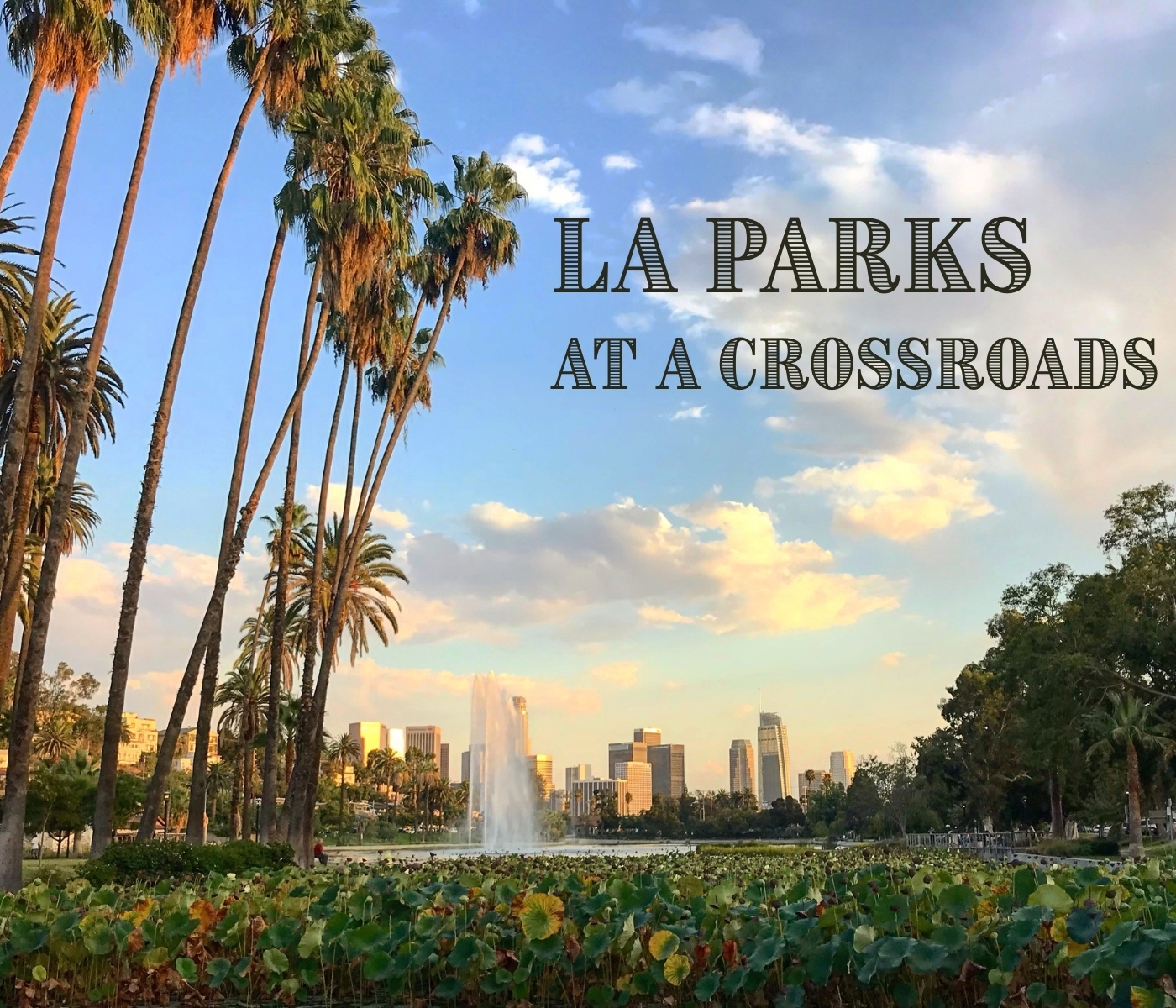
Your neighborhood parks are on the ballot. Learn how PRK would increase guaranteed funding without a new tax—and weigh the tradeoffs for other city services.
Magazine, The Immigrant Experience
Sunday should be a day when a working family can finally catch its breath.
A chance to take the children outside. Meet a neighbor. Visit a recreation center without squeezing the trip between work and school.
But at Connie Chung’s neighborhood park, the recreation center is closed on Sundays.
Chung, a managing partner at HR&A Advisors who worked on Los Angeles’ Park Needs Assessment, shared that experience during a conversation about Measure PRK. It brought a large funding debate down to something families understand immediately: a public facility can be nearby and still be unavailable when people need it.
For many Los Angeles residents, a park serves as the backyard their apartment does not have. It is where children learn to ride a bicycle, grandparents get some exercise, and neighbors become familiar faces.
When the gates close, the bathrooms fail or the playground becomes difficult to use, a community loses more than an amenity. It loses part of its everyday life.
This November, City of Los Angeles voters will decide whether Measure PRK should give parks a larger, more dependable commitment from the city budget. The proposed charter amendment would increase the minimum funding requirement over ten years without creating a new tax. It would direct more existing city money toward parks, leaving less available for other services. cityclerk.lacity.org
Understanding both sides of that choice matters. Families deserve functioning parks and clear answers about how the city will pay for them.
An American Community Media (ACOM) briefing explored those questions in a conversation moderated by Pilar Marrero. Councilmember Monica Rodriguez, who represents District 7 in the northeast San Fernando Valley, explained the proposal’s origins. Chung discussed the financial needs behind it.
Marrero also acknowledged assessment researcher Jon Christensen during audience questions. Supplemental ACOM reporting captured the experiences of Trust for Public Land organizer Dayana Molina and community advocate Sakae Koyama.
Across those perspectives ran a familiar concern: residents have been asking for basic improvements for years.
Rodriguez spoke about working-class neighborhoods in her district with too little park space and facilities that need attention.
She connected PRK to the approaching expiration of Proposition K, the voter-approved funding measure that has supported park construction and improvements for decades. Earlier attempts to establish a replacement had not succeeded, she said.
PRK would take another route. Rather than impose a new tax, it would change the city charter—the rules governing city operations—to require a gradual increase in parks funding.
Rodriguez wants that commitment to last beyond the priorities of any one council or annual budget.
Parks, she explained, compete with many other demands. Repairs can be postponed, staffing can remain thin, and a facility can slowly become harder to maintain.
Meanwhile, the consequences of neglect continue to grow.
“We’re going to either pay through liabilities claims,” she said, “or we’re going to invest in modernizing and protecting and fixing our park facilities.”
Her argument was that waiting carries costs, including the risk of injuries and claims against the city. Investing earlier, she believes, can help address those risks.
Residents know another cost of waiting: the outing cut short because a restroom is unusable, the program a child cannot attend, or the path an older neighbor cannot safely navigate.
Those experiences helped inform the city’s Park Needs Assessment.
Rodriguez said she secured approximately $1.5 million for the effort, which examined facilities and gathered community input about immediate needs and longer-term priorities.
“The best part about PRK is we’ve already got a plan,” she said.
A plan gives residents a starting point for accountability. They should be able to understand what needs fixing, what will happen first and how progress will be reported.
Chung’s analysis explained why the work is substantial.
Over the past 25 years, she said, the Department of Recreation and Parks acquired 117 additional parks and hundreds of acres. More land brought more responsibilities: grounds to maintain, facilities to operate, and people to serve.
Resources did not keep pace.
Staffing cuts dating to the Great Recession left a lasting strain. The department’s operating budget grew more slowly than the city’s overall operating budget, while some increases went toward benefits, utilities, and reimbursements to the general fund.
Families experience that pressure through reduced hours, maintenance problems, and fewer opportunities to use the spaces intended for them.
A new park can be a wonderful addition to a neighborhood. But someone still has to open it, clean it, care for the grounds, and supervise its programs.
Keeping a park welcoming is daily work.
The assessment identified approximately $15 billion in one-time capital needs, including renovations, facilities, and new parkland. It also estimated annual operating needs of around $600 million.
The distinction is important. A major repair needs funding to get completed. A recreation center needs continuing support to remain open afterward.
PRK would not immediately pay for every project. Chung described it as one significant funding strategy alongside partnerships and other approaches.
Nor should residents expect construction to begin at every park at once.
People who contributed to the assessment wanted the city to improve places they already use, Chung said. That means paying attention to ordinary needs that can make an immediate difference to a visit.
A working restroom. Reliable opening hours. A clean space. Enough staff to keep activities running.
These may be modest expectations, but they shape whether public investment feels real.
Reporter Nicole Chang asked Rodriguez which underserved neighborhoods would see improvements first and what residents could expect.
Rodriguez did not offer a guaranteed project list. She pointed to the assessment and the need to prioritize deteriorating facilities in neighborhoods with few alternatives.
She highlighted accessible playground equipment, sidewalks, restrooms, and other essentials.
Access begins before a child reaches the swings. A missing sidewalk can make the journey difficult for a parent with a stroller. A damaged path can stop someone using a wheelchair. Equipment that does not accommodate children with disabilities can leave a family on the sidelines.
A park should make room for the people who live around it.
Journalist Araceli Martinez raised another question: how would the city know whether PRK was helping close the green-space gap in Latino neighborhoods?
Rodriguez connected that concern to the heat experienced in parts of the San Fernando Valley. She described work to remove dead trees and stumps and prepare for planting across schools, parkways, and parks.
Her response reached beyond park boundaries.
Shade at a playground matters. So does the walk a family takes to get there.
Opening a schoolyard to the public can expand recreation space, but a paved yard without shade offers a different experience from green space where people can find relief.
Rodriguez discussed school partnerships while emphasizing the need to make those spaces greener as well as more accessible.
For immigrant families living in apartments or shared households, nearby recreation space can ease pressure on crowded homes. An affordable program can help a child build friendships. A public gathering place can help newcomers feel part of a neighborhood.
Those benefits grow when people can depend on the space.
ACOM’s additional reporting brought in Molina’s experience, beginning with soccer at Glassell Park as a teenager. Now a Trust for Public Land organizer, she works with young people still seeking dependable investment in green spaces.
Koyama, co-president of Friends of Elysian Park and president of Echo Park’s Park Advisory Board, described years of waiting for restroom improvements and a recreation-center room closed because of leaks. She called the deterioration “demolition by neglect.”
Their experiences show how a delayed repair can become a recurring part of neighborhood life.
The need for care is clear. The funding decision still requires scrutiny.
Under the current charter, the parks department’s minimum funding is calculated using 0.0325 percent of the assessed value of property in the city. PRK would gradually raise that rate to 0.065 percent, reaching the higher level in fiscal year 2036–37.
This is a formula for distributing city money. It is not a new tax rate charged to homeowners.
The official analysis says the measure would generate no additional revenue and reduce general-fund resources available for other city services. cityclerk.lacity.org
That is the tradeoff voters must consider.
Residents can want better parks and also ask how the city will meet other urgent needs. Both concerns deserve a serious answer.
Rodriguez argued that parks themselves support several public purposes. They serve young people and seniors, and recreation facilities can help communities during emergencies.
The broader question is how firmly those services should be protected in the budget—and what that commitment means for future spending choices.
PRK includes an emergency provision. During a declared fiscal emergency, the City Council could reduce the required allocation by up to 30 percent, but not below the current 0.0325 percent rate. cityclerk.lacity.org
That offers some flexibility while preserving a funding floor.
It does not remove the need for careful planning or public oversight.
Marrero asked whether residents would receive regular reports showing how money was spent and what had been accomplished. Chung said the assessment called for reporting, although she did not identify a settled format, such as a public dashboard.
Residents should continue asking for that clarity.
Which parks will receive attention first? How will neighborhoods with limited green space be prioritized? When will a promised repair be completed? Who will explain a delay?
The answers should be understandable to the people using the parks.
Opening hours, restroom availability, staffing, accessible equipment and completed repairs would offer practical ways to judge progress. These are possible measures of success, rather than guaranteed outcomes written into the proposal.
The city should also distinguish work funded through PRK from projects already supported by other sources. Families deserve to know what this measure changes.
A yes vote would approve the higher minimum funding requirement and its fiscal-emergency exception. A no vote would leave the current charter formula in place. Neither outcome makes existing park needs disappear. cityclerk.lacity.org
Before deciding, read the City of Los Angeles voter information pamphlet, including the impartial analysis, financial assessment and arguments on both sides. Visit LA County’s election website for voting information.
Then think about the park your family knows.
Can children enjoy its playground? Can an elder reach its programs? Are the bathrooms open? Is there a place to sit comfortably when the afternoon gets hot?
Those questions bring the ballot measure home.
PRK asks Los Angeles to decide how much existing city funding it should commit to these shared spaces. Voters deserve to understand the choice, and residents deserve to see the results of any new commitment.
Learn what the measure would do. Ask how your neighborhood’s needs will be addressed. Make an informed decision when you vote.
A Sunday afternoon at the park may seem like a small thing. For a family with few other places to gather, it can mean a great deal.
#MeasurePRK #LosAngelesParks #ParkEquity #GreenSpace #HealthyNeighborhoods #LAVotes2026 #ImmigrantFamilies #TheImmigrantMagazine