Voting rights advocates from across the South warn that a new Supreme Court ruling could dismantle hard-won protections against racial gerrymandering and weaken the political voice of Black and other communities of color nationwide.
Magazine, The Immigrant Experience
More than 42,000 Louisianians had already cast their ballots when they were told their votes might not count.
Some had mailed their ballots weeks earlier. Others had stood patiently in early voting lines, believing that participation still mattered. Then, with the stroke of a pen, Louisiana Governor Jeff Landry suspended the state’s congressional elections after a U.S. Supreme Court ruling upended the maps.
For many Black voters, it felt painfully familiar.
In America, the right to vote has often expanded just enough to inspire hope, only to be narrowed again when that hope begins to shift the balance of power.
That is why civil rights leaders across the South are sounding the alarm.
In late April, the U.S. Supreme Court struck down Louisiana’s congressional map containing two majority-Black districts in Louisiana v. Callais. Voting rights advocates say the decision could severely weaken Section 2 of the Voting Rights Act of 1965—the cornerstone legal protection against racial gerrymandering.
If they are right, the consequences will reach far beyond Louisiana. They could reshape political representation for Black, Latino, Asian American, Native American, and immigrant communities across the country.
Within hours of the ruling, legislators across the South began discussing emergency redistricting sessions. In Louisiana, Alabama, Tennessee, Mississippi, Georgia, and beyond, advocates say lawmakers moved quickly to redraw maps in ways that could reduce Black representation in Congress, state legislatures, and local governing bodies.
To understand what is at stake, American Community Media convened a national briefing with some of the South’s leading voting rights attorneys, organizers, and elected officials. Moderated by Pilar Marrero, associate editor of American Community Media, the conversation brought together Mitchell Brown of the Southern Coalition for Social Justice, Amir Badat of Fair Fight Action, Louisiana Public Service Commissioner Devante Lewis, Jerome Dees of the Southern Poverty Law Center, and Rhianon Wagner of Alabama Values. Each speaker came with a different vantage point—legal, political, and grassroots—but their message was strikingly consistent: this is not merely a dispute over maps. It is a coordinated effort to reduce Black political power at the very moment communities of color are exercising it most effectively.
The Slow Dismantling of Section 2
Mitchell Brown, senior counsel in the Voting Rights Section at the Southern Coalition for Social Justice and coordinator of the Southern Leadership for Voter Engagement (SOLVE) Network, began by explaining the legal stakes with the clarity of someone who has spent years defending communities whose voices are too often diluted rather than denied.
Section 2 of the Voting Rights Act protects against two forms of discrimination: vote denial and vote dilution. Vote denial includes policies that make it harder to cast a ballot. Vote dilution occurs when district lines are drawn in ways that weaken a community’s collective political voice.
A neighborhood can turn out in large numbers, Brown noted, but if that community is split among several districts—or packed into a single district to limit its influence elsewhere—its votes carry less power.
For more than four decades, plaintiffs challenging discriminatory maps did not have to prove that lawmakers openly intended to discriminate. They only had to show that the maps had the effect of diminishing minority voting strength.
That standard reflected congressional intent. In 1982, Congress amended the Voting Rights Act specifically to remove the requirement of proving discriminatory intent.
The Supreme Court’s new direction, Brown said, effectively reverses that decision.
Now, communities may have to produce direct evidence that legislators intentionally sought to disenfranchise minority voters.
“Legislators are very cunning people,” Brown observed. “They’re not going to say the quiet part out loud.”
History’s Familiar Rhythm
Amir Badat, voting rights attorney and political strategist with Fair Fight Action, situated the ruling within a larger American pattern.
Every major expansion of Black political power, he said, has been followed by a coordinated backlash.
After the Civil War and Reconstruction, Black Americans registered and voted in unprecedented numbers. Black elected officials held office throughout the South.
Then came violent suppression and laws designed to neutralize those gains.
Poll taxes, literacy tests, grandfather clauses, and white primaries were written in race-neutral terms but crafted with unmistakable discriminatory intent.
The Voting Rights Act of 1965 broke that cycle. Black voter registration surged, and representation expanded dramatically.
The current Supreme Court, Badat argued, is dismantling those protections in stages.
First, Shelby County v. Holder in 2013 eliminated the federal preclearance process that required certain states to obtain approval before changing election laws.
Then, Brnovich v. Democratic National Committee narrowed challenges to voter suppression laws.
Now, Louisiana v. Callais threatens the vote-dilution protections that helped minority communities secure fair district maps.
“This attack on voting rights didn’t start with Callais,” Badat said. “This has been in the works.”
Louisiana: Democracy Interrupted
Devante Lewis, Louisiana Public Service Commissioner, brought the legal debate down to street level.
When the Supreme Court issued its ruling, early voting for Louisiana’s congressional races was already underway. More than 42,000 voters had cast ballots.
Then Governor Jeff Landry suspended the election using emergency powers historically reserved for hurricanes and natural disasters.
Lewis called it unprecedented.
Voters were left asking whether their ballots would count, whether they still needed to vote, and whether the rules had changed in the middle of the game.
At the same time, lawmakers advanced a new congressional map that would reduce Black opportunity districts from two to one.
In another extraordinary move, legislators removed racial demographic breakdowns from the official bill analysis—information routinely included in Louisiana redistricting legislation for decades.
“It is mass confusion and chaos down here,” Lewis said.
Lewis also described broader efforts to weaken Black political power, including eliminating elected positions and judgeships disproportionately held by Black officials.
To him, these actions formed a coherent pattern: reducing Black representation wherever it gains traction.
Alabama: Democracy on Trial
Jerome Dees, policy director at the Southern Poverty Law Center, described Alabama as both a symbol and a testing ground.
During Reconstruction, Alabama elected Black members of Congress. After federal protections receded, it would take 115 years before another Black Alabamian was sent to Washington.
That history gives current litigation in Alabama special significance.
The Supreme Court’s 2023 ruling in Allen v. Milligan initially affirmed that Alabama likely violated Section 2 by failing to create a second district where Black voters could elect their preferred candidate.
Yet subsequent legal maneuvering has generated confusion about which district maps govern upcoming elections.
Dees warned that changing timelines and conflicting public messages create fertile ground for misinformation.
His advice was direct: if there is an election on the calendar, show up and vote.
Bigger Than Lines on a Map
Rhianon Wagner, policy narrative and coalition partnerships director at Alabama Values, brought the conversation back to its moral center.
“This is bigger than lines on a map,” she said. “This is about power, representation, and whether Black communities and other communities of color will have a meaningful voice in our democracy.”
Wagner argued that today’s race-neutral legal doctrines mirror the logic of Jim Crow.
Then, discriminatory systems rarely stated openly that they were intended to disenfranchise Black voters.
Now, colorblind frameworks can ignore structural racism while producing the same unequal outcomes.
She also reminded national observers that Southern Black-led organizations have carried this work for generations.
“This is not a parachute moment,” Wagner said.
The struggle for fair maps did not begin when national cameras arrived, and it will not end when they leave.
Why Immigrant Communities Should Pay Attention
During the briefing’s question-and-answer session, ethnic media journalists asked what this ruling could mean for Latino, Asian American, and Native communities.
The answer was unequivocal.
Section 2 has protected minority communities nationwide—not only in the Deep South.
It has helped Latino voters secure representation in states such as California and Texas. It has supported Native American voting rights in the Dakotas and Nebraska. It has protected Asian American communities where population growth has increased demands for equitable representation.
Jerome Dees emphasized that these struggles are interconnected.
When those in power come for one community, they rarely stop there.
For immigrant communities, the implications are immediate.
Representation shapes public schools, healthcare access, labor protections, language access, housing, and immigration policy.
When communities lose political voice, they lose influence over the institutions that shape everyday life.
Representation Is a Daily-Life Issue
The briefing repeatedly underscored that voting rights are not abstract legal concepts.
Who serves on a school board affects curriculum and disciplinary policies.
Who controls county commissions influences transportation, health services, and policing.
Who wins congressional seats shapes national debates over immigration reform, civil rights enforcement, and economic opportunity.
Gerrymandering alters who gets to make those decisions.
That is why the stakes extend far beyond the courtroom.
The Response: Organize, Educate, Vote
Despite the legal setbacks, the panelists described a surge of civic engagement.
In Louisiana, Black voters made up a much larger share of early ballots than usual after the ruling.
Residents testified through the night in legislative hearings.
Organizations in Alabama and Mississippi mobilized mass rallies and voter education efforts.
Coalitions launched toolkits and resource hubs to help communities navigate changing election rules and counter misinformation.
The message was not despair.
It was disciplined resistance.
Democracy’s Ongoing Test
The Supreme Court’s ruling in Louisiana v. Callais may prove to be one of the most consequential voting rights decisions of this decade.
If it substantially weakens Section 2, the decision could accelerate efforts to redraw political maps in ways that reduce the influence of Black voters and other communities of color across the country.
The implications reach far beyond the South.
For immigrants, Latinos, Asian Americans, Native Americans, and all communities striving for fair representation, this moment is a reminder that civil rights protections are only as durable as the public’s willingness to defend them.
The right to vote has never been guaranteed by law alone.
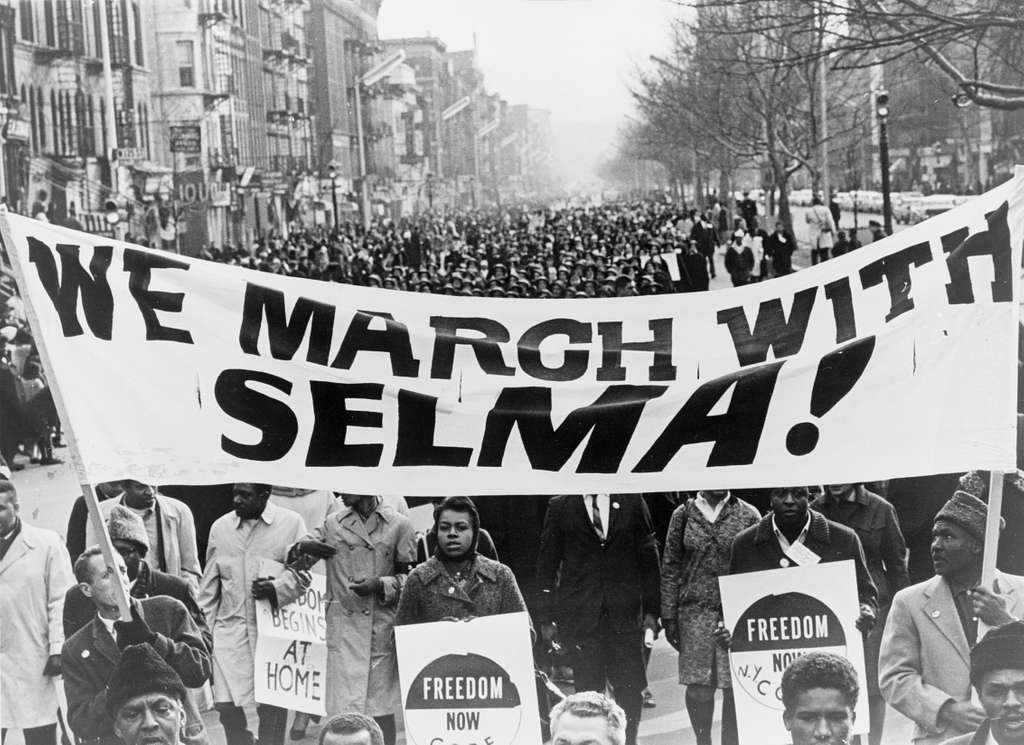
It has survived because ordinary people refused to surrender it—marching across bridges, challenging unjust laws, organizing neighbors, and showing up at the polls even when the system was designed to silence them.
That same spirit was unmistakable throughout this American Community Media conversation.
In the voices of attorneys fighting in courtrooms, organizers building power in church basements, and voters waiting until four in the morning to testify against discriminatory maps, there was no trace of resignation.
Only resolve.
The question before the country is not whether these attacks on voting rights are real.
They are.
The real question is whether Americans of every background—Black, Latino, Asian, Native, immigrant, and white—will recognize that democracy is strongest when every community is fully seen, fairly represented, and heard.
Because when one group’s voice is diminished, the promise of democracy is diminished for us all.
And when people refuse to be erased, history has shown that democracy can still bend toward justice.
Stay proud, stay grounded, stay true.
#VotingRights #BlackVote #Section2 #FairMaps #CivilRights #Democracy #ImmigrantVoices #TheImmigrantMagazine