
Even as affordability worries grow and housing costs soar, there’s a bright spot for would-be first-generation homebuyers—particularly in California’s long-underserved ethnic minority and immigrant communities. The California Housing Finance Agency (CalHFA) is rolling out the California Dream For All Shared Appreciation Loan Program for qualified Californians to help would-be buyers meet down payment and/or closing costs on home mortgages. Applications for the program are open between February 24th and March 16th, 2026. For some 1,500 to 2,000 beneficiaries, the program plants the seed for intergenerational wealth and changes real lives one at a time.
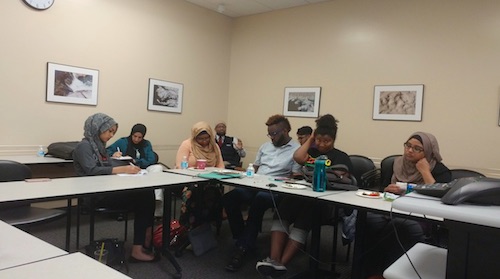
At a recent ethnic media briefing hosted by American Community Media (ACOM), panelists gathered to discuss how the program works, who qualifies, how to apply, and why now is the time to take a leap of faith to become a homebuyer. Speakers included Eric Johnson, Information Officer with the Marketing and Communications Division at CalHFA; Shonta Clark, Senior Loan Consultant and CalHFA Program Educator, Home Counselor, and Broker in Southern California; Imelda Manzo, Broker-Owner of Premier One Realtors; Willie Lee, Homeownership Program Director at the Shalom Center; and Tiffany Duvernay Smith, a Dream for All program beneficiary.
CalHFA spokesperson Eric Johnson framed the program as a remedy to a deep and painful legacy of exclusion. “In the Black community, homeownership rates today are lower than in 1968, when the Fair Housing Act was passed,” he noted. “Programs like Dream for All are meant to make an incremental change—but an important one.”
Under the program, eligible first-generation buyers receive a loan for up to 20% of a home’s purchase price. The catch? When the home is eventually sold, transferred, or the mortgage is paid in full, the buyer repays the original loan plus a share of the home’s appreciated value. It’s not just a key to the front door—it’s a blueprint for lasting equity.
To qualify, applicants must not have owned a home in the past seven years, and their parents must not currently own one either. Foster youth and those who never had access to inherited wealth are also eligible. It’s a recognition, Johnson said, that generational wealth is often passed down through property—and its absence is a defining factor in racial and economic inequality.
But this isn’t just policy talk. Speaker after speaker gave voice to the everyday realities behind the statistics.
“We can afford rent—$3,500 a month, sometimes more,” said Shonta Clark. “But we don’t have $100,000 saved up for a down payment. That’s where the Dream for All program makes the impossible, possible.”
Clark, who works with New American Funding, described helping buyers close in less than 30 days—even those who initially doubted they could qualify. She partners with churches and community groups in Los Angeles, like the Shalom Center and NHS, to offer HUD-approved counseling and educate first-time buyers on their options. “This is how we prevent homelessness,” she said. “By empowering renters to become owners.”
Imelda Manzo, a real estate broker in Riverside County, spoke from both personal and professional experience. An immigrant herself, she bought her first home in her 20s and now serves a predominantly Latino clientele. “Our community is mortgage-ready—we have jobs, we have credit. What we lack is the down payment,” she said. “This program is the key.”
Manzo recalled walking alongside one family—the Artiaga-Sanchez—for over four years to prepare them for homeownership. “They just closed using Dream for All,” she said, her voice thick with emotion. “That’s what this program does: it changes the narrative.”
Willie Lee, Homeownership Program Director at the Shalom Center, highlighted the Asian community’s unique challenges. “Asian buyers face a double barrier: financial and cultural,” he explained. “Terms like ‘escrow’ and ‘shared appreciation loan’ are daunting, especially with language gaps. Even those fluent in English struggle with legal jargon.”
Lee emphasized the importance of culturally competent, multilingual counseling. “We need workshops, trusted messengers, and one-on-one guidance. Without that, people hesitate. And when they hesitate, they delay dreams.”
One of the most stirring testimonies came from Tiffany Duvernay Smith, a Dream for All beneficiary whose story moved many to tears.
“I went from homeless to homeowner,” she said simply. A longtime advocate around homelessness and mental health, Duvernay Smith never imagined she’d own a home in Los Angeles. She credits the program—and her decision to work with two Black women professionals, including Clark—for making her dream real.
“I had all the barriers: low credit, unstable income, doubt,” she said. “But I applied anyway. You’re already locked out—until you dare to knock.”
Her voice, steady and proud, carried more weight than any statistic. “Your name is on the deed. That’s yours. And that changes everything.”
Stepping back, the program’s urgency is clear. In California’s sky-high housing market, where even modest homes can cost over $700,000, down payments often start in the six figures. For immigrant families who didn’t benefit from generational wealth or who send money back home, saving that kind of cash is a mountain too steep to climb alone.
But with Dream for All, the state is not only offering a leg up—it’s affirming a vision of equity. A vision where Latino, Black, Asian, and immigrant families don’t just survive, but root and rise.
How to Apply
Registration for the next round of Dream for All loan vouchers will be open from February 24 to March 16, 2026. Interested applicants can explore eligibility, required documents, and video walk-throughs on CalHFA’s official website: www.calhfa.ca.gov/dream
If you applied in previous rounds and received a voucher, you can access the Voucher Portal to check your status, request an extension, or download your voucher.
Program Highlights Include:
- Eligibility guidelines for first-time and first-generation homebuyers
- Required documents
- Examples of shared appreciation loan repayment
- Homebuyer education and counseling resources
- Video tutorials
As the application window nears, speakers urged community members to reach out now. “Don’t disqualify yourself before you begin,” said Johnson. “Talk to a counselor. Take a class. This is about dreams—but also about strategy.”
In the words of Duvernay Smith: “What’s for you is for you. Don’t let fear or doubt keep you from what might be waiting.”
Because sometimes, the American Dream isn’t dead. It’s just waiting for an invitation.