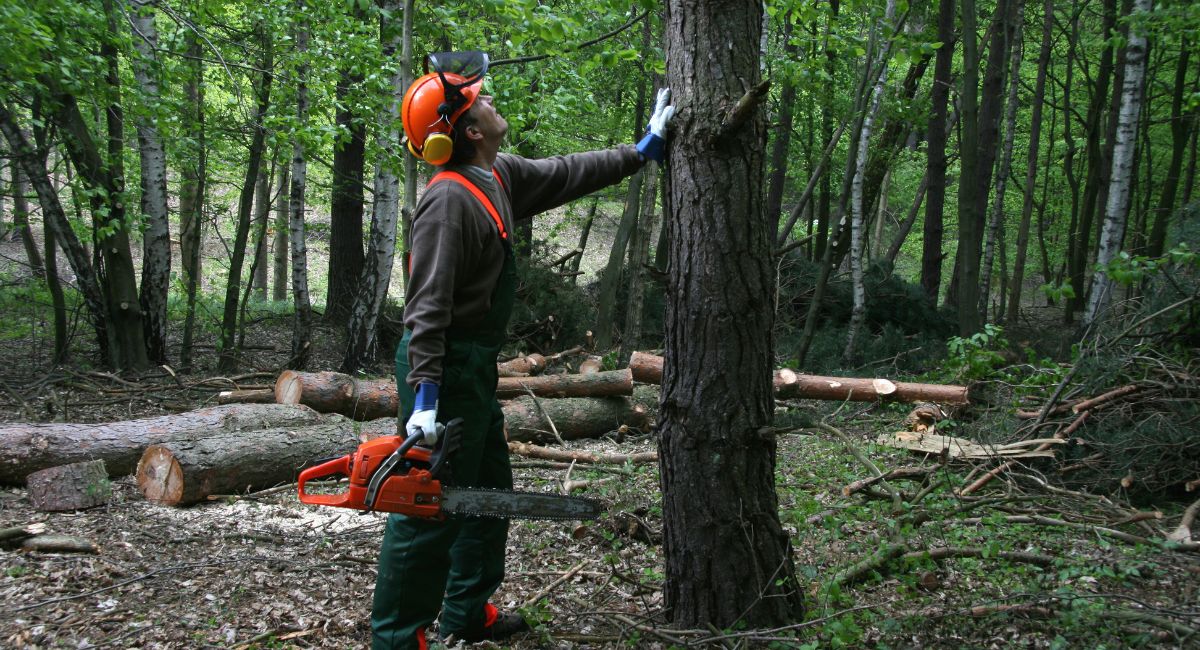
California’s labor market is tightening even as its environmental demands intensify. Entry-level opportunities are shrinking across industries, while the state confronts an escalating wildfire crisis—one that requires more workers, stronger coordination, and sustained investment in land management.
Within that tension, however, a different story is emerging: a workforce sector that is expanding, not contracting—offering stable, skilled careers tied directly to climate resilience and public safety.
At a recent American Community Media (ACOM) ethnic media briefing, that opportunity came into focus. Industry leaders and journalists gathered to examine the California Forestry Sector Jobs Initiative, a statewide effort to connect more Californians to careers in forest management, wildfire prevention, and environmental stewardship.
As traditional pathways narrow—from tech to consulting—California’s forestry sector is moving in the opposite direction. Demand is increasing. Roles are diversifying. And entry points into the workforce are widening.
Matt Dias, President and CEO of the California Forestry Association, framed the initiative not as a short-term response to crisis, but as a long-term investment in workforce development.
“We’re trying to build new partnerships and expand awareness,” Dias said, pointing to the initiative’s goal of connecting more Californians to careers across the forestry sector.
A Workforce with Room to Grow
At its core, the initiative is about scale—expanding both the size and diversity of California’s forestry workforce.
The sector already supports an estimated 55,000 workers across its full supply chain. As wildfire prevention, forest restoration, and climate resilience efforts intensify statewide, we anticipate a significant increase in that number.
At the time of the briefing, approximately 90 job openings were listed through the initiative, with projections to reach up to 200 in the near term.
But the opportunity is not limited to numbers—it is structural.
Forestry today is not a single profession. It is an interconnected system of careers, including:
- Forest management and wildfire mitigation
- Skilled trades such as electrical, welding, and heavy equipment operation
- Transportation and logistics roles
- Office-based careers in HR, IT, communications, and sales
“It’s a deeply integrated chain,” Dias said, emphasizing that opportunities exist across multiple skill levels and educational backgrounds.
For job seekers navigating an uncertain labor market, that breadth matters.
Entry Points Without Barriers
One of the most significant takeaways from the briefing was accessibility.
Unlike many sectors that require specialized degrees or prior experience, forestry offers multiple entry points:
- Entry-level roles with immediate hiring potential
- On-the-job training and internal advancement pathways
- Vocational opportunities requiring minimal formal education
- Academic tracks through universities and community colleges
“You don’t have to come with experience,” Dias noted. “We will help you every step of the way.”
This flexibility positions the sector as a viable option for a wide range of workers—including recent graduates, career changers, and individuals re-entering the workforce.
Connecting Opportunity to Underserved Communities
While the initiative emphasizes expansion, it also acknowledges a critical gap: awareness.
Historically, forestry jobs have been concentrated in rural regions of Northern and Central California, with recruitment largely limited to local communities. As a result, urban populations—particularly immigrant and underserved communities—have remained largely disconnected from these opportunities.
Dias addressed the issue directly.
“We have not done a good job reaching out,” he said, referring to the industry’s limited engagement with diverse populations.
The current initiative aims to change that by building partnerships beyond traditional recruitment zones—particularly through ethnic media, community networks, and educational institutions.
For immigrant communities, the implications are significant.
These are jobs that offer:
- Stable, living wages
- Clear advancement pathways
- Transferable skill development
- Long-term career growth
But access depends on visibility—and visibility depends on outreach.
Geography and Mobility
One practical consideration raised during the briefing was location.
Many forestry jobs are based in rural areas, including regions like Humboldt County, Redding, and the Central Valley. While this reflects the geographic reality of forest ecosystems, it also introduces barriers for workers based in urban centers.
Dias acknowledged that relocation is often part of the equation, though not universally required.
At the same time, he suggested that some workers are increasingly open to transitioning into rural or semi-rural environments—particularly when stable employment is part of the equation.
Still, for many immigrant families, relocation involves broader considerations—housing, schools, and community support—which will shape how accessible these opportunities truly are.
Climate Work as Economic Opportunity
Underlying the entire initiative is a larger shift: the alignment of climate response and job creation.
California’s wildfire crisis has transformed forest management from a seasonal concern into a year-round priority. Over 11 million acres have burned in the past decade, affecting air quality, water systems, and public health across the state.
Addressing this requires sustained labor—workers trained in prevention, restoration, and long-term land management.
Dias framed this as both a responsibility and an opportunity.
Healthy forests, he noted, provide more than economic output. They support clean air, water systems, and environmental stability—benefits that extend to all Californians.
In this context, forestry jobs are not just employment—they are infrastructure.
Reframing the Industry
The briefing also addressed long-standing perceptions around forestry, particularly the role of logging.
Dias emphasized that modern forestry integrates environmental stewardship with resource management. Activities such as thinning, prescribed burns, and selective harvesting are part of a broader strategy to reduce wildfire risk and maintain ecosystem health.
Rather than opposing environmental goals, the sector is increasingly positioned as part of the solution.
This reframing is critical for public understanding—and for attracting a new generation of workers motivated by both economic and environmental impact.
A Sector at a Crossroads
The California Forestry Sector Jobs Initiative arrives at a pivotal moment.
On one side is a growing demand for labor—driven by climate pressures, environmental policy, and infrastructure needs.
On the other is a workforce that is aging, unevenly distributed, and not yet reflective of California’s diversity.
Bridging that gap will determine whether the initiative fulfills its potential.
The opportunity is clear.
The challenge is ensuring that access keeps pace.
#ImmigrantVoices #ClimateJobs #GreenCareers #WorkforceDevelopment #EthnicMedia #CaliforniaJobs #EconomicOpportunity #ACOM