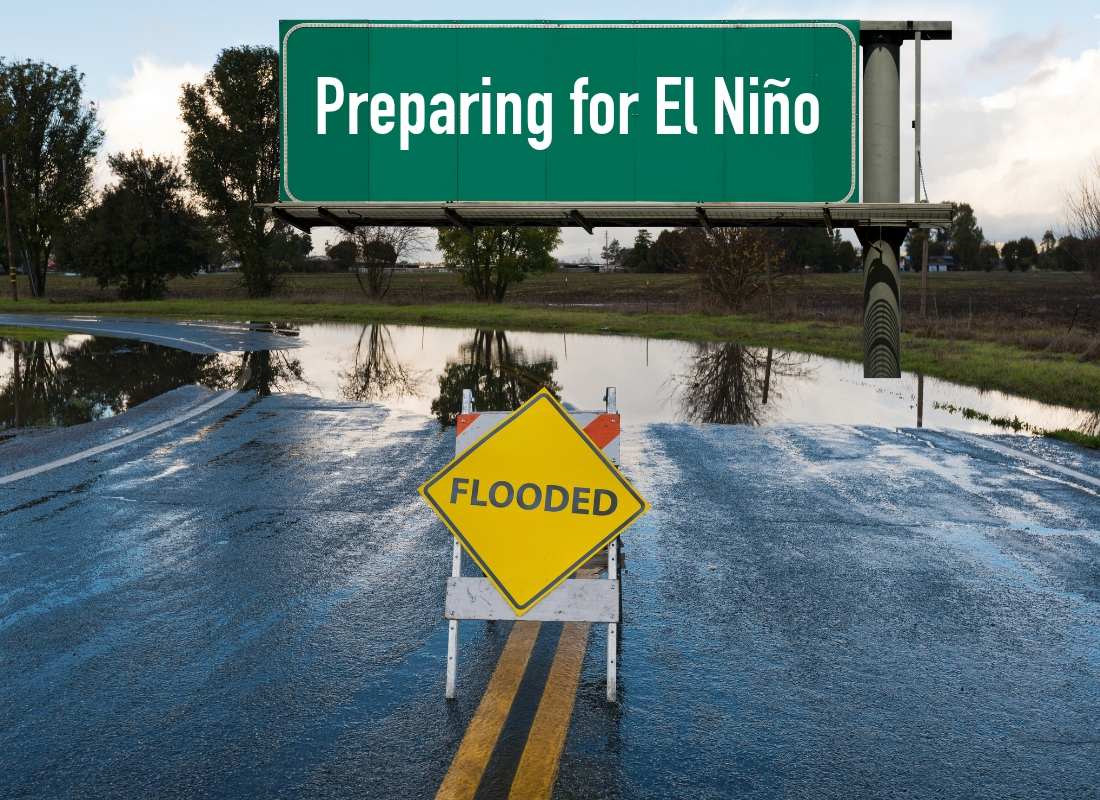
Find your county’s emergency alerts, plan how your family would evacuate, and get ready for flooding and power outages before the next storm.
When farmworkers finish a late shift, Laura Jaramillo and her colleagues sometimes find families gathered around a game of lotería. That’s where a conversation about El Niño can begin. Jaramillo is a promotora, or community health worker, and the environmental health manager at Visión y Compromiso. If people are at work during the hours when a workshop would normally take place, her team can come later. Families can hear what California is preparing for and ask what it means for them.
If the county tells you to leave while you’re still at work, who can pick up your children? If the power goes out and your mother needs help getting down the stairs, who can get to her? And if a warning comes in English, will everyone in your household understand what to do?
California officials urged families to work through those questions before the next storm. At a statewide media briefing, they said a strong El Niño was already underway and warned that its effects could vary widely across the state. American Community Media and California Black Media hosted the briefing in partnership with Ready California, an initiative of the California Governor’s Office of Emergency Services, known as Cal OES. Briefing overview and speaker roster
Regina Brown Wilson, executive director of California Black Media, moderated the briefing, which offered simultaneous interpretation in Spanish, Mandarin, and Korean. She pointed out that people facing some of the greatest risks can also have the hardest time getting information in time to use it. Matt Notley, Cal OES deputy director of crisis communications and public affairs, asked ethnic and community media to help reach people the state’s usual channels often miss. For someone still getting to know a new city, the first storm warning they hear may come from the local radio station they listen to on the way to work.
What El Niño can mean where you live
Some of the Spanish-speaking families Jaramillo works with hear El Niño and think of heat, drought, or a shortage of water. That’s what some remember learning about it before. Her team begins with that experience and explains why California is preparing for heavy rain and flooding this season. When you’ve lived in places where the same weather pattern had different effects, it’s a fair question to ask what it could mean for you here.
Dr. Michael Anderson, California’s state climatologist at the Department of Water Resources, explained that warmer-than-usual waters in the equatorial Pacific can change the path of the jet stream, the high-altitude winds that steer storms. Where those storms come ashore, how much moisture they carry, and how soon the next storm follows all help determine where the heaviest rain falls and how much damage it can do.
California has seen strong El Niño seasons play out in very different ways. In 1983 and 1998, widespread precipitation brought damaging conditions to parts of the coast. In 1992, Southern California received more rain than usual while Northern California remained dry during a multiyear drought. Anderson noted that even the seasons with lower overall totals had a period of unusually heavy precipitation. For a family trying to get home on a Friday evening, a single storm can matter more than how the winter averages out.
Along the coast, unusually high tides can worsen flooding when they coincide with a storm. Inland, heavy rain can swell creeks and cover roads. Near a recent wildfire burn scar, intense rain can send mud, rocks, and debris downhill. And a family that lives well away from a river can still be affected if the road to work, school, or a medical appointment floods. Pay attention to the forecast for the places you travel through as well as the one for your address. National Weather Service flood guidance
How California is preparing before the rain
Brian Ferguson, chief deputy director of Cal OES, said the state was working with local and tribal partners to get crews and equipment where they might be needed before storms arrive. Emergency managers are watching places that have flooded before, neighborhoods below recent wildfire burn scars, and coastal communities where storm conditions could overlap with unusually high tides.
Ferguson said the state is paying particular attention to older adults, people with disabilities, people experiencing homelessness, and residents who need information in a language they understand. Advance notice can give someone who relies on a caregiver time to coordinate with that person. For a resident without a car, it can mean a few extra minutes to reach someone who can help them leave.
At the Department of Water Resources, some of the work comes down to a simple question. When local crews need sandbags, how quickly can they get them? Laura Hollender, the department’s deputy director for flood management and dam safety, said local agencies have keys to containers stocked with sandbags, plastic sheeting, and other flood-fighting supplies. The state can move those supplies as forecasts change. The department also holds workshops with emergency managers and first responders so they can plan together before they’re called out to a flood.
In the Central Valley, Hollender said, the department inspects and maintains about 1,600 miles of levees and related flood structures. It also helps local agencies plan for problems at specific sites. That work matters to the families who live and work behind those levees, sometimes miles from the river. For residents, knowing where the county posts road closures and evacuation instructions is one of the ways to stay informed as conditions change.
Bringing preparedness to farmworker families
During the briefing, Jaramillo shared photos of Visión y Compromiso’s Central Coast team bringing information to farmworkers in Santa Barbara during the harvest season. The people doing that outreach live in the communities they serve. They shop in the same stores and go to the same places of worship. By the time they show up with information about a storm, they may already be familiar faces.
Jaramillo said the organization was in its third year of working with California’s preparedness campaign and was reaching communities in 14 counties. Its teams go door to door, call residents, hold workshops, and share information on social media. They also make time after work, when families who spend the day in the fields may be easier to reach. That’s how a statewide message can find its way to a lotería game, where people have time to talk through what it means at home.
That approach matters in a state where a household might hear about a storm from several places in a single day. One person catches the news on the radio. Another sees a message in the family chat. Someone else hears that a road has closed but has no idea when the message was sent. A familiar person who can point the family to the county’s official update can help them make a decision with the information they have.
What your family can do before the next storm
Sign up for alerts where you live and work. California’s county directory takes you to the alert system for your area. If you live in one county and work in another, you can sign up for both. Check which languages your local system offers. If someone in your family needs help registering, sit down with them and do it together. Save the county’s official page in your family chat so everyone knows where to check for updates. Find your county’s emergency alerts.
Agree on who does what if you have to leave. Choose a place to meet and a backup route in case your usual road closes. Decide who can pick up the children, take the pets or help a relative who needs a ride. If your family shares one car, talk through what happens if the person driving it is at work. Follow local evacuation orders promptly. Stay out of floodwater on foot or in a vehicle, and never drive around a barricade. Water can hide a washed-out section of a road you’ve driven for years. National Weather Service guidance on what to do during a flood
Pack a bag you can grab and keep supplies at home. Start with the things you use every day, such as medications, glasses, and a phone charger. Write important numbers on paper and add copies of documents you may need if you leave. At home, set aside drinking water, shelf-stable food, flashlights, and batteries in case the power goes out and it’s safe to stay. If someone relies on powered medical equipment, ask the equipment provider about backup power and your utility about its medical baseline program. Make sure another person knows where the supplies are and whom to call. California’s disaster preparedness guides
Check your flood risk and review your coverage. Find out whether your home, workplace, or children’s school is near a creek, a low-lying road, the coast, or a recent burn scar. Look up where your county posts road closures and evacuation notices. Ferguson also urged residents to review their insurance early. Whether you rent or own, ask your insurer what your policy covers and when any flood coverage would take effect. Give yourself time to read through the answers while the weather is calm.
The next time your family is together, over dinner or a game of lotería, pull up your county’s alert page and make sure everyone knows how to find it. Talk about where you’ll meet if you’re told to leave. Then call the person who came to mind while you were making that plan. They may be glad you thought of them before the rain came. Ready California preparedness resources
#ElNiño #CaliforniaWeather #FloodSafety #ReadyCalifornia #EmergencyPreparedness #ImmigrantCommunities #TheImmigrantMagazine