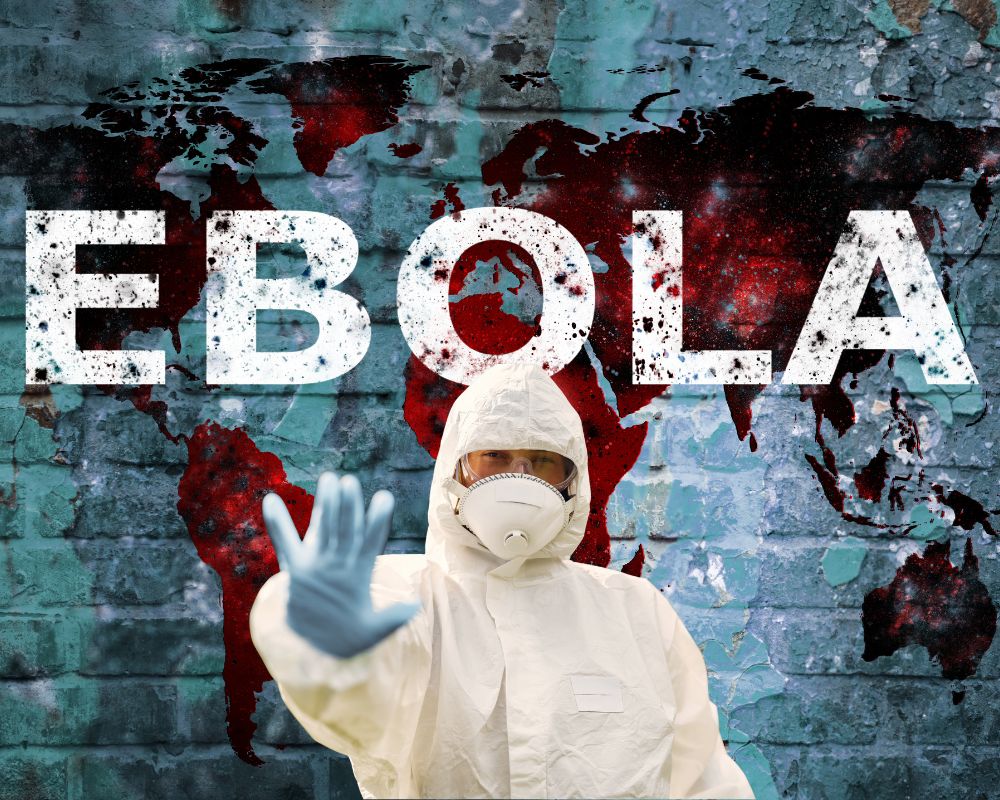
As Ebola spreads through the Democratic Republic of Congo and Uganda, the outbreak is exposing more than a public health emergency—it is revealing the interconnected roles of conflict, misinformation, fragile healthcare systems, the African diaspora, and the urgent need for sustainable African-led solutions.
Magazine, The Immigrant Experience
When Ebola returns, it rarely announces itself with a headline.
It arrives as a phone call from home. A WhatsApp message asking for prayers. A family member wiring money for medicine, clean water, or hospital bills. For many Africans living abroad, the hardest part isn’t simply knowing an outbreak is happening. It’s knowing what to believe.
As the World Health Organization monitors a growing Ebola outbreak in the Democratic Republic of Congo (DRC) and neighboring Uganda, health officials are working to contain the rare Bundibugyo strain of the virus, for which there is currently no approved vaccine. While confirmed cases continue to rise, experts believe the true scale of the outbreak is likely much greater because conflict, displacement, and weak healthcare infrastructure make surveillance and reporting difficult.
Yet the numbers tell only part of the story.
This outbreak is exposing a much bigger crisis—one rooted in decades of armed conflict, fragile health systems, shrinking international assistance, misinformation, and the difficult realities facing millions of Africans at home and across the diaspora.
Those questions took center stage during a recent conversation between American Community Media (ACOM) and ethnic media journalists from across the country. Moderated by health editor Sunita Sarabji, the briefing featured infectious disease specialist Dr. William Schaffner and conflict researcher Dr. Rachel Sweet, whose expertise helped explain the medical and political realities shaping the outbreak.
The briefing also inspired broader reporting by Pamela Anchang, founder and editor-in-chief of The Immigrant Magazine, who spoke with members of the African diaspora and diaspora leaders to understand how the outbreak is being experienced far beyond the affected regions. Their perspectives revealed not only concern for loved ones back home but also the emotional toll of distance, the spread of misinformation, the persistence of stigma, and the growing determination among diaspora communities to invest in long-term, African-led solutions.
More Than a Medical Emergency
Understanding the current outbreak begins with understanding the virus itself.
According to Dr. William Schaffner, Ebola remains one of the world’s deadliest infectious diseases—not because it spreads easily, but because it exploits moments of human care. The virus spreads through direct contact with infected bodily fluids, often while families are caring for sick relatives or preparing loved ones for burial.
This outbreak presents an additional challenge. Unlike previous Ebola epidemics, the Bundibugyo strain has no licensed vaccine. That means public health officials must rely on rapid diagnosis, contact tracing, isolation, community education, and, above all, trust.
Trust quickly emerged as one of the defining themes throughout the briefing.
Dr. Rachel Sweet, whose research has taken her deep into communities across eastern Congo, challenged one of the most persistent misconceptions surrounding Ebola—that communities reject public health guidance because they do not understand science.
Instead, she argued, many people have learned through decades of conflict and political instability to question institutions that have repeatedly failed or harmed them.
“The conflict isn’t separate from the health response,” she explained. “It is intertwined with it.”
That insight changes how we understand the outbreak.
Containing Ebola is not simply about delivering medicine. It is about rebuilding confidence in the institutions responsible for delivering it.
The Diaspora Watches From Afar
That same uncertainty extends thousands of miles beyond Central Africa.
To understand how the outbreak was unfolding beyond the headlines, The Immigrant Magazine spoke with members of the Ugandan, Congolese, Cameroonian, Nigerian, Tanzanian, and Sierra Leonean diaspora.
What emerged challenged another common assumption.
There was no single African response to the outbreak.
Concern varied by country, personal experience, and access to reliable information. Some questioned whether international media accurately reflected conditions on the ground. Others described checking on relatives several times a day, wiring money home for medicine and clean water, postponing travel, and worrying that another Ebola outbreak would once again reinforce harmful stereotypes about Africa.
Nearly everyone, however, shared one concern.
Misinformation.
Rumors spread quickly when reliable information is scarce, making fear almost as contagious as the virus itself. Several community members also spoke about the lingering stigma associated with Ebola, recalling how previous outbreaks affected travel, employment, and public perception long after the health emergency had ended.
Despite those challenges, the diaspora continues to do what it has always done—support families, strengthen communities, and invest in Africa’s future through remittances, philanthropy, professional expertise, and civic leadership.
The question is no longer whether the diaspora wants to help.
It is how that commitment can become more coordinated, more strategic, and more sustainable.
Beyond Emergency Response
If the briefing diagnosed the crisis, HRH. Hon. Rev. Dr. Pamela Fomunung, CEO and Group Chair of AFRICA’S BRAIN BANK® Global, offered a vision for moving beyond it.
For Dr. Fomunung, every Ebola outbreak reinforces the same lesson: Africa cannot continue relying on emergency interventions after disaster strikes. Lasting resilience requires investment in healthcare systems, clean water infrastructure, scientific research, medical education, and African-led innovation long before the next crisis emerges.
“As People of African Descent, we are made from the same stock, cut from the same cloth,” she wrote. “Ebola outbreaks in DRC and Uganda mean we all are affected.”
That philosophy has shaped AFRICA’s BRAIN BANK® Global’s work. During the COVID-19 pandemic, the organization launched Operation Borehole 55 in Sierra Leone, restoring clean water and renewable energy to a maternity clinic originally established during the previous Ebola epidemic. Today, the organization is advancing initiatives that include Africa’s Medical Center in Ghana and an AI-enabled telemedicine network designed to strengthen healthcare access across the continent.
For Dr. Fomunung, Africa’s greatest challenge is not a shortage of talent.
It is the lack of sustained investment in African-led solutions.
The Lesson Beyond Ebola
The current outbreak will eventually be contained.
What happens afterward will matter even more.
Whether the world continues treating outbreaks as isolated emergencies—or finally invests in stronger healthcare systems, trusted institutions, scientific research, and local leadership—will determine how prepared we are for the next crisis.
That responsibility does not belong to governments alone. It also belongs to global institutions, philanthropic partners, researchers, and the African diaspora, whose expertise, investment, and commitment continue to shape Africa’s future.
If this outbreak has revealed anything, it is that Africa does not lack resilience, talent, or leadership.
It never has.
What it has lacked is sustained investment in the people and institutions already building the future.
And perhaps that is the most important story this Ebola outbreak has to tell.
#Ebola #DRC #GlobalHealth #AfricanDiaspora #ImmigrantMagazine #PublicHealth #HealthEquity #CentralAfrica #DiasporaVoices #CommunityJournalism