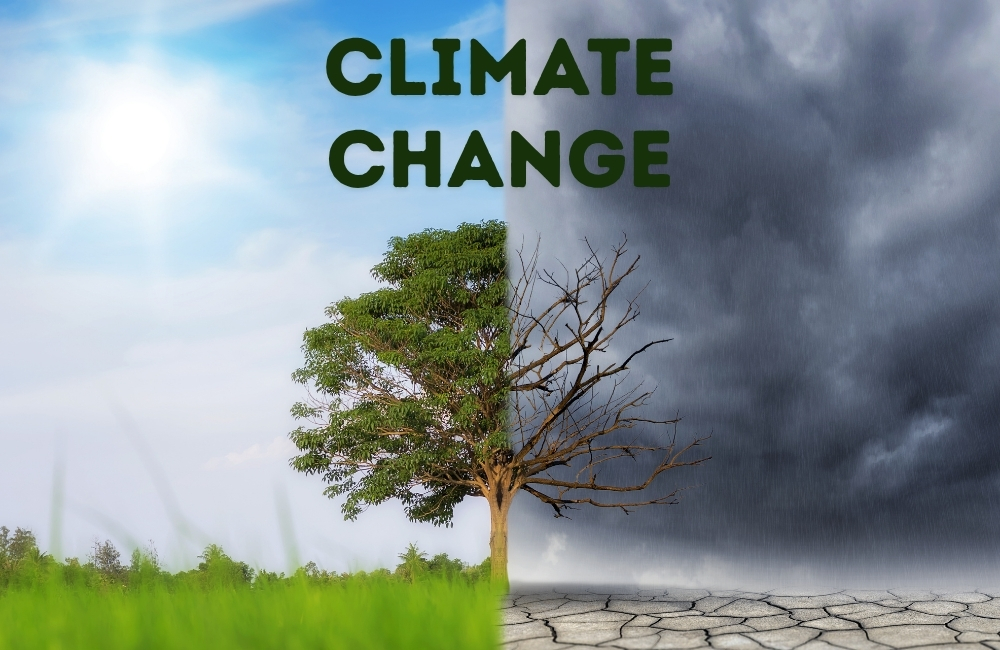
From extreme heat and wildfire smoke to housing and health, immigrant communities are confronting a climate crisis that politics can no longer afford to ignore.
Climate change may have disappeared from Washington’s political conversation, but try telling that to the immigrant family living beside a diesel corridor, the senior breathing wildfire smoke in Chinatown, the renter trapped in an aging apartment during triple-digit heat, or the worker whose paycheck depends on staying outside when the air itself becomes dangerous.
For many immigrant communities, climate change never left the radar.
It moved into the home, the lungs, the workday, the neighborhood power outage, and the emergency warning that may—or may not—arrive in a language someone understands.
That was the deeper message running through a recent conversation between American Community Media (ACOM) and ethnic media, titled “Climate Change — The Issue That Dropped Off the Political Radar.” Moderated by ACOM Associate Editor Pilar Marrero, the briefing brought journalists together with three voices approaching the climate crisis from different directions: science, community organizing and global grassroots resilience.
Karen McKinnon, associate professor of statistics and the environment at UCLA, studies climate variability and its connection to extreme weather. Sheena Robinson, Resilience Projects Director at the Asian Pacific Environmental Network (APEN), works with Asian American, immigrant and refugee communities on climate, housing, energy, and neighborhood resilience. Mark Valentine, senior adviser to the Omega Resilience Awards and founder of ReFrame It, has worked with grassroots changemakers across Africa, India and Latin America.
Together, they made one point difficult to ignore: climate change is not only a planetary crisis. It is a lived inequality.
And for ethnic media, the challenge is not simply to report that temperatures are rising. It is to show who is absorbing the consequences, who has the fewest options for escaping them, and who is already building solutions from the ground up.
Marrero opened the conversation with a contradiction: political attention may have moved elsewhere, but extreme heat, drought, wildfire smoke, flooding, and other climate threats have not.
McKinnon explained that climate change is altering the baseline beneath the weather people already experience. Natural climate patterns still occur, but they now unfold in a warmer world.
El Niño, for example, is a naturally occurring phenomenon. Scientists do not yet fully agree on how climate change may affect El Niño itself, McKinnon explained. What they do know is that an El Niño event today occurs on top of an already warmer climate, intensifying potential temperature impacts. A warmer atmosphere can also hold more moisture, increasing the potential for heavier precipitation during extreme rainfall events.
When it comes to heat, McKinnon was especially clear.
“Every heat extreme, it’s hotter because of climate change,” she said.
For immigrant and working-class communities, that sentence raises immediate questions.
Who has air conditioning? Who controls the thermostat? Who works outside? Who lives in housing that traps heat? Who can afford to miss a shift when temperatures become dangerous?
Climate change does not arrive equally.
The person working from an air-conditioned home experiences extreme heat differently from the farmworker, landscaper, construction worker, delivery driver, or other worker whose livelihood can require exposure to it. A homeowner who can upgrade insulation or install air filtration has choices that many renters do not.
That is where climate science becomes a story about inequality.
McKinnon shared a smaller, deeply human example. While visiting Colorado, her daughter wanted to camp outside in her grandparents’ backyard. Wildfire smoke had moved into the area.
McKinnon had to tell her no. It was not safe.
Climate change, in moments like that, stops being a graph. It becomes childhood memory and the changing assumptions people carry about summer and the outdoors.
Immigrant families may understand environmental memory in another way, too.
Migration creates lives connected across borders. Families carry memories of rainy seasons, farms, coastlines, rivers and neighborhoods from one country into another. Today, someone can experience wildfire smoke in California while calling relatives abroad who are confronting drought, flooding or other environmental disruptions.
Climate change can touch both the homeland and the new home.
That makes it an inherently transnational story—one ethnic media is particularly equipped to tell.
Robinson brought the conversation directly into immigrant neighborhoods.
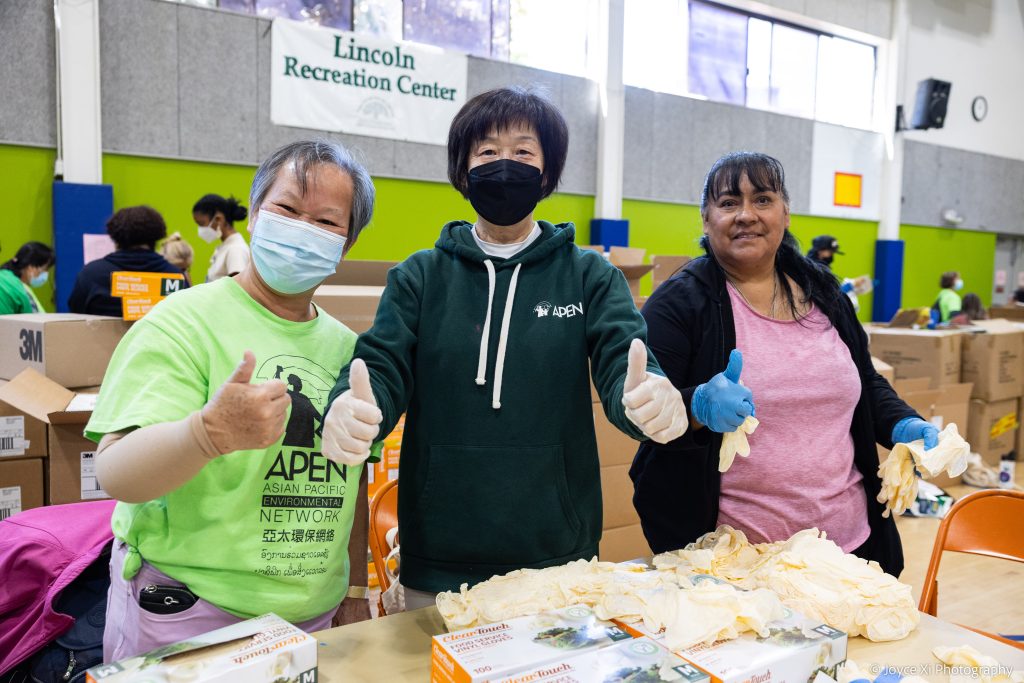
For roughly three decades, APEN has organized Asian American, immigrant, and refugee communities, many of them living near refineries, industrial pollution, and heavily trafficked corridors.
Those communities did not enter the climate crisis from a position of environmental safety.
Climate change instead adds another layer to existing burdens.
A family already exposed to diesel pollution may then endure wildfire smoke. An older, poorly insulated apartment can trap heat and polluted air. A power outage during extreme temperatures can create another health threat.
But Robinson did not present these communities merely as victims. She presented them as architects of their own resilience.
Her most vivid example was the Lincoln Recreation Center in Oakland’s Chinatown, a neighborhood institution serving roughly 1,000 people each day.
In the morning, seniors arrive for tai chi, table tennis, and dance. Children come for after-school programs. Teenagers use the basketball courts. Residents receive help with CalFresh, voter registration, and other services, with programming offered in languages including Cantonese, Mandarin, and Vietnamese.
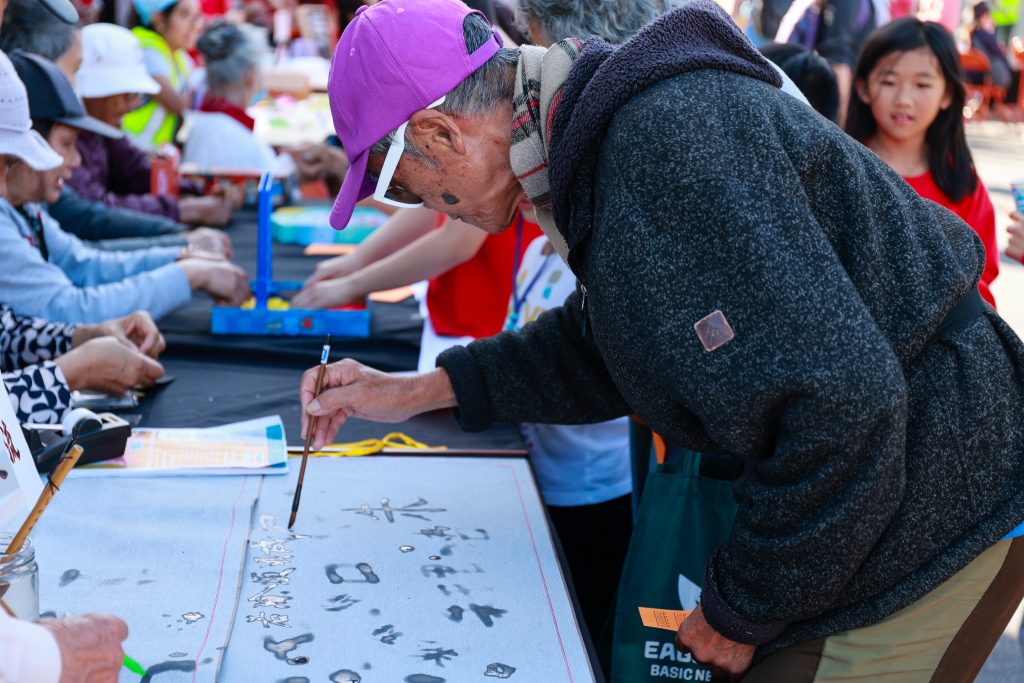
For generations of immigrants, the center has been more than a building. It is a place where newcomers find services, elders find community, and families return across generations.
Robinson called it the “Pearl of Chinatown.”
Its importance became especially visible during the pandemic, when immigrant seniors faced isolation, language barriers around public health information, and fears connected to anti-Asian violence. Volunteers organized walking patrols and helped elders reach grocery stores and medical appointments.
The experience demonstrated something that climate planning can easily overlook: during a crisis, people need more than infrastructure.
They need trusted infrastructure.
That principle is now shaping the center’s future.
After years of advocacy, Robinson said, the Lincoln Recreation Center was preparing to become Oakland’s first municipal resilience hub. Plans include rooftop solar, battery backup power, improved heating and cooling, air filtration, clean-air space, overnight shelter capacity and a community kitchen that can help keep food and essential medicines safe during outages.
But Robinson kept returning to something that cannot be installed on a roof.
Connection.
“Resilient communities are organized communities,” she said. “Resilient communities are connected communities.”
That may be one of the briefing’s most important lessons for immigrant America.
Much of climate adaptation is presented as an individual responsibility: buy an air purifier, install solar panels, improve insulation, purchase backup power.
But renters do not control their roofs. Low-income households may not be able to afford expensive upgrades. Seniors and newcomers may need language assistance to navigate emergency systems.
Community resilience changes the equation. Instead of asking whether every household can privately purchase protection, it asks whether trusted neighborhood institutions can provide protection collectively.
Robinson also challenged the language used to sell climate policy.
A phrase such as “equitable decarbonization” may work in a government report. It means little to many families trying to pay rent and keep their children healthy.
APEN instead talks about healthy and habitable homes.
Suddenly, policy becomes tangible: cleaner indoor air, fewer asthma triggers, safer temperatures, and housing improvements that do not price residents out of their neighborhoods.
For ethnic media, that translation is critical.
Language access determines who receives emergency information, who understands public programs, who participates in civic decisions, and whose voice is heard.
Valentine widened the lens beyond the United States.
Through the Omega Resilience Awards, he has worked with grassroots leaders in Africa, India, and Latin America confronting environmental pressures alongside economic and political ones.
His warning was important: not everything labeled “green” is automatically just.
Mining the minerals required for clean-energy technologies can benefit consumers in wealthy countries while damaging land and livelihoods elsewhere. Renewable-energy projects can serve national climate goals while imposing significant costs on local communities.
For diaspora audiences, that raises difficult questions.
Who pays for the clean-energy future? Who gets the benefits? Who loses land? Who is displaced? Who gets to define progress?
Immigrant communities often live on both ends of that global equation—using new technologies in one country while maintaining family and cultural connections to places where the materials, land, or labor behind those technologies originate.
Climate justice requires seeing the entire chain.
Valentine also challenged one of the most celebrated words in conversations about vulnerable communities: resilience.
People who have survived poverty, displacement, disaster, or environmental injustice are often praised for being resilient.
But, Valentine observed, many people do not want to be congratulated for surviving crises they did not create. They would rather not have been forced through them.
For immigrant communities, the distinction is especially powerful.
Immigrants are constantly praised for resilience. They endure. They rebuild. They work. They begin again.
But resilience can become a dangerous compliment when it replaces justice.
There is little virtue in repeatedly forcing the same communities to absorb hardship and then admiring their ability to survive it.
True climate justice cannot simply make vulnerable communities better at surviving.
It must reduce what they are being asked to survive.
That point also speaks directly to journalism.
There is plenty of coverage of heat waves, wildfire, drought, and flooding, Valentine noted. What often disappears is the thread connecting them.
A wildfire becomes one story.
A heat wave, another.
A power outage, another.
Housing another.
Pollution, another.
But the family living through them does not experience separate news beats. They experience one life.
Ethnic media can help make those connections visible because it often stands closer to the communities carrying overlapping burdens.
That does not mean frightening audiences into paralysis.
McKinnon noted that public attitudes toward climate change have shifted. Years ago, people might ask a climate scientist whether climate change was happening at all. Today, the question is increasingly, “How bad is it? Is it irreversible?
Moving from denial to doom is not necessarily progress.
People need urgency, but they also need agency.
And McKinnon sees reasons for hope.
A future with less dependence on fossil fuels is not simply a world with lower temperatures. It can mean fewer diesel corridors, cleaner air and healthier communities. Climate action and environmental justice can strengthen each other.
The path will not be simple. Infrastructure must change. Workers must build and maintain new systems. Communities will need protection while emissions are reduced. And science will not always provide a perfectly simple answer.
But the story becomes clearer when journalism begins where people live.
Follow the heat into the apartment without adequate cooling.
Follow the smoke into the lungs of the worker who cannot stay home.
Follow the outage into the household where medicine needs refrigeration.
Follow climate investment into the neighborhood and ask who helped design it.
Follow the immigrant grandmother into the community center, where emergency information arrives in a language she understands.
Follow the family calling relatives across an ocean after another flood, drought, or fire.
Then follow those communities into the rooms where decisions are made.
Climate change may have fallen off the political radar.
It has not fallen out of immigrant life.
For ethnic media, that is the story—not merely how the planet is changing, but who is carrying out that change, who is speaking up and who is already building something better.
#ClimateChange #ImmigrantVoices #ClimateJustice #EnvironmentalJustice #ImmigrantCommunities #EthnicMedia #CommunityResilience #DiasporaVoices #ClimateAction