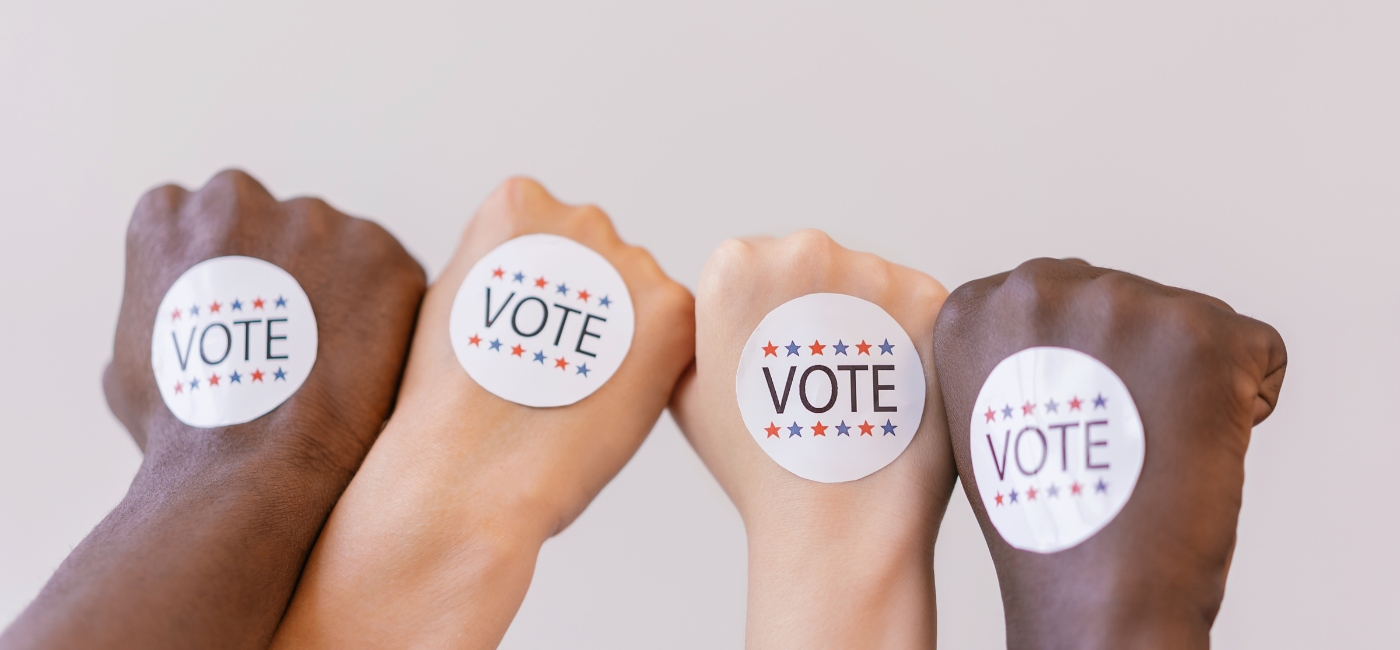
For naturalized citizens and immigrant families, fear and misinformation can add to challenges with ID rules, language access, and distance. Voting rights advocates explain how eligible voters can prepare before November 3.
Magazine, The Immigrant Experience
Can a naturalized citizen vote without carrying a citizenship document to the polls? Can a voter bring someone to help read an English ballot? Is a warning about immigration agents at polling places based on a confirmed event—or a rumor?
Voting rights advocates heard those questions from communities preparing for the midterms. Their answer begins with reliable, local information: check your registration, your state’s ID rules, and your voting options before Election Day. Find out where your polling place is, whether you qualify to vote by mail, and what language help is available. Requirements differ by state, and Vote.gov connects voters with their state election information and deadlines.
The questions brought four advocates into a conversation with ethnic media reporters hosted by American Community Media and moderated by Sunita Sarabji. John C. Yang of Asian Americans Advancing Justice | AAJC, Monica Spencer of VoteRiders, Jesús Zamora of Mi Familia Vota and Jacqueline De León of the Native American Rights Fund described barriers ranging from fear and misinformation to missing documents, limited transportation, and distant polling places.
Yang began with the concerns reaching Asian American communities. Could people still vote by mail? Would ICE be at polling places? He said claims about immigration agents appearing at the polls were, at the time of the conversation, rumors. He did not dismiss the fear behind them. Instead, he urged voters and journalists to distinguish confirmed information from speculation.
That distinction matters. An unverified warning can discourage an eligible citizen from voting, particularly in a community affected by immigration enforcement. “Don’t let that fear, don’t let the misinformation dissuade you from voting,” Yang said.
His practical advice was to choose a voting method and check the local rules. Mail voting remains available to eligible voters under their state’s rules, he said, and it may give someone more time to study a ballot at home. But voters should confirm how to request and return one rather than assume the process is identical to the last election.
When an India Currents reporter asked whether naturalized citizens should carry proof of citizenship to the polls because of fears about ICE, Yang declined to give a universal answer. What a voter is required to bring depends on state law; an individual may make a separate choice about what makes them comfortable. His response underscored the need to distinguish ordinary voter ID requirements from a rumor about immigration enforcement.
The citizenship rule is clear even when a household includes people with different statuses. Naturalized U.S. citizens can vote in federal elections if they meet the other eligibility requirements. People who are not U.S. citizens, including lawful permanent residents, should not register for federal elections. Vote.gov advises new citizens to confirm that they are officially citizens before registering.
Yang also reminded reporters that speaking fluent English is not a condition of voting. Federal law protects voters who need assistance because they cannot read or write well enough to vote independently. Under Section 208 of the Voting Rights Act, a voter who qualifies may choose someone to help, except for their employer or a representative of their union. Some jurisdictions must provide election materials or assistance in covered languages. Voters can ask their local election office what is available where they live.
A ballot can contain unfamiliar names, local measures, and instructions that take time to understand. Language help allows a voter to make their own choices with a clearer grasp of the process. Yang pointed Asian American voters with questions to 1-888-API-VOTE, a hotline run by Asian Americans Advancing Justice | AAJC and APIAVote.
In Georgia, Spencer described a barrier that may begin long before someone reaches a polling place: obtaining an acceptable ID. VoteRiders helps eligible voters understand their state’s rules and secure identification and supporting documents. Spencer said its assistance can cover costs and transportation.
One woman, she recalled, visited Georgia’s Department of Driver Services five times. At each visit she learned that another document was needed. With help, she eventually obtained an ID and voted. Spencer also spoke of older voters trying to renew identification, people who left documents behind when fleeing domestic violence, and rural residents without public transportation to reach an office.
Georgia offers a free voter ID card, according to the secretary of state. Still, obtaining one may require documents, travel, and time away from other responsibilities. The state publishes its list of accepted identification and instructions for getting a free card; voters can check those requirements before they go.
Spencer’s work has brought her into contact with people whose need for identification extends beyond voting. She described helping a woman living in a recovery shelter obtain an ID. According to Spencer, the woman said afterward that she felt human again. The account shows how an ID can affect access to housing, work, and services, as well as voting.
Rural distance makes each step harder. Spencer described communities where there is no convenient bus, taxi, or rideshare service. A voter may have to arrange a trip to replace a document and another to reach an early voting location or polling place. Limited drop box hours can be a particular obstacle for someone working two jobs. Georgia’s 2026 advance voting period runs October 13 through October 30, giving voters an opportunity to address a problem before Election Day.
She also cautioned against assuming that a past felony conviction always means a person cannot vote. Eligibility depends on the state’s rules and the individual’s circumstances. Anyone uncertain should check with election officials or a qualified voting rights organization before registering or casting a ballot. Spencer’s closing advice to reporters was to remind people to check their registration, ID, precinct, and sample ballot.
Zamora brought the conversation to Texas, where Mi Familia Vota organizes Latino communities through voter registration, civic education, and year-round outreach. He described teams knocking on doors and answering questions in Houston, Harris County, and other parts of the state. The work begins with a fact many first-time voters may not know: Texas does not offer a general online voter registration process. A person can obtain a form online but ordinarily must submit a completed application through an accepted method. Vote.gov says a mailed registration application must be postmarked 30 days before Election Day.
A form is only one part of the journey. Zamora said some residents his canvassers meet face a long walk to a polling place and have no car. He described helping people identify transportation and other local resources. For an older voter or someone caring for family members, getting to a polling place may require as much planning as completing the ballot itself.
Mail voting could help some of those voters, but Texas restricts who qualifies. The secretary of state lists eligibility categories that include voters who are 65 or older, sick or disabled, absent from the county during the required voting period, expecting to give birth within a specified window, or confined in jail while otherwise eligible. Voters must check the full requirements and application instructions; a preference to vote from home alone does not establish eligibility.
Zamora said errors on an application can delay a voter. His field teams therefore guide people through questions and paperwork, especially older residents who may be unfamiliar with the process. He also described how changed district maps can leave people unsure who represents them, from a school board to Congress. Mi Familia Vota’s response has included canvassing, text messages, and voter guides.
For Zamora, that outreach cannot begin and end in election season. He spoke about bringing high school students to meet lawmakers and helping residents understand the local decisions that affect them. He argued that trust grows when organizers return to a community throughout the year, rather than appearing only when ballots are about to be cast.
De León described an obstacle that cannot be solved by telling a voter to leave a few minutes early. In some Native communities, she said, a person may need to travel a substantial distance to register, reach a polling place, or collect mail. Homes may lack conventional street addresses, complicating registration. Mail may be delivered to a post office rather than a residence, requiring another trip and sometimes the cost of a box. Poor roads, limited vehicle access, and uneven early voting opportunities compound the distance.
The Native American Rights Fund’s 2026 report, Obstacles Persist: According to the data, documents higher rejection rates for Native voters at stages of the election process, including registration and ballot casting. De León said the organization is pressing for more equitable registration and voting access on reservations, better treatment of tribal identification, and changes to address requirements. The question is how a right can be exercised on equal terms when the route to a ballot box is so much longer for one community.
De León said the organization planned to send poll watchers into rural Native communities to document problems and connect them with attorneys when needed. She also called for stronger legal tools to challenge discrimination. Asked whether candidates pay enough attention to Native voters, she said Native communities can be decisive in statewide elections yet continue to be neglected across the political spectrum.
The speakers described different communities and rules, but their advice meets at one point: an eligible voter should seek accurate help early rather than try to solve every obstacle alone. Check that your registration lists your current name and address. Confirm your polling location, early voting options, and sample ballot through your election office. Find out what ID your state accepts. If voting by mail, verify both eligibility and return deadlines. If language assistance is needed, ask what is available before arriving to vote.
VoteRiders offers free voter ID assistance at 866-432-8683. For questions or problems involving registration, a ballot, or a polling place, voters can call or text the nonpartisan Election Protection hotline at 866-OUR-VOTE (866-687-8683). Native voters can also find state guides and tribal ID resources through the Native American Rights Fund.
A clear answer shared in time can help a neighbor check an address, an elder arrange a ride, or a new citizen vote with confidence. Before November 3, find out what the rules are where you live—and pass that information to someone who may need it.
#2026Midterms #VotingRights #ImmigrantVoters #NaturalizedCitizens #NativeVote #LanguageAccess #YourVoteMatters