
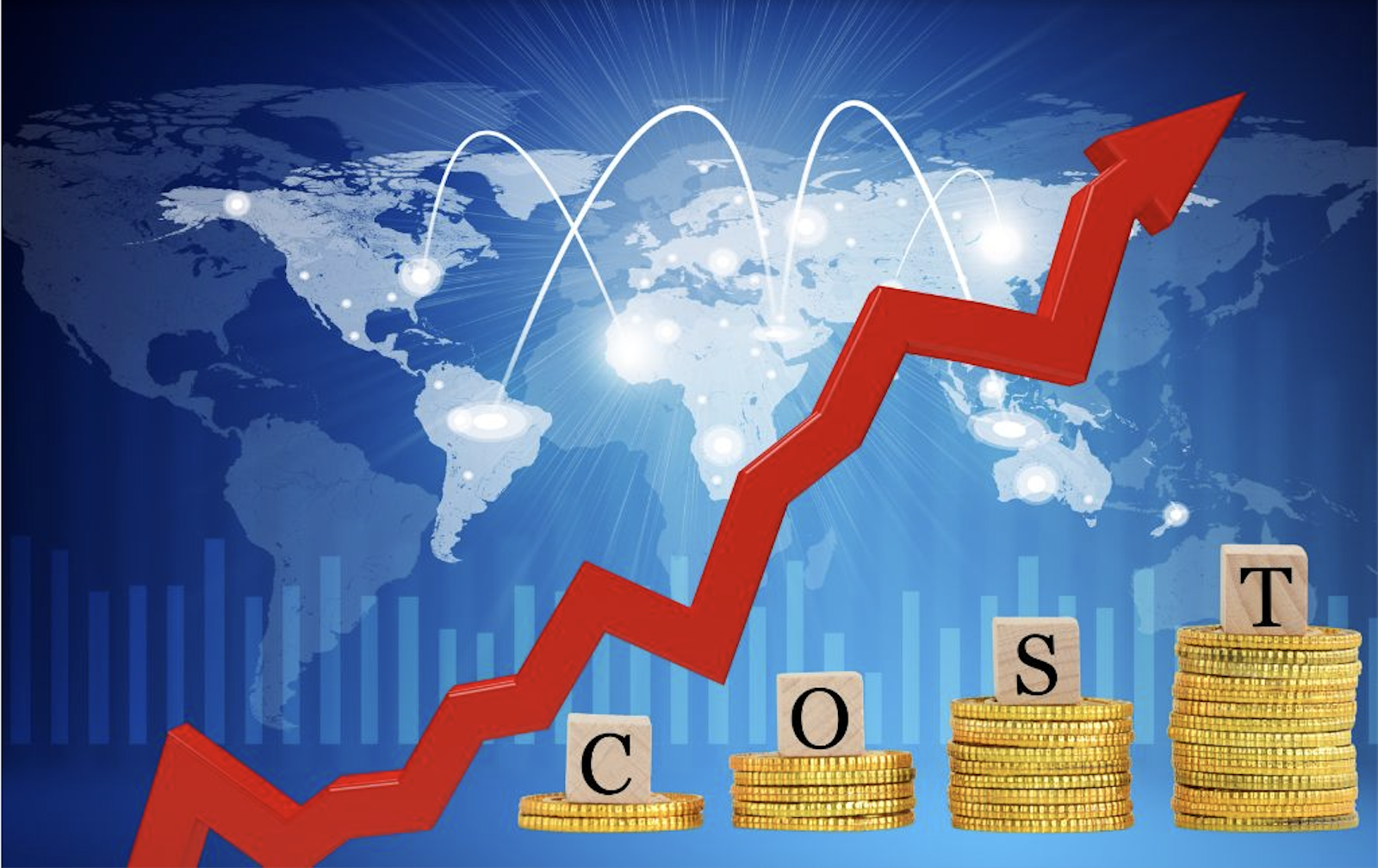
As oil routes fracture and supply chains strain, experts warn the real cost of war is unfolding in grocery aisles, gas stations, and family budgets worldwide.
The war does not knock on your door.
It slips in through numbers. Through a receipt that feels just a little higher than last week. Through the quiet calculation at the gas pump. Through the moment you pause in the grocery aisle, deciding what can wait and what cannot.
At this week’s American Community Media briefing, three experts came together to trace that journey—how a geopolitical conflict thousands of miles away travels, almost invisibly, into the most intimate spaces of daily life.
The panel featured Dr. William O. Beeman, Professor Emeritus of Anthropology at the University of Minnesota and a specialist in the Middle East; Dr. Ryan Nunn, Director of Research at the Budget Lab at Yale; and Dr. Anil Deolalikar, Professor of Economics at UC Riverside and founding Dean of the School of Public Policy at UCR. Each brought a different lens, but all pointed to the same conclusion: the economic aftershocks of this war are already here—and they are only beginning.
The chokepoint the world depends on
At the center of the crisis is the Strait of Hormuz, a narrow passageway through which roughly one-fifth of the world’s oil supply normally flows.
Today, that artery is strained by conflict, blockade, and uncertainty.
Recent reports show the scale of disruption is historic. The war has cut global oil supply by more than 11% at times—one of the largest shocks ever recorded. Oil prices have surged above $100 per barrel amid attacks on tankers and stalled negotiations. And even if fighting slows, clearing the strait could take months, prolonging high prices.
This is not just an energy story. It is a systems story.
Oil is not only fuel—it is embedded in fertilizer, plastics, pharmaceuticals, transportation, and food production. When oil moves, everything moves with it.
Understanding the conflict beyond headlines
Dr. Beeman urged journalists to step outside the narrow frame of Western policy debates and understand the deeper logic shaping Iran’s actions.
For Iran, he explained, this is not simply a military standoff—it is about sovereignty, identity, and a long history of foreign intervention. That context, rooted in the 1979 revolution, continues to shape how the Iranian government responds to pressure today.
Without that understanding, he warned, attempts at negotiation risk failing before they begin.
Even the temporary reopening of the Strait, he suggested, reflects strategic calculation—not concession. And as long as both sides remain locked in fundamentally different worldviews, instability will persist.
From oil prices to grocery bills
If Beeman explained the “why,” Dr. Ryan Nunn explained the “what happens next.”
When oil prices rise, he said, the first impact is obvious: gas prices increase. But what follows is broader and more enduring.
Transportation costs rise. Shipping becomes more expensive. Production costs climb. And slowly, almost quietly, those increases spread into food, goods, and services.
Recent data already reflects this shift. Energy-driven inflation has surged, contributing significantly to rising consumer prices in the U.S.
But the burden is not evenly shared.
Lower-income households feel it first and most deeply. They spend a greater share of their income on essentials. They have fewer alternatives. And they have less room to absorb prolonged increases.
Inflation, in that sense, is not just economic. It is structural. It widens the distance between those who can adapt and those who cannot.
A global crisis with unequal consequences
Dr. Anil Deolalikar expanded the lens even further, tracing how the same shock reverberates across developing economies.
In countries already facing fragile food systems and energy dependence, rising oil prices are not an inconvenience—they are a tipping point.
Food prices climb. Fertilizer costs surge. Transportation slows. And for families living near the edge, even a small increase can mean the difference between stability and crisis.
His case study of India revealed how quickly the effects cascade.
With heavy reliance on energy imports passing through the Strait of Hormuz, disruptions have led to shortages of cooking gas and sharp price spikes. Households are reverting to firewood. Small vendors are losing income. Farmers are facing rising input costs at the start of planting season.
And once those pressures begin, they do not simply reverse when markets stabilize.
“The damage is done,” Deolalikar warned, pointing to likely increases in poverty, malnutrition, and economic distress in the months ahead.
The quiet reach of war
What emerged from the briefing was not just a picture of inflation but a chain reaction.
A naval blockade becomes a supply shock.
A supply shock becomes higher fuel costs.
Higher fuel costs become higher food prices.
And those prices land, finally, on the kitchen table.
For immigrant communities, the impact stretches even further. Rising costs are felt here—in rent, food, and fuel—and simultaneously abroad, where family members may face even sharper economic shocks. The distance between global conflict and personal consequence collapses.
What happens next
Even if oil prices fluctuate—as they already have in recent days—the underlying instability remains.
Supply chains take time to rebuild. Infrastructure takes time to repair. Markets take time to stabilize. And households, already stretched, feel the effects long before relief arrives.
History suggests these shocks do not fade quickly. Even after disruptions ease, it can take months—or longer—for prices to return to anything resembling normal.
And for many, normal may no longer look the same.
War does not always announce itself with noise.
Sometimes, it arrives quietly—
in the space between what things cost
and what families can afford.
#USIranWar #RisingPrices #Warflation #CostOfLiving #GlobalEconomy #OilPrices #SupplyChains #ImmigrantVoices








1 Comment. Leave new
Finally a site that supports local banks properly and processes withdrawals on the same day, the community vibe here is so welcoming and helpful for newcomers ph100jl