Ethnic and community journalists across Los Angeles are uncovering gaps, amplifying voices, and shaping the path forward for equitable parks—from Inglewood to Boyle Heights.
Magazine, The Immigrant Experience, By Pamela Anchang
There is something intimate about a park bench in the shade. There is something sacred about watching your child laugh under a tree, in a space that feels safe. In Los Angeles, where concrete often outpaces canopy, where neighborhoods carry the scars of redlining and neglect, a park is never just a patch of green.
Over the past year, I’ve had the privilege and responsibility of listening to how immigrant families across this city find solace, connection, and identity in public parks. I’ve walked with them, sat beside them, and heard stories that rarely make headlines. Stories that reveal a simple truth: our parks are more than recreation—they are restoration.
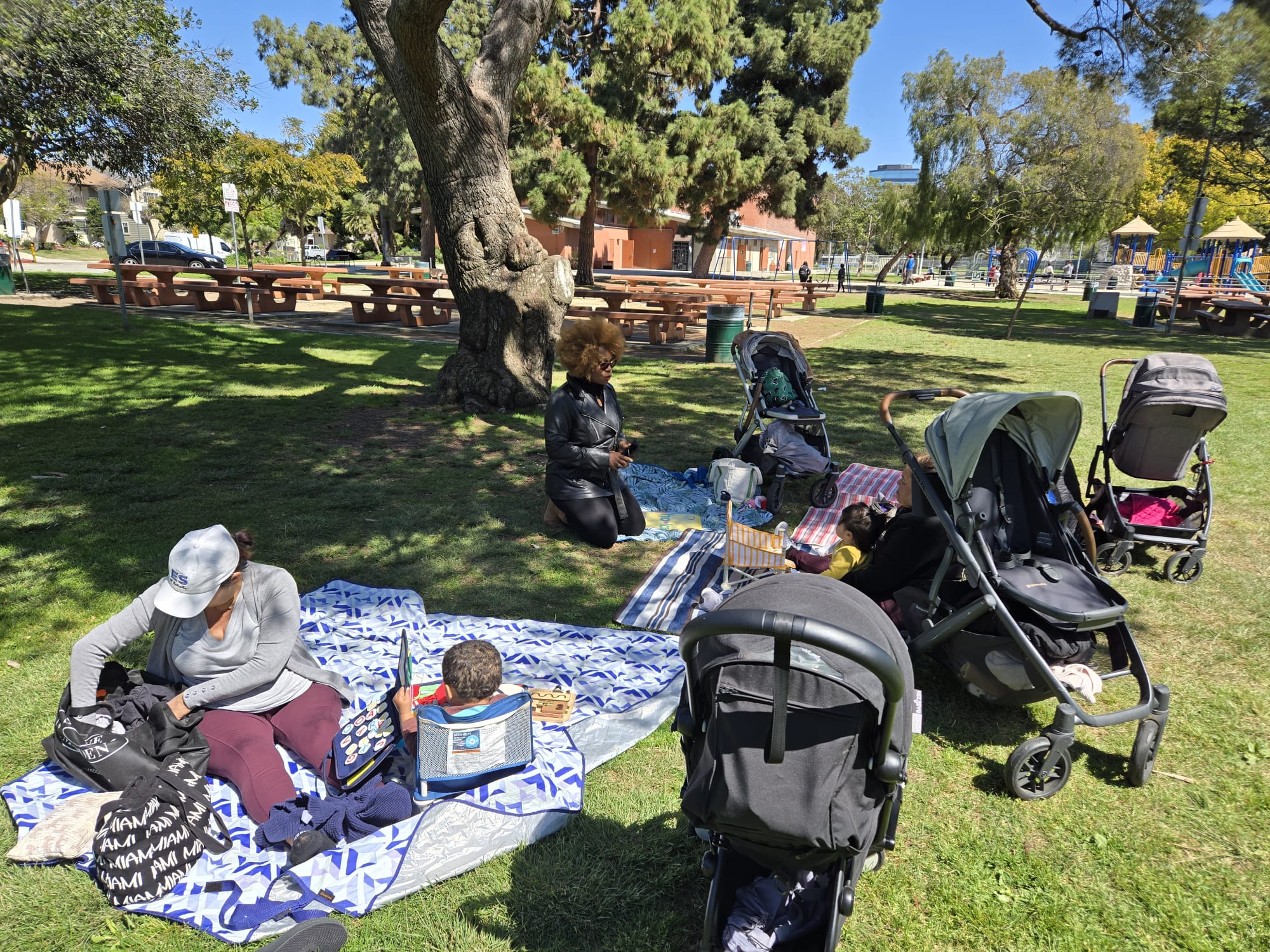
I know this truth personally. Mar Vista Park raised my kids. As a mother and immigrant woman, that space became our second home. It held us through transitions, soothed us after long days, and reminded us we belonged even when everything else in this country felt uncertain. I watched my children grow into their voices on that playground. I saw cultures collide and harmonize: Black, Latino, Asian, and white, all staking their small, sacred claims to joy. And as I looked around, I realized something profound: no matter our roots, we were all reaching for the same sun.
That experience inspired my reporting across Los Angeles, where I found countless echoes of my story. In Inglewood, I met Cherella Nicholson, a business owner and lifelong resident who reflected on the generational change she’d seen in local parks, or the lack thereof. “There haven’t been any new parks since I was a kid,” she said. With new housing and entertainment zones reshaping the city, she asked the question many are thinking: where are the green spaces to match that growth?
Cherella spoke about the importance of parks as healing spaces, especially in communities of color. Her dream park? A place with walking trails, pickleball courts, reading gardens, a skating area—and pools. “We need more places to cool off,” she said. And more spaces for families to gather, barbecue, and celebrate safely.

Inell Woods Park Ribbon Cutting
In South LA, I attended the ribbon-cutting ceremony for Inell Woods Park, a victory decades in the making. The Community Investment for Families Department (CIFD) and Council District 9 secured $1.2 million in Community Development Block Grant (CDBG) funding to bring the project to life. City leaders emphasized how critical cross-agency collaboration was to accelerate park development. Their message: getting funding isn’t the end; getting it to communities fast is the challenge.
As a journalist, these stories came full circle at the Narrative Change Strategies for Parks and Urban Greening convening hosted by Jon Christensen of UCLA and American Community Media. A panel moderated by Sandy Close, executive director of ACoM (American Community Media), featured journalists from across the ethnic media landscape. From TV to radio, photojournalism to longform, we shared how our communities experience parks.
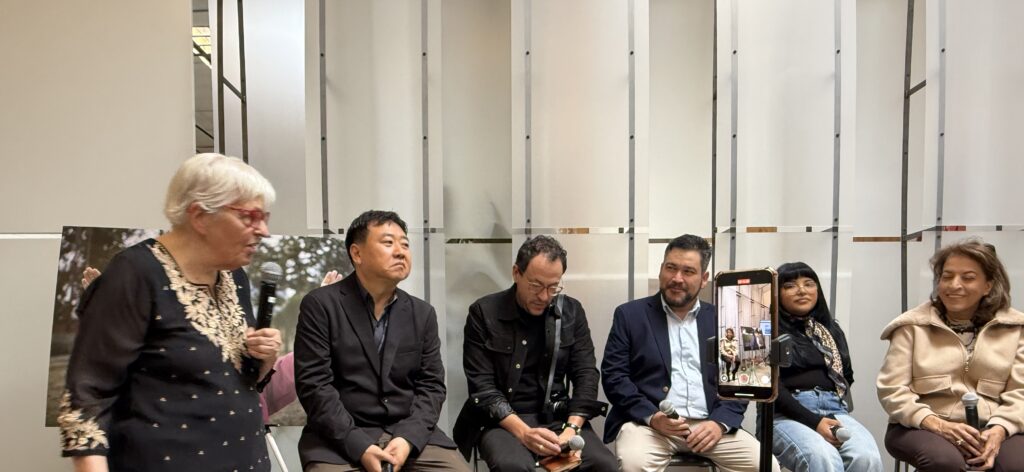
ACoM Executive Director Sandy Close moderates a panel of ethnic media
Brenda Verano (CALÓ News and the LA Blade) reported on policy gaps and the community’s call for park designs that reflect cultural identities, emphasizing the power of bilingual journalism to hold officials accountable. Carlos Aviles (editor at Excélsior and contributor to the San Diego Union-Tribune) illustrated how revitalized parks in Boyle Heights have become safe havens, steering youth away from violence. Paul Chun (SBS International) highlighted how Koreatown’s scarce green spaces serve as multigenerational gathering places and cultural touchstones. Fatmeh Bakhit (Arabic-language El Enteshar) reflected on how simple walking routines in parks foster healing and well-being for refugee families. Photojournalist Manuel Ortiz used photography to amplify stories of resilience and joy, capturing families reclaiming space and belonging through nature.
I saw how our collective reporting revealed a deeper narrative: our communities are not just asking for parks—they are asking to be seen.
Yet, according to Brenda Verano’s reporting and findings, over 1.1 million Angelenos still live without a park within a 10-minute walk of home, disproportionately affecting low-income, Black, and Brown communities [source: Brenda Verano, ACoM].
So what comes next?
We explored that question in a follow-up panel: “Saving LA’s Beleaguered Park System: What Comes After the Park Needs Assessment?” This panel and briefing, featuring leaders from OLIN, Trust for Public Land, Los Angeles Neighborhood Land Trust, the City’s Recreation and Parks Department, and others, helped clarify the road ahead.
Jessica Henson of OLIN shared that LA County’s Parks Needs Assessment Plus (PNA+) is underway. This new version builds on the original PNA with more detailed data, layering in climate vulnerability, tree canopy gaps, and racial equity indicators to help identify areas most in need. Meanwhile, the City of LA is advancing its Community Forest Management Plan and conducting an Urban Forest Equity Assessment to better guide shade and planting priorities.
These plans reflect a growing recognition: park equity is a climate, health, and racial justice issue.
Funding remains the biggest hurdle. At the Inell Woods event, officials credited federal grants like the CDBG as vital resources, but such opportunities are limited and competitive. Advocates and planners are now suggesting a potential 2026 ballot measure, modeled on successful initiatives like Measure A and Prop 68, which have previously directed millions toward green infrastructure. If pursued, a 2026 bond could provide dedicated revenue for park equity.
As Sandy Close emphasized at the convening, “Our goal is not to tell audiences who or what to vote for. It’s to give them the information they need to make up their own minds and to see what’s at stake for their families and neighborhoods.”
Other options under discussion include state environmental justice funds, federal climate resilience grants, and public-private partnerships. Participatory budgeting is also gaining traction, empowering residents to shape how funds are spent in their neighborhoods.
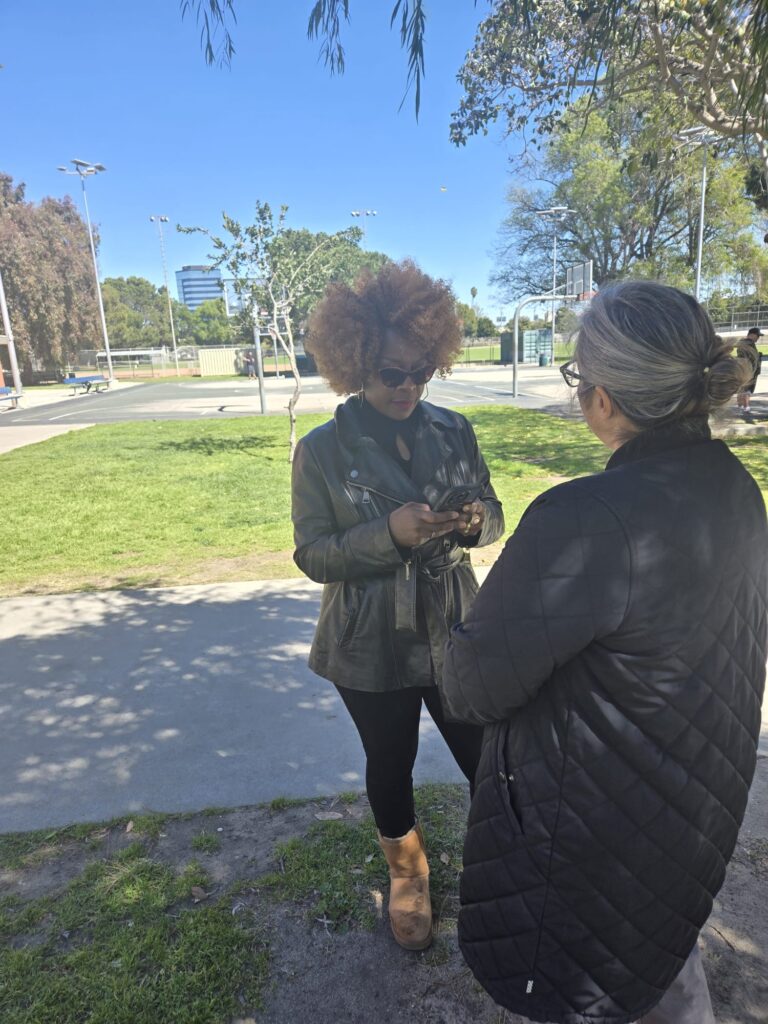
With Cristina, Mar Vista Park director
From my interview with Cristina, director at Mar Vista Park, it was clear that even well-used parks face challenges. “We often have to choose between maintenance and new programming,” she said. Funding is rarely consistent, and without it, communities are left with under-resourced spaces that can’t meet growing demands.
All of this points to a critical truth: if equity is the goal, funding must follow need.
Ethnic media has been instrumental in surfacing these issues and sparking change. One reporter’s story uncovered a $4.2 million grant for a South LA wetlands park that had gone largely unpublicized until the community learned about it through local media. That’s the power of information, especially when it comes from trusted voices within the community.
As Los Angeles charts its next chapter in urban greening, one thing is clear: equity doesn’t happen by chance. It happens by design, by demand—and by listening to the stories of those who have been overlooked for far too long.
#ParkEquity #UrbanGreening #GreenJustice #PublicParks #ClimateJustice #EnvironmentalJustice #EquityInLA #LAparks #EthnicMedia #CommunityVoices #NarrativeChange #LocalJournalism #StorytellingForChange #JournalismMatters #RepresentationMatters #LosAngeles #Inglewood #BoyleHeights #KoreatownLA #SouthLA