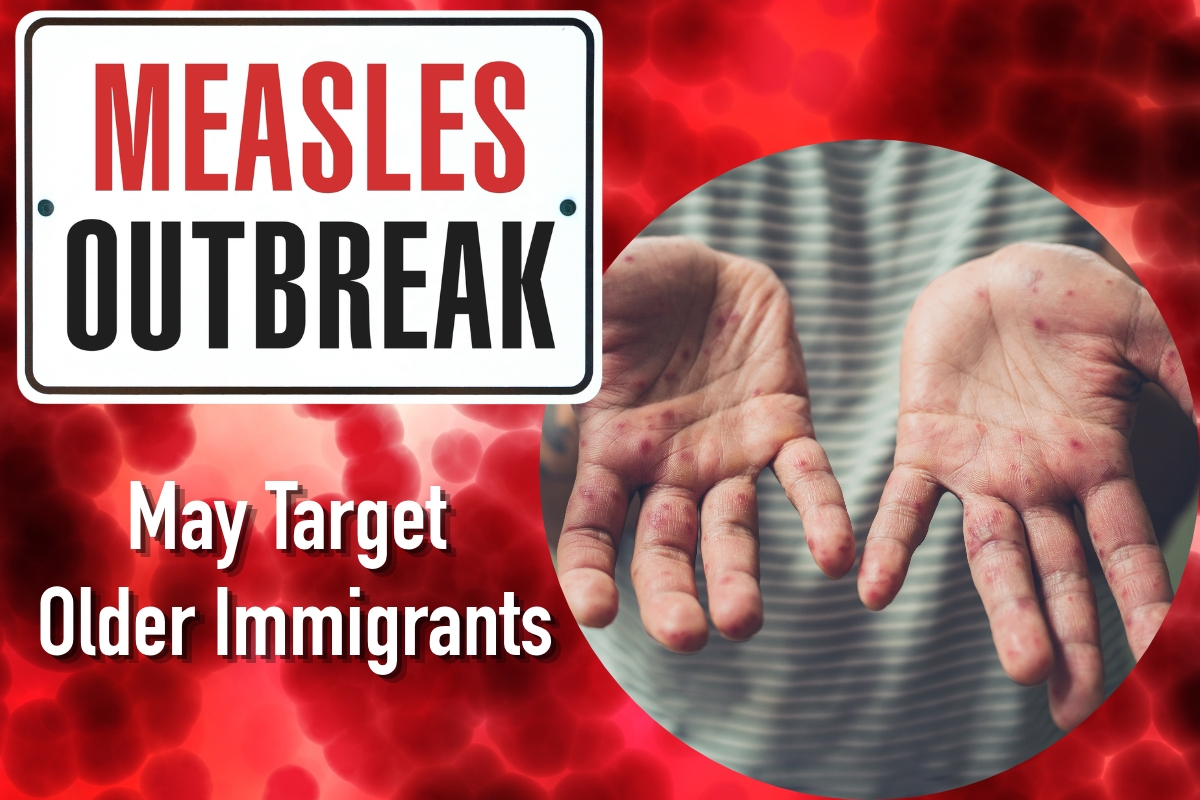
If you grew up abroad and your childhood vaccine records are missing, here’s what to ask about measles protection, antibody testing, and the MMR vaccine.
Munira Maalimisaq was nine when her little sister died in Somalia. She remembers the fever and the rash. Her sister was about seven. At a briefing on measles, a reporter asked her what her sister’s name was.
Zakia. Years later, Maalimisaq gave her daughter the same name.
The family came to understand afterward that Zakia had measles. Maalimisaq doubts they could have gotten a vaccine where they lived. Today, she is a family nurse practitioner and the founder and CEO of Inspire Change Clinic in Minneapolis, where she cares for immigrants and other patients who have trouble getting care.
If you grew up abroad, you may have to go back a long way to answer a simple question about your own health. Did the clinic where you grew up give measles shots? Is there someone in the family you could ask? And if you can’t find your childhood vaccine record, how do you find out whether you’re protected?
There’s a reason to ask now. On November 17, the Pan American Health Organization announced that the United States had lost the measles elimination status it had held since 2000. The country had seen cases and outbreaks over those years. What changed was how long the virus kept spreading. A regional commission found that measles had circulated continuously within the United States for at least 12 months. Pan American Health Organization
By November 12, the Centers for Disease Control and Prevention had counted 5,412 confirmed U.S. cases in 2026. Sunita Sohrabji, health editor at American Community Media, shared another figure as she moderated the briefing, which was co-hosted with the Measles Collaborative. About 41 percent of reported cases, she said, were in people age 20 or older. That includes everyone from college students to grandparents. The briefing gave no separate count for older immigrants. CDC measles case counts
Where do you look for a childhood vaccine record?
Carolyn Bick of Northwest Asian Weekly asked whether refugees were likely to have been vaccinated before coming to the United States and what it takes to get a shot after arrival, especially when language is a barrier. Reporter Elena Kuznetsova wanted to know what leaves older adults at risk.
Dr. Andi Shane, chief of the Division of Pediatric Infectious Diseases at Emory University School of Medicine, explained that routine childhood vaccination generally provides lasting protection. If you never had measles or received the vaccine, you can still be susceptible decades later. That’s why it helps to tell your clinician where you grew up and what care was available to you then.
Two people born in the same year may have had very different chances of getting a measles shot. India, for example, added its first measles dose to the national immunization schedule in 1985. The panel noted that many countries in Africa, Asia, and Latin America began or expanded their programs in the late 1970s and 1980s. A date on a national calendar can only tell you so much. As Maalimisaq recalled of Somalia, getting a vaccine could depend on how far you lived from care and what your family could afford. India Ministry of Health and Family Welfare
Start with whatever you can find. A relative might be able to send a photo of an old vaccine card. A school or a former clinic may still have a copy. If you received doses in the United States, ask your previous provider or your state’s immunization registry. Bring records from abroad, even if they’re in another language. Ask the clinic for help reading them. The vaccine name and the dates can help your clinician decide whether the doses meet U.S. recommendations. CDC vaccine recommendations
Maybe all you have is a memory of your mother saying you had measles. Tell your clinician what you remember. Several childhood illnesses can cause a fever and a rash, so there may still be a question about whether you’re immune. You can make the appointment even if you come up empty after looking for records.
Do you need a blood test or another shot?
Dr. Margot Savoy, chief medical officer at the American Academy of Family Physicians, walked through what a clinician can use to check your protection. A written record of the recommended doses can settle the question. So can a blood test that finds measles antibodies or a lab result confirming you had measles in the past. The CDC generally considers people born before 1957 likely to be immune because measles was so widespread before vaccines became available. Health care workers can receive different advice, and local health departments may issue specific guidance during an outbreak. CDC vaccine recommendations
For most adults born in 1957 or later who have no evidence of immunity, the CDC recommends one dose of MMR, the vaccine for measles, mumps, and rubella. International travelers, health care workers, and college students generally need two doses at least 28 days apart if they lack other evidence of immunity. The CDC estimates that one dose is about 93 percent effective against measles and two doses about 97 percent effective. CDC vaccine recommendations
If your records are missing, you can ask about a measles antibody test. Your clinician may call it an IgG test or a titer. Many adults who can safely get MMR can get the shot without having a blood test first. If you have written proof of two doses given according to CDC recommendations, your doctor can generally rely on those records even if an antibody test later comes back negative. CDC clinical questions about measles
There’s one more thing to bring up if you were vaccinated in the 1960s. An older version of the measles vaccine didn’t offer reliable protection. If you received that version, known as the inactivated vaccine, or you got a shot between 1963 and 1967 and don’t know which kind it was, ask whether you need another dose. MMR is a live vaccine. Before getting it, tell your clinician if you’re pregnant, have a severely weakened immune system, or have had a serious allergic reaction to a previous dose or vaccine ingredient. CDC clinical questions about measles · CDC vaccine recommendations
If you’ve been exposed, call ahead
Measles can start with a high fever, a cough, a runny nose, and red, watery eyes. Shane explained that the rash usually comes a few days later, starting around the face or hairline and spreading down the body. Adults can develop pneumonia, and measles during pregnancy can be dangerous for both the pregnant patient and the baby. A person can spread measles from four days before the rash appears through four days afterward. The virus can remain infectious in the air for up to two hours after that person leaves the room. CDC clinical overview of measles
If you learn you’ve been exposed, call your health care provider or local health department promptly, even if you feel fine. If you have symptoms and think it could be measles, call before going to a clinic or emergency department. The staff can tell you how to get care without exposing other people. For those eligible to receive it, MMR may offer protection if given within 72 hours of the initial exposure. A medicine called immune globulin may be an option within six days for some people, including certain infants, pregnant patients who lack evidence of immunity, and people with severely weakened immune systems. CDC questions about measles · CDC vaccine recommendations
Reporter Nicole Chang asked why California should worry about outbreaks given its relatively high vaccination coverage. Patsy Stinchfield, a pediatric nurse practitioner and executive director of the Measles Collaborative, pointed to the differences from one county to the next. A statewide average can look reassuring even when some communities have enough people without immunity for an outbreak to spread. PAHO recommends coverage of at least 95 percent with two doses. That local protection matters to people who can’t receive MMR and to babies who are still too young for routine vaccination. Pan American Health Organization
What happens when families get time to ask?
When Kuznetsova asked how health professionals should respond when immigrant communities are blamed for outbreaks, Maalimisaq brought the conversation back to the exam room. Before you turn to the computer, she told clinicians, “Take a moment with the person who came to see you. A parent may have heard something frightening about a vaccine. Give them time to tell you what it was.”
Maalimisaq started the Motherhood Circle in 2023 so mothers could bring those questions and hear from one another. She told reporters that among one group of 75 mothers, 12 percent had vaccinated their children with MMR at the start of 2025. By the time the group finished in December, she said, that share had reached 89 percent. What gave her hope was seeing the mothers ask the questions they’d been carrying and make decisions for their own children.
Knowing where to go and how to pay can be its own hurdle. Maalimisaq spoke about young adults who were ready for the shot and unsure how they could afford it. An older relative might need help making the first call. A community health center or local health department can help you find out where to get vaccinated and what it might cost. You can also ask for an interpreter. If you get the shot, ask for a dated copy of the record and take a photo of it. It may save you or someone in your family from having to look for it years from now. CDC guidance on where to get vaccinated
“I cannot change what happened to my sister, but what I can change is what happens to other families,” Maalimisaq told reporters.
If you’ve been putting off the call because you don’t have your records, start with what you know. “I grew up outside the United States, and I’m not sure I’m protected against measles. Can you help me find out?”
#Measles #MMRVaccine #ImmigrantHealth #VaccineAccess #CommunityHealth #PublicHealth #TheImmigrantMagazine