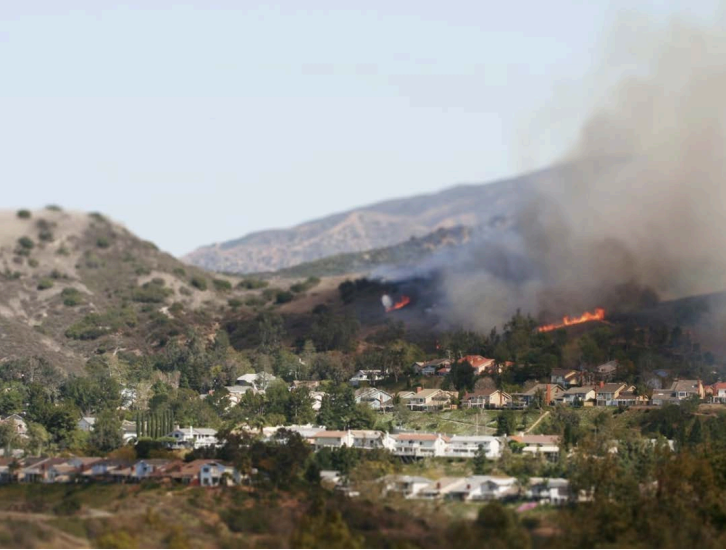
A wildfire can begin with something as ordinary as a missed message.
An alert lands on a phone in a language someone does not fully understand. A power company sends an email to a resident who rarely checks it. A family hears that an evacuation shelter is open but hesitates, unsure whether immigration status will be questioned. A person who uses a wheelchair knows the flames are moving closer but has not yet arranged transportation.
By the time smoke darkens the sky, those small gaps can become dangerous.
That was the urgency behind a statewide media briefing hosted by American Community Media and California Black Media in partnership with the California Governor’s Office of Emergency Services, or Cal OES. Moderated by Regina Brown Wilson, executive director of California Black Media, the briefing brought emergency officials and community advocates together around a question that California can no longer afford to treat as routine:
When wildfire comes, will every community know what to do?
The question matters because the state is in peak fire season, when hot, dry conditions and seasonal winds can turn an ordinary day into an evacuation order with little warning.
“We are in the middle of peak wildfire season, and there are new fires starting every day across the state,” said Matt Notley, deputy director of crisis communications and public affairs at Cal OES.
California has lived this story before.
The Gann Fire in Calaveras County burned more than 10,000 acres this summer, forcing evacuations and threatening nearby communities. And the devastating Eaton and Palisades fires of 2025 shattered any lingering belief that catastrophic wildfire belongs only to mountain towns or rural communities.
Fire can move through suburbs. It can displace thousands. It can erase the familiar in a single afternoon.
But the briefing made another truth just as clear: wildfire danger is not experienced equally.
For California’s immigrant, multilingual, low-income, elderly, and disabled communities, preparedness is often shaped by whether information arrives in time, in the right language, and from someone they trust.
That trust, officials said, can be as important as the warning itself.
Diana Crofts-Pelayo, chief deputy communications director for Gov. Gavin Newsom’s office, spoke directly to the role of ethnic media and community organizations in reaching people government may not reach on its own.
“Trust really comes from the people you know, and in an emergency, that trust can save lives,” she said.
In California, one of the most linguistically and culturally diverse states in the country, emergency information does not travel through a single channel. It moves through churches and neighborhood associations. Through local radio and ethnic newspapers. Through family group chats, community organizers, cultural organizations, WhatsApp messages, and trusted advocates.
That matters because preparedness is not simply a question of whether information exists.
It is a question of whether people believe it, understand it, and know what to do next.
Crofts-Pelayo said California’s experience with the Camp Fire, extreme heat, flooding, and other disasters forced the state to rethink what preparedness means.
It cannot begin when the flames are already visible.
That lesson helped shape Listos California and the broader Ready California initiative, which works with community organizations and trusted messengers to bring emergency-preparedness information to residents before disaster strikes.
The approach recognizes something communities have long understood: people often turn first to those who know their language, their neighborhoods, and their fears.
For Omaira Baptista, who works with immigrants, farmworkers, older adults, and people with disabilities in Napa and Lake counties, those fears are not abstract.
Residents in fire-prone communities know how quickly the air can change. They know the smell of smoke. They know the dread that comes with a red-flag warning.
But Baptista said one of the deepest fears she encounters is not fire itself.
“People’s biggest fear is not just the fire itself, but feeling alone and uninformed,” she said.
That sentence carries much of what emergency preparedness often misses.
A family can live in a high-risk fire zone and still not know how evacuation orders work. A farmworker may spend the day miles from home while conditions worsen. A newly arrived immigrant may not know which government alerts to trust. An older resident may know evacuation is necessary but have no one nearby to help.
Baptista said simple, culturally accessible preparedness tools can change that sense of helplessness.
“We are not just handing out guides,” she said. “We are giving families back their peace of mind.”
That peace of mind begins with practical things.
A packed bag.
Medication set aside.
Copies of important documents.
A meeting place.
A phone number written down in case a cell phone dies.
A plan for who will pick up a child, check on an elderly neighbor, or help someone who cannot evacuate alone.
Davina Mapes, public affairs manager for Cal OES, said state research has revealed a persistent gap between understanding the danger and taking action.
Officials call it the “awareness-action gap.”
Many Californians know they should prepare. Far fewer have actually completed the steps.
The reasons are not difficult to understand.
Preparedness competes with rent, work, school pickups, medical appointments, childcare, transportation, and the thousand demands of everyday life. For a family living paycheck to paycheck, buying emergency supplies may be postponed. For someone navigating a new country or unfamiliar public systems, even knowing where to begin can feel overwhelming.
The answer, Mapes said, is to make preparedness less intimidating and more achievable.
Ready California materials break emergency planning into simple actions and are available in multiple languages. The initiative includes printable preparedness guides, videos, social-media resources, and tools designed for communities that may not be reached by conventional emergency messaging.
For immigrant families, one point is especially important: California emergency mass-care shelters are open regardless of immigration status.
People seeking shelter during an emergency are not required to provide immigration information.
That distinction can save lives.
Fear can slow a decision that should be immediate.
If a family hesitates because it believes entering a shelter could expose someone to immigration enforcement, precious evacuation time can disappear.
Preparedness, then, is not only about telling people where to go.
It is about making sure they believe they are safe enough to go there.
For people with disabilities, the planning can be even more specific.
Steven Vera of Disability Services and Legal Center in Santa Rosa told reporters that a generic evacuation plan is often not enough. Transportation, medication, mobility devices, power-dependent medical equipment, communication needs, service animals, and caregivers may all have to be considered in advance.
His organization has learned not to rely on one method of communication.
A utility may email a resident about a planned power shutoff during dangerous fire weather. But what happens if that person misses the email?
Vera’s team follows up with texts and phone calls. If there is no answer, they leave messages.
That redundancy is intentional.
In an emergency, one missed message can matter.
Vera urged residents to prepare a go-bag with essentials such as medication, identification, chargers, cash, and a flashlight, and to establish evacuation routes before they are needed.
“Work with your family, work with your friends, have a plan set in stone,” he said.
The goal is simple: when the order comes, the family should not still be deciding what to do.
California, meanwhile, has built one of the most extensive emergency-response systems in the country.
Cal OES oversees the state’s Fire and Rescue Mutual Aid System, connecting more than 1,000 local fire agencies. When one community is overwhelmed, firefighters, engines, and equipment can move across jurisdictions to where they are needed most.
Increasingly, the state is moving resources before fires begin.
Notley said Cal OES had approved dozens of county requests this year to preposition firefighters and equipment ahead of dangerous fire weather. Those resources can include engines, water tenders, hand crews, and dispatch personnel positioned closer to areas expected to face elevated risk.
Technology is also helping emergency officials see fires sooner and understand them faster.
California’s Fire Integrated Real-Time Intelligence System, known as FIRIS, uses specially equipped aircraft with infrared and thermal technology to map fires as they burn. The system can help officials track the direction of a fire, assess threats to communities, and determine where resources or evacuations may be needed.
It is a remarkable tool.
But no aircraft can pack a grandmother’s medication.
No thermal camera can arrange a wheelchair-accessible ride.
No statewide command center can know that the elderly man three doors down lives alone unless someone in the neighborhood does.
That is where community becomes part of the emergency system.
It happens when a journalist explains an evacuation order in Spanish, Korean, Mandarin, Tagalog, or another language spoken at home.
It happens when a local organization calls a resident instead of assuming an email was enough.
It happens when neighbors know who among them will need extra help.
It happens when a family prepares before fear has entered the room.
Sandy Close, director emeritus of American Community Media, framed the briefing as part of a larger challenge facing community and ethnic journalists as extreme weather becomes a more persistent part of California life.
Coverage can no longer begin only after disaster.
Journalists are increasingly part of the preparedness infrastructure itself.
Brown Wilson made the same point in welcoming reporters from across the state. These briefings, she said, are designed to connect ethnic and community media with information, experts, and resources their audiences need before an emergency arrives.
That role matters because fire does not care what language a family speaks.
It does not ask whether someone was born in California or arrived last year.
It does not make allowances for poverty, disability, age, or fear.
But preparedness can.
Preparedness can recognize those differences before they become barriers to survival.
California has built powerful systems to move firefighters, engines, aircraft, and emergency personnel toward danger.
The deeper test is whether lifesaving information can move just as quickly.
Because when the hills begin to burn, resilience will not be measured only by how many engines arrive.
It will also be measured by how many people already knew where to go.
#CaliforniaWildfirePreparedness #ImmigrantVoices #CaliforniaWildfires #ReadyCalifornia #CommunityResilience #EmergencyPreparedness #EthnicMedia #DisasterReady #InclusivePreparedness