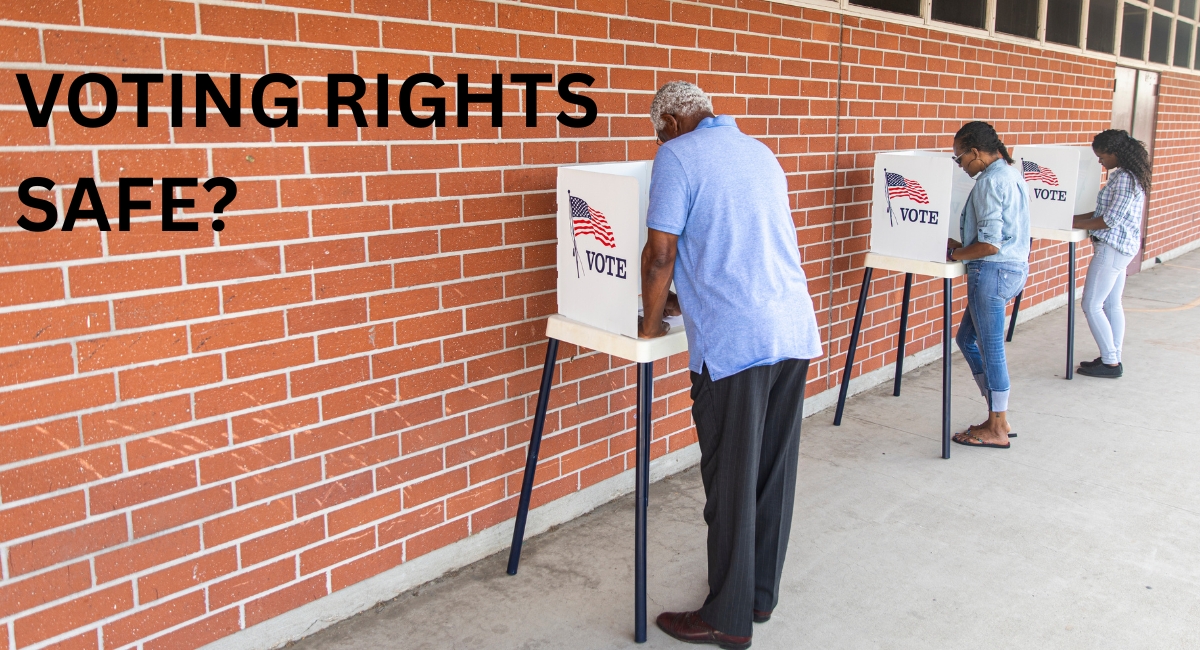
Experts warn that changing voting laws and misinformation could affect voter participation ahead of the 2026 midterm elections.
Magazine, The Immigrant Experience
As the United States prepares for the 2026 midterm elections, voting rights have once again become a national flashpoint. Across the country, legislatures, courts, and local election officials are considering changes to voter identification requirements, election administration, mail voting, and ballot counting. Supporters say the measures strengthen election security, while civil rights organizations argue they could make voting more difficult for millions of eligible Americans.
During an American Community Media briefing, voting rights attorneys, election advocates, and a local journalist discussed how these changes could affect voters and what communities should know before heading to the polls.
Thomas A. Saenz, President and General Counsel of the Mexican American Legal Defense and Educational Fund (MALDEF), said one of the most significant recent developments is the Supreme Court’s decision affecting Voting Rights Act challenges to congressional redistricting. While the ruling does not prevent individuals from voting, he said it could reduce the ability of Black and Latino communities to elect candidates of their choice in some states through changes to district boundaries.
Saenz said the more immediate concern is the growing number of state and local policies affecting how people register and cast ballots.
He emphasized that the president cannot change election rules through executive order. Under the Constitution, states administer elections, while Congress—not the president—has authority over federal election laws. He urged voters to learn their state’s registration deadlines, identification requirements, and voting procedures well before Election Day because court challenges to new laws may not be resolved in time.
Another major concern, Saenz said, is misinformation.
False information about polling locations, voting dates, identification requirements, and mail ballots often spreads in the weeks before elections. He encouraged journalists and community organizations to direct voters to official election offices and trusted nonpartisan resources rather than social media rumors.
Da Hae Kim, Policy Advocacy Manager at VoteRiders, presented national research showing that voter identification requirements can create barriers for eligible voters.
According to VoteRiders, nearly 21 million voting-age U.S. citizens do not have a current, unexpired driver’s license. Another 29 million have identification that does not reflect their current name or address. Young adults, people of color, rural residents, and low-income Americans are disproportionately affected.
Kim also pointed to proposed documentary proof of citizenship requirements, which would require voters to present documents such as passports or birth certificates when registering to vote.
VoteRiders estimates that more than 21 million eligible Americans would have difficulty accessing those documents if required. In California alone, more than three million voting-age citizens could face similar challenges.
She said obtaining identification is often more complicated than simply visiting the DMV. Costs, transportation, lost documents, natural disasters, and time away from work can all prevent eligible voters from obtaining the documents required under stricter laws.
VoteRiders provides free assistance with obtaining identification, including transportation, document fees, and one-on-one guidance for eligible voters.
The briefing also examined election administration through the experience of Shasta County, California.
Annelise Pierce, founder and managing editor of Shasta Scout, described how the county has become a national example of local election disputes after officials replaced voting equipment, altered election procedures, and adopted Measure B, a local initiative that seeks to create county-specific election rules.
The measure includes voter ID requirements and proposes separating the county’s voter rolls from California’s statewide voter registration system. California has challenged the measure in court, arguing that counties cannot establish election rules that conflict with state law.
Pierce said some procedural changes have already produced unintended consequences, including longer lines, inconsistent poll worker training, and confusion among voters.
“The public needs to understand how to vote, and they need to feel safe coming to vote,” she said, noting that public confidence depends not only on secure elections but also on clear and consistent election procedures.
During the question-and-answer session, panelists addressed concerns about voter fraud, non-citizen voting, and public confidence in elections.
Saenz said there is no evidence of widespread voter fraud by ineligible voters and warned that repeated false claims undermine confidence in election systems that are already highly secure. He also clarified that lawful permanent residents, Temporary Protected Status (TPS) holders, and other non-citizens generally cannot vote in federal or state elections, with only limited exceptions for certain local elections in a handful of jurisdictions.
Looking ahead to November, the speakers agreed that preparation will be essential.
Their advice was consistent: verify your voter registration, learn your state’s identification requirements, rely on official election information, and don’t wait until Election Day to resolve questions about eligibility or required documents.
#VotingRights #Election2026 #VoteReady #Democracy #ElectionAccess #CommunityMedia #VoterID #CivicParticipation