
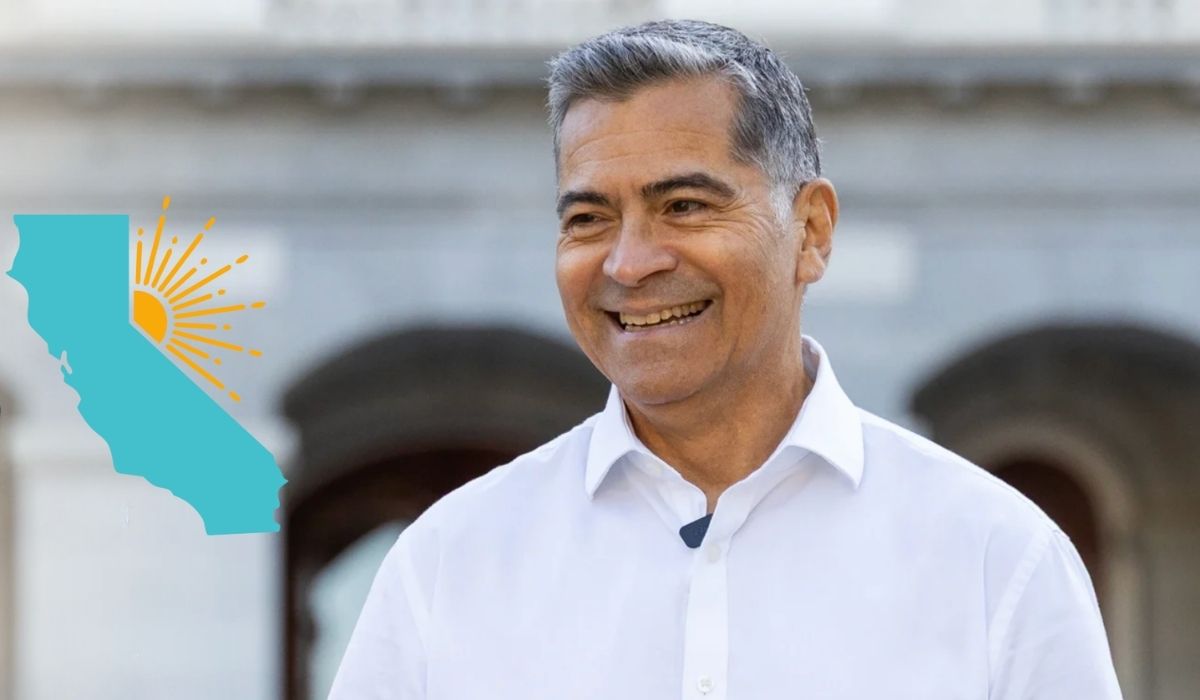
In a sweeping conversation with ethnic media, the gubernatorial candidate confronted the crises reshaping California—housing, healthcare, homelessness, affordability, and the growing instability facing working families.
Magazine, The Immigrant Experience
California’s next governor will inherit more than a housing crisis, a homelessness crisis, or a budget crisis. They will inherit a crisis of belief.
Across the state, the bargain that once defined California is beginning to feel broken. People who work full-time cannot afford to live near the jobs that sustain the economy. Families earning decent wages are still one medical emergency away from financial collapse. Teachers, nurses, caregivers, and service workers are leaving the communities they helped hold together. Inside immigrant neighborhoods, another kind of instability is settling in too — the fear that shifting political winds in Washington could once again disrupt ordinary life overnight.
This is the emotional terrain shaping California’s governor’s race: not optimism, but exhaustion.
When Xavier Becerra appeared before ethnic media outlets from across California and the nation through a forum hosted by American Community Media (ACOM), he entered a political atmosphere defined less by ideology than by anxiety. Latino, Asian American, Black, Russian-language, South Asian, and independent community journalists brought forward the concerns dominating kitchen-table conversations across the state: affordability, healthcare, housing, homelessness, public trust, and the growing sense that California is drifting further away from the people who built it.
Becerra made his case not simply as a candidate for governor, but as someone arguing that California’s identity itself is now on the ballot.
The former congressman, California attorney general, and Biden administration cabinet secretary leaned heavily on biography throughout the exchange, grounding his answers in the story of his immigrant parents, his father’s union work, and his own rise as the first in his family to attend college.
The story was familiar.
But in this political moment, it carried sharper meaning.
Becerra’s larger argument was not merely that California faces policy failures. It was that the state has drifted dangerously far from the promise that once made sacrifice feel worthwhile.
“We have to restore those days when people would come to California believing that if they worked hard, they could accomplish much more for their kids,” he said.
That sentiment lingered over nearly every issue raised because it captured the deeper tension shaping California politics right now. The state remains enormously wealthy, globally influential, and politically dominant. Yet many of the people who clean its offices, harvest its food, care for its elderly, teach its children, and power its service economy increasingly experience California less as a place of opportunity than as a place of permanent economic anxiety.
Housing became the clearest expression of that anxiety.
Becerra said his first executive action as governor would be declaring a state of emergency on housing, pointing to roughly 40,000 shovel-ready housing units stalled largely because financing has dried up. He also proposed freezing utility rate increases and home insurance premiums during the emergency period, arguing that Californians deserve protection from costs that now feel detached from ordinary wages and daily reality.
The crisis has expanded far beyond poverty and deep into the middle class. Young adults delay independence because rent consumes too much income. Parents quietly subsidize grown children who cannot realistically afford market housing alone. Essential workers endure brutal commutes because the regions they sustain have become economically inaccessible.
The issue is no longer simply whether Californians can buy homes.
It is whether they can build continuity in their lives at all.
For immigrant families especially, the affordability crisis has reshaped family structures, financial planning, and even the meaning of stability itself. Multiple generations often live together not solely out of tradition but necessity. Families postpone entrepreneurship, education, or retirement simply to remain afloat. Entire communities are being pushed inland as economic centers become unlivable for the labor force sustaining them.
California still depends profoundly on immigrant labor while slowly becoming unaffordable to the people doing it.
Healthcare revealed another fracture line in California’s economic reality.
Becerra defended his decades-long support for expanded healthcare access while arguing that healthcare insecurity has become one of the fastest pathways into debt and displacement for working families. He reaffirmed support for Medi-Cal protections, including access for undocumented Californians, while warning that federal cuts to Medicaid would destabilize hospitals, overload emergency systems, and deepen inequality throughout the state.
“If you work hard in California,” he said, “you deserve to have access to the healthcare that you need.”
The statement spoke directly to workers occupying many of California’s most physically demanding and economically essential industries while remaining among its least protected: agricultural laborers, caregivers, restaurant workers, home health aides, hotel staff, warehouse workers, and delivery drivers.
People whose labor is considered indispensable right up until they need care themselves.
Becerra repeatedly argued that stripping healthcare access from vulnerable populations would not eliminate costs but merely relocate them into overcrowded emergency rooms and collapsing community health systems.
People without insurance, he emphasized repeatedly in substance, do not stop getting sick.
Immigration surfaced as one of the most emotionally charged dimensions of the exchange, though notably, it never stood apart from the broader discussion about economic insecurity and public belonging. Instead, it exposed how deeply immigration fears now intersect with housing instability, healthcare access, labor exploitation, and public trust.
“We will not take a knee,” Becerra said when discussing the possibility of renewed federal immigration crackdowns under Donald Trump.
The phrase became the defining refrain of the afternoon.
Drawing from his years battling the Trump administration as attorney general, Becerra promised legal resistance against what he described as unconstitutional federal overreach. He accused ICE operations of violating rights and pledged continued cooperation with California Attorney General Rob Bonta to challenge aggressive enforcement actions targeting immigrant communities.
But the strongest moments came when he stepped away from legal language and spoke instead from personal memory.
“I know what it feels like when your rights are not respected,” he said.
Inside ethnic media spaces, immigration policy is never theoretical. Policy shifts become immediate disruptions to daily life: workers disappearing from job sites after rumors of raids, families avoiding public spaces, parents terrified to drive children to school, and green card applicants fearful that years of sacrifice could be destabilized by administrative hostility.
Becerra condemned recent federal restrictions affecting adjustment-of-status applicants seeking green cards, arguing that immigrant families already following legal pathways are being deliberately destabilized.
“These are people who are qualifying to be here,” he said. “These are not the criminals.”
Again and again, he framed immigrants not as burdens on California but as central to its survival.
“They have created millions of jobs,” he said. “They are revitalizing communities.”
Still, immigration never overtook the larger picture emerging throughout the exchange: California’s crises are no longer arriving one at a time.
Housing insecurity overlaps with healthcare debt. Immigration fears intersect with labor instability. Rising utility costs collide with stagnant wages. Homelessness increasingly shadows families who once believed they were financially secure.
California continues to hold the nation’s largest unhoused population, and Becerra argued that the state spends far too much reacting to homelessness while investing too little in preventing families from falling into it in the first place.
“It costs way more money to pick someone off the street,” he said.
He called for greater accountability from homelessness programs while expanding efforts designed to keep struggling residents housed before temporary hardship spirals into permanent displacement.
Homelessness no longer feels distant to many Californians. Increasingly, families understand how thin the line has become between stability and collapse.
A lost job.
A medical diagnosis.
An impossible rent increase.
For many Californians, stability no longer feels permanent. It feels borrowed.
Even the conversation around arts funding and education reflected the same broader concern. Becerra spoke about music, science, and cultural programs not as luxuries but as pathways that allow children—especially those from disadvantaged backgrounds—to imagine larger futures for themselves.
California’s crisis, ultimately, is not only economic.
It is psychological.
Too many residents no longer believe sacrifice will produce stability. Too many families no longer trust that hard work will secure dignity, homeownership, healthcare, or permanence in the communities they helped build.
That loss of belief may be the most politically dangerous crisis California faces.
And perhaps that is why the ACOM forum resonated beyond ordinary campaign politics. The exchange became less about electoral messaging than about whether the government still understands the emotional reality of ordinary life in California—the fatigue, the uncertainty, the quiet calculations families now make every month simply to remain here.
As the conversation closed, the election itself returned to the center of the moment, though not in the language campaigns usually prefer.
There was little focus on polling, endorsements, or political strategy.
Instead, the deeper question hanging over the discussion was whether Californians still believe the state can function as a place where working families are able not merely to survive, but to imagine a future worth staying for.
Becerra ended where he often does: with family.
He spoke again about his father’s union work. His mother arrived with almost nothing. Being the first in his family to attend college. The story was personal but also unmistakably political. It was his argument that California once made upward mobility feel attainable to families like his—and that this election may determine whether that promise survives for the next generation.
“I am going to make full use of every lever of government,” he said, “to protect the families that were just like my parents.”
Whether voters ultimately believe that vision may define far more than a single governor’s race.
Because beneath every issue raised—housing, healthcare, homelessness, affordability, immigration, and public trust—sits the same defining question now hanging over California politics:
Can the state still deliver stability, dignity, and possibility to ordinary people who work hard and ask for little more than a fair chance to remain?
The answer may decide not only who becomes governor but also what California becomes next.
#XavierBecerra #CaliforniaPolitics #HousingCrisis #EthnicMedia #HealthcareAccess #ImmigrantVoices #MediCal #ACOM #TheImmigrantMagazine




1 Comment. Leave new
Navigating this site is a breeze and the registration process took less than two minutes. I tested the customer support on a weekend and they were still helpful and patient. The game library is huge with plenty of local favorites and international hits. Payments are secure and my winnings arrived without a single delay. caraocruz