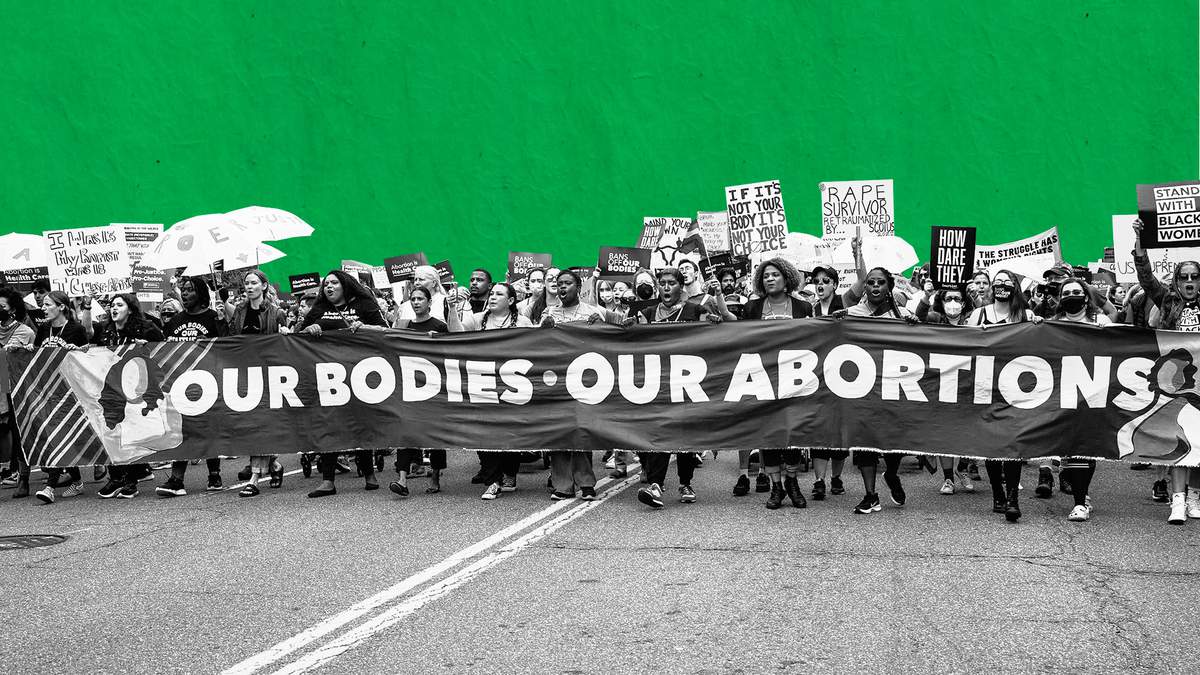
(Planned Parenthood photo)
Magazine, Living Well, By Sunita Sohrabji, /American Community Media
A ban on accessing abortion pills by mail would require women to see a physician to access the medication. Such policy would adversely impact women who are uninsured or live in areas with chronic physician shortages.
Black and Hispanic women face the greatest risk of not being able to access abortion care if the Supreme Court this week upholds a lower court’s ban to end delivery of mifepristone —an abortion pill — by mail.
If the Supreme Court does agree with the lower court’s ruling, mifepristone by mail would be banned across the US, even in states where abortion is legal. Currently, 25 states have passed laws protecting a woman’s right to choose. 13 states have enacted whole or partial abortion bans.
Medication abortions account for 63% of all abortions in the US, according to 2023 data from the Guttmacher Institute. 2022 CDC abortion surveillance data suggests that Black women receive 40% of abortions in the US, while Hispanic women receive 21%.
Limited access to healthcare
But Black and Hispanic women also are uninsured or underinsured in contrast to the population at large. They are more likely not to have a primary care physician, and also live in areas with chronic shortages of designated primary care givers, according to data from the Congressional District Health Dashboard. (See detailed analysis below)
If the Supreme Court does uphold the lower court’s ban on mifepristone by mail, women would have to see a physician in the clinic to access the needed medication. But ironically, access to healthcare is limited in many of the 13 states with abortion bans.
Nationwide uninsured rates in 2024 were higher for Indigenous women (21.6%), Latinas (19.8%), and Black women (10.3%), notes data from the National Women’s Law Center.
Five years ago, before Roe vs Wade was overturned, the Food and Drug Administration removed in-person dispensing requirements for mifepristone and misoprostol, a pill often taken in combination. Women seeking a medication abortion can currently call a tele-health clinic to get the pills via mail or at a pharmacy. Planned Parenthood and other reproductive health organizations also offer medication abortions.
’Illegal abortions?’
Louisiana May 1 filed a lawsuit in the 5th Circuit Court of Appeals against the FDA, Danco Laboratories and GenBioPro, the primary manufacturers and distributors of mifepristone in the United States.
In its suit, the state said that allowing mifepristone to be delivered by mail, rather than at a clinic had “resulted in numerous illegal abortions in Louisiana and in Louisiana paying thousands in Medicaid bills for women harmed by mifepristone.” Louisiana also stated that the FDA had not thoroughly reviewed mifepristone to determine whether it was harmful.
Research has shown mifepristone is safe to use in early pregnancy.
The 5th Circuit ruled in favor of Louisiana, imposing a ban on mifepristone via mail. The Supreme Court took up the case May 7, responding to an emergency request from Danco and Gen Bio Pro. Justice Samuel Alito responded to the emergency request, and issued an administrative stay — pausing the lower court’s decision — until May 14. This is Alito’s 2nd stay in this matter.
Limiting Abortions
“Reinstating outdated and medically unnecessary restrictions on the provision of mifepristone would negatively impact people’s lives and decrease abortion access across the country,” Amy Freidrich-Karnik, director of federal policy at the Guttmacher Institute, said in an earlier statement. Her remarks came after the release of data showing abortions in the US reached a 12-year-high in the first year after the overturning of Roe.
“The order eliminates nationwide access to mifepristone from certified pharmacies and by mail, thereby disrupting a status quo that has been in place for more than five years and upending the reasonable reliance of patients, providers, pharmacies, and drug sponsors across the country,” wrote Gen Bio Pro in its emergency request.
’Regulatory chaos’
“The 5th Circuit’s order has unleashed regulatory chaos,” wrote the pharmaceutical company, noting that the court had “short-circuited” the FDA’s review of mifepristone.
The 5th Circuit Court’s ruling does not impact misoprostol, which can be used without mifepristone to induce an abortion. But the dosage is much higher, and has a lower rate of success.
Limited healthcare in abortion ban states
Roughly 25% to 31% of Hispanic women and 9% of Black women who live in Louisiana are uninsured, according to data from the CDHD.
More than 19% of Louisiana‘s residents live in “designated primary care shortage areas,” regions that are in short supply of health professionals.
In Alabama, more than 11% of women are uninsured. In certain districts, uninsurance rates are higher than 12% for Black residents and almost 30% for Hispanic residents. Alabama is one of the few states with a high percentage of uninsured Asian residents. Almost 18% of Alabama’s residents live in regions with a shortage of doctors.
Some of the greatest disparities are in Texas, which enacted a complete abortion ban shortly following the overturn of Roe v. Wade. Almost 18% of women in the state are uninsured.
In Texas’ Congressional District 5, which is the northeast portion of Dallas County, more than 1/3 of Hispanic women are uninsured. Fourteen percent of Black women lack health insurance. The district is one of the few where a significant number of White women — 16% — also do not have health insurance.
Mifepristone is safe, say experts
The American College of Obstetricians & Gynecologists and 20 medical organizations joined in filing an amicus brief May 6 urging the Supreme Court to stay or vacate the Fifth Circuit’s decision reinstating the in-person dispensing requirement for mifepristone. The organization noted “the overwhelming body of medical evidence proving that mifepristone is safe and effective whether dispensed in-person or prescribed through telehealth and dispensed by mail.”
“All patients are entitled to timely, complete, and unbiased health care that is medically and scientifically sound. The substantial body of real-world data and research, including data from the COVID-19 pandemic, proves that mifepristone is safe and effective regardless of whether it is dispensed in person,” said Dr. Camille A. Clare, president of ACOG.
Healthcare inequities
ACOG noted that mifepristone’s availability by telehealth is vitally important to the provision of more equitable reproductive health care.
“The option of mail and pharmacy dispensing enables practitioners to provide safe, medically appropriate, and effective care to the many patients that face barriers to access to basic reproductive health care, including miscarriage management,” said ACOG in its amicus brief
“The ability to dispense mifepristone by telehealth has been a much-needed advancement in addressing real barriers that prevent people from accessing evidence-based reproductive health care. Reinstating the in-person dispensing requirement would only worsen those unnecessary barriers to care and exacerbate subsequent health inequities,” said Clare.
#Mifepristone #ReproductiveJustice #AbortionAccess #BlackMaternalHealth #LatinaHealth #HealthcareEquity #SupremeCourt #MedicationAbortion #WomenRights #ImmigrantHealth