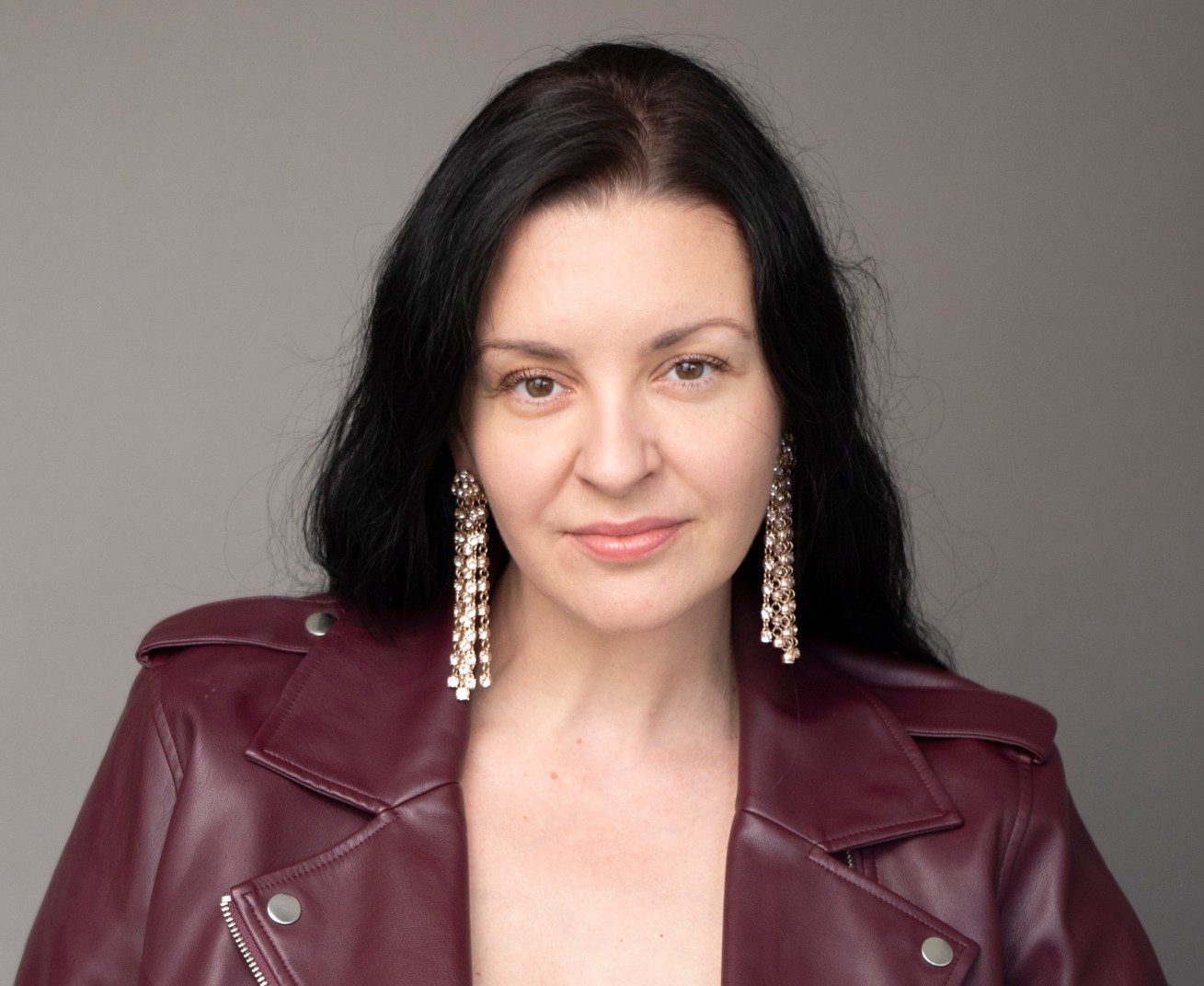
Anna Zaitseva, Director & Screenwriter, LEAVING JAMES
She grew up backstage in a theater in Russia, surrounded by actors and stories. Yet Anna Zaitseva never imagined becoming a filmmaker.
Life had other plans.
Years later, she brought her filmmaking career to Hollywood, determined to tell the kinds of stories that make us confront uncomfortable truths.
Her latest psychological thriller, Leaving James, explores the realities of marriage, manipulation, and control through the eyes of an Eastern European immigrant woman struggling to reclaim her independence.
When does love become control? And how much harder is it to walk away when you’re an immigrant, far from home?
In this exclusive conversation with The Immigrant Magazine, Anna shares her journey from Russia to Hollywood, the inspiration behind Leaving James, and why she believes some stories are too important to leave untold.
Before the films and recognition, where did your story begin? Tell us about growing up and what first drew you to storytelling.
I was born in Petropavlovsk-Kamchatsky, on the Kamchatka Peninsula in the Russian Far East, not so far from Alaska. It’s a rather extraordinary place to begin a life, especially a life in cinema.
Both of my parents worked in theater. My mother was an actress, and my father was an actor and theater director. So instead of going to kindergarten, I practically grew up backstage.
My parents would take me to rehearsals and performances, and I spent my days wandering through this enormous repertory theater. There were costume rooms, backstage corridors, and these magical spaces where all the sets and props were stored. A few other actors’ children and I had the entire theater as our playground. We climbed everywhere, invented games, and basically lived in a world where imagination was part of everyday life.
By the age of three, I was already performing onstage, playing a children’s role with quite a complicated text.
So storytelling was never something I consciously discovered. It was simply the world I grew up in.
But there’s an interesting twist to this story: for a long time, I was absolutely determined not to follow in my parents’ footsteps.
When I was about six or seven, our family moved to Moscow. It was the 1990s, an incredibly difficult period economically. My father continued working in theater, but my mother had to find all kinds of ways to make money because the arts could barely support a family. The film industry had practically collapsed, theaters had no money, and people were struggling just to survive.
Watching all of this as a child, I made a very firm decision: I would never become an actress or a director. It seemed like such a financially unstable profession, where your future depended entirely on other people’s decisions.
I thought perhaps I would become a producer instead. Something practical!
So after high school, I enrolled in an economics university and eventually graduated with honors.
The funny thing is, by my second year, I was already terribly bored.
In high school, I had attended a Waldorf school, where creativity was a huge part of our education. I used to direct school plays and perform in them myself. It all felt completely natural to me.
And once I found myself studying economics, I suddenly realized how much I missed that world.
I started experimenting with filmmaking. Together with some friends, I made a little thriller at home. It was my first film, and of course, looking back, it was quite naive in some ways. But apparently, there was already something interesting about the way I told stories.
Meanwhile, my father had moved from theater into filmmaking and had become a successful film director.
While I was still at university, I started visiting his film sets. And I became completely obsessed.
I would arrive early in the morning with the crew and stay until late at night. I didn’t have any official responsibilities. I would just sit quietly, trying not to disturb anyone, and watch him work.
I was fascinated by everything: how he communicated with actors, how he analyzed a scene, how he found its emotional core, and how he translated that into performances, movement, and the relationships between characters.
I could spend an entire day watching him direct a single scene and never get bored.
Looking back, I think those days were my first real film school.
My father could see how interested I was, and he was very supportive when I started making my own films.
After graduating from university, I went straight to work on his film set as a first assistant director. I worked in that position for about two years, and it felt like finally being able to breathe. I was exactly where I wanted to be.
Then something unexpected happened.
I traveled to Venezuela to work on a film production, and there I met a local producer who was also a director. He told me about a film school in Prague called FAMU.
It’s one of Europe’s most renowned film schools, with alumni including Miloš Forman and Emir Kusturica.
He had studied in its international program, and the way he talked about the school was so inspiring that I suddenly knew I wanted to go there.
So I applied.
And here’s my favorite part: I got accepted with that very first little thriller I’d made at home with my friends while studying economics.
My future professor, Ivo Trajkov, who accepted me into his class, later told me that although the film was quite naive, he could already see an interesting cinematic language in it.
That’s how I ended up moving to Prague, a city I’d never visited before.
I fell in love with it immediately. It’s an incredibly beautiful city, and FAMU turned out to be a transformative experience.
I initially enrolled in a one-year academic program but then decided to stay and pursue a master’s degree in film directing. Altogether, I spent four years studying there.
During that time, I made several short films that began traveling to international festivals, and that was really the beginning of my professional career as a director.
So I suppose the irony of my story is that I spent years trying to escape the world I was born into, only to discover that it was exactly where I belonged.
And perhaps that’s the answer to what first drew me to storytelling: I never really chose it. In a way, it chose me.
How I Fell in Love with Storytelling
I think I first experienced that feeling when I made my very first film, a little thriller we shot with friends at home, using an ordinary consumer camera. We were young, inexperienced, and, to be perfectly honest, not entirely sober during the process!
But something extraordinary happened when I watched my own edit of the film.
I realized that I was actually getting scared.
And that completely amazed me. I knew exactly how everything had been shot. I knew what was going to happen. I had created the whole thing myself. And yet, somehow, it was working on me emotionally.
I think that was the moment I truly fell in love with filmmaking.
What fascinates me most about directing is the ability to create an entire world out of nothing. At first, there’s just a story on paper. Then actors begin speaking the words, characters start coming alive, and gradually, through an incredibly complex combination of creative decisions and technical craftsmanship, that imaginary world becomes real.
And eventually, something almost magical happens: this world you’ve invented begins to affect other people. It makes them laugh, cry, feel anxious, or afraid. It makes them think.
I sometimes describe it as manipulating the audience’s emotions, in the best possible sense of the word. And I find that absolutely thrilling.
There are actually two parts of filmmaking that give me this extraordinary feeling.
The first is the process of directing itself. When you’re on set, you’re like a locomotive, driving this enormous creative machine forward. You give your energy to the actors, to the crew, and to everyone around you. Your vision, your emotions, and your excitement become contagious. Everyone contributes their own talent, of course, but for a moment, you’re all connected through this one imaginary world you’re bringing to life.
And the second part happens in the editing room.
Sometimes I’ll be editing a scene, carefully arranging every shot, adjusting the rhythm, and knowing exactly where to cut to make something scarier or funnier. I know every single frame by heart.
And then I watch the finished scene, and suddenly I’m scared. Or I’m laughing. Even though I know exactly how I made it happen, it still works on me.
What I find most incredible, though, is watching how a film affects an audience. Sitting in a dark theater and hearing people gasp, laugh, or collectively hold their breath, sometimes at exactly the moments you intended is an extraordinary feeling. You realize that you’ve created these emotions, almost woven them into the film.
But what’s equally fascinating is when audiences react in ways you never anticipated. Once a film is finished, it begins to have a life of its own. You may think you’ve carefully controlled every emotional beat, but people bring their own experiences to the story, and sometimes they discover something you didn’t even realize was there.
As I’ve grown as a filmmaker, the ideas and themes I want to explore have become increasingly important to me. But I’ve also come to understand that emotional engagement is what allows cinema to communicate those ideas so powerfully. A film can address the most meaningful subjects and express the most important values, but if it doesn’t move people, those ideas may never truly reach them.
That’s what I love most about cinema: its extraordinary ability to connect with people emotionally and, through those emotions, start a conversation about something that really matters.
What brought you to America? Was this always your dream, or did an opportunity lead you here? What were you hoping to build for yourself?
I first fell in love with America in 2012, when I attended the Austin Film Festival. I remember the American audiences and how exciting it felt to experience cinema with them. I also fell in love with the California coast. That trip planted a seed: someday, I wanted to come back and work in America.
But I didn’t want to rush. I wanted to return as an established director, with my own experience and a body of work behind me.
Over the next ten years, I directed seven television series and a feature film, earned dozens of international awards for my films and series, and built a wonderful family with my husband and our two children, who are now six and a half and three and a half.
And that was just as important as my professional achievements. When I finally moved to the United States, I wasn’t looking for a new life because something was missing from my old one. I already had a career I loved and a family that made me incredibly happy. I came here feeling established, both professionally and personally, with a strong foundation that gave me the confidence to start a new chapter in another country.
What do you remember most about starting over in Los Angeles? Share a moment that captures those early days, including something you missed from home?
I love Los Angeles, but adjusting to life here was quite an adventure. Coming from Europe, I miss walkable streets and beautiful architecture. Here, especially with two kids, I spend half my life driving! But then I visit Joshua Tree or Northern California, and the landscapes make up for so much.
My first American short, Dating a Suspicious Man, gave me a particularly memorable welcome. We were filming under a bridge in Santa Monica, at a location we’d worked hard to secure. Our bags were unattended for just three minutes. When I returned, a homeless man was rummaging through them. He told me he worked there and walked off with a backpack full of our costumes, props, and my personal things.
My crew scrambled to replace everything, including my tights, which are surprisingly hard to find in LA! Later, I couldn’t help imagining him strolling around Santa Monica smelling of my perfume and wearing my shapewear. One minute you’re thrilled to be filming in beautiful Santa Monica; the next, reality hits!
Hollywood itself has its quirks. Everyone seems to be a producer or screenwriter with a fantastic project and endless promises. There are wonderful collaborators here, but experience has taught me to tell the talkers from the doers. And yes, LA is incredibly expensive. Still, I love its creative energy, its possibilities, and California’s extraordinary scenery.
How did you begin to find your people and feel a sense of belonging here? Who or what helped you make a life beyond your work?
I was lucky because I already had a small circle of close friends in Los Angeles , filmmakers I met at a festival in Monaco back in 2011. We’ve stayed connected ever since, and I’ve now even cast one of them in two of my films.
My husband’s support is also huge, I never feel alone here. And honestly, filmmaking itself brings people together incredibly fast. You go through intense experiences together, so by my third project I was already working with friends instead of just colleagues. Now we visit each other, have barbecues, and support one another. A shared passion for cinema really unites us.
You brought filmmaking experience with you. What did building a career in Hollywood ask you to learn—or learn again? Take us into a challenge or unexpected opportunity that shaped your path.
I’ve worked with people from different countries and cultures, so I didn’t feel I had to learn filmmaking all over again. The biggest adjustment was understanding American production regulations , things like studio teachers for child actors or intimacy coordinators. It adds organizational complexity, but I appreciate how much attention goes to safety and comfort on set. What matters most is that my stories connect with American actors, producers, and audiences. That’s why I wanted to make films here.
Looking back, what has this journey taught you about yourself—and has it changed what success means to you?
Honestly, I don’t feel ready to look back yet. I feel like I’m just at the beginning of an exciting new chapter, so I’m looking forward rather than back. I still believe what I’ve always believed: you have to keep working hard, keep creating, keep writing, keep making films, and knock on every possible door. What I love about America is that sometimes those doors really open , even a cold email can lead to an unexpected opportunity. That openness is inspiring. So my definition of success hasn’t changed, it’s about continuing to move forward and never stopping. And I’m genuinely excited to see where this journey takes me.
How has your immigrant experience shaped the women and stories you bring to the screen? What led you to LEAVING JAMES, and why did you make its central character an Eastern European immigrant?
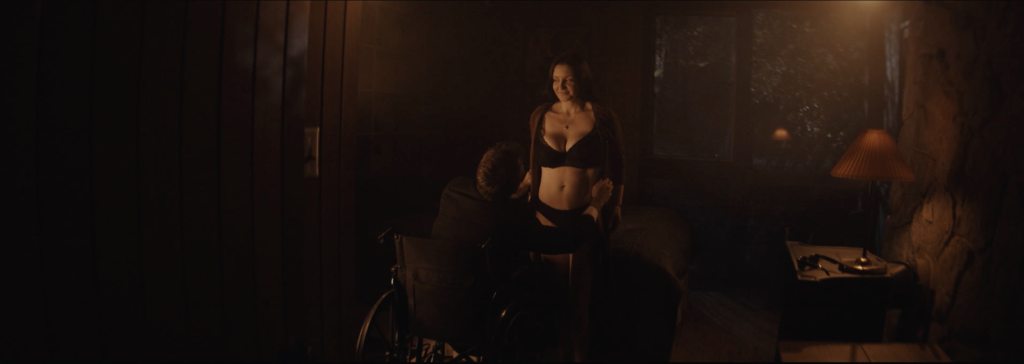 LEAVING JAMES is a deeply personal film. It’s not autobiographical, but it draws on different experiences I’ve had with relationships, manipulation, and control.
Beneath the thriller’s main story lies something I’ve experienced myself: how women can spend years measuring their worth through men’s approval, whether it’s a father, a partner, or another authority figure.
I made Anna an Eastern European immigrant partly because I knew I would play her myself. But her immigrant status also makes her vulnerability much more real. Her husband is an established American actor with money, connections, and a home, while she’s still trying to find her place in a new country. Her family is far away, and leaving him isn’t nearly as simple as it might seem.
That imbalance gives him even more power to undermine her confidence and manipulate her through guilt. Her immigrant experience isn’t just background, it’s an essential part of what makes her feel trapped.
Who is Anna beyond her relationship with James? What does she want for her own life, and what makes it difficult for her to pursue it?
Anna is a talented actress who graduated from a prestigious European drama school and came to America hoping to build a career. But like many immigrant actors, she struggles to find her place, taking survival jobs while chasing opportunities in Hollywood.
Just as things finally start moving forward, she gets offered a leading role in New York, the kind of opportunity that could change her life.
But James, now paralyzed after an accident, convinces her that she’s responsible for his condition and that leaving him would be a terrible betrayal. He even proposes marriage, something he had never wanted when he was healthy and successful.
Trapped between her ambitions, her love for James, and an overwhelming sense of guilt, Anna sacrifices the career she’s worked so hard to build.
What did you want to explore about consent and control within marriage? In telling this story, how did you distinguish James’s need for care from his use of guilt to control Anna?
What I really wanted to explore is how abuse develops gradually, often almost invisibly. It can start with love, attention, gifts, and seemingly small compromises. That’s why LEAVING JAMES begins almost like a romantic drama and gradually transforms into a dark thriller.
James was controlling long before the accident. His disability doesn’t make him abusive, but it gives him another way to manipulate Anna through guilt. I don’t even think he’s always consciously manipulating her. He’s genuinely struggling, but he cannot accept a relationship in which Anna has her own ambitions and independence.
For me, care becomes control when choice disappears. Anna could support James without sacrificing her career, her independence, or her emotional well-being, but he doesn’t look for compromise. He makes her feel that loving him means giving up her life.
And that’s where care becomes a trap. This kind of manipulation can escalate so gradually that you barely notice it’s happening. In real life, it can lead to violence, crime, and even murder. Sometimes, a woman finds herself making choices that change her life forever, just as Anna does. I don’t want to spoil the story, but this is exactly why I think it’s important to talk about these things. I hope the film helps someone recognize the early signs of manipulation and abuse in their own relationship before it’s too late.
How did you approach the intimate scenes with care for both the performers and the story? What guided your decisions about what audiences needed to see to understand Anna’s experience?
For me, the most important principle was that intimacy should never exist just for the sake of showing sex. The film has one central intimate scene, and it plays a crucial role in the story. It’s a complex, carefully constructed sequence that unfolds almost without dialogue, revealing the emotional states of three characters and becoming a major turning point in the film.
What makes this scene so disturbing is the ambiguity of consent. Anna appears to be willingly having sex with another man, but emotionally, she has been pushed into it by her husband. To me, this is a scene about rape — just not rape in the way we’re used to seeing it portrayed on screen. James doesn’t physically restrain her or use violence. Instead, he uses love, guilt, and emotional blackmail to tie her down with invisible ropes. Her apparent consent hides the fact that she doesn’t truly feel free to say no.
I wanted the audience to feel that discomfort. The scene is intimate, but it’s not meant to be erotic in a conventional sense. It’s about power, vulnerability, and humiliation. Even the visual contrast is deliberate: James remains fully dressed in his tuxedo while the other two characters are exposed. He’s physically vulnerable because of his disability, yet he’s the one exercising control.
At the same time, we approached the filming with great care. We dedicated a separate day to rehearsing the entire scene fully clothed, carefully planning the choreography and camera angles. Everyone knew exactly what would happen, and we made sure the actors felt comfortable and respected. We didn’t need explicit nudity or graphic details to communicate what was happening.
I also played Anna myself, so I experienced the emotional intensity of the scene firsthand. I remember the first take being genuinely uncomfortable, even though I knew exactly what was coming. That experience confirmed something important for me: the scene’s power wasn’t in how much we showed, but in what the audience could feel.
What was the hardest decision you faced in bringing this film to life? Did being an immigrant woman director affect your ability to find support or protect the story you wanted to tell?
Although I was already an established director in Russia, in Hollywood I’m essentially building my career again. I know my craft and have confidence, but I don’t yet have the local network that makes financing easier, so I had to raise the money for production myself. Fortunately, I later found support for post-production.
I’ve also noticed that some people, especially men, can follow the plot but don’t always connect with the subtle psychological dynamics many women recognize instantly. Of course, there are wonderfully empathetic men who understand these stories too, and some have helped my film even when its theme wasn’t especially close to them.
But one of the reasons I came to America was precisely because I believe women’s stories have real value here. I see women producers, actresses, and directors who support each other, who understand what we’re trying to say, and who are willing to stand beside us to bring these stories to life. That’s incredibly important to me. I want to make films not only with support but together with women who share this experience and vision.
What do you hope stays with people after they watch LEAVING JAMES? What practical advice would you give to an immigrant woman trying to build a career in filmmaking?
What I hope people take away from LEAVING JAMES is how important it is to recognize when a relationship is becoming toxic, controlling, or dangerous , before it’s too late.
Anna tries to leave James several times throughout the film. But each time, he finds a way to pull her back through guilt, emotional blackmail, or promises of love. That’s what makes these relationships so difficult to escape. The emotional highs and lows create a cycle that can be incredibly hard to break.
One of the central ideas of the film is that the longer you stay in a destructive relationship, the higher the price of leaving can become. At first, walking away might mean heartbreak or starting your life over. But as the situation escalates, the consequences can become irreversible.
I’m also interested in how psychological manipulation can push people into making choices they would never otherwise make — sometimes even choices that cross moral or legal boundaries and destroy their own lives.
I don’t want to judge Anna or tell audiences what they should do. I want them to understand how someone can gradually become trapped in a situation they never imagined themselves being in.
If the film makes even one person look at their own relationship differently, recognize something troubling, or find the courage to make a difficult decision before it’s too late, that would mean a great deal to me.
I don’t think I can give universal advice, because everyone comes here with different experiences and circumstances. I can only speak from my own journey, and I don’t yet know where it will lead me.
But in less than two years in America, I’ve managed to make three projects and become actively involved in the independent film industry. And if there’s one thing I’ve learned, it’s this: never stop making films.
I understand that many immigrants have to focus on survival, take other jobs, and rebuild their lives from scratch. I’ve experienced that transition myself. But I believe that if you’re a filmmaker, you have to remain a filmmaker. Don’t let the struggle of everyday life completely take over your creative life.
You don’t need a huge budget to start. Make something small, find people who share your passion, help each other, take risks, and keep creating. Every project opens new doors. You meet collaborators, reach festivals, build relationships, and gradually become part of the industry.
And don’t expect one film to change everything overnight. You might make a short or a feature film, get some attention, and still not see a major breakthrough. So you make another, and another. You never know which project will bring you recognition. Sometimes it’s the cumulative effect of everything you’ve created — different films reach different people, and gradually you build your reputation and establish your place in the industry. Success is often the result of persistence, not one lucky breakthrough.
And knock on every door. Don’t wait for someone to discover you. Create opportunities yourself. Every film, every screening, every new achievement is a reason to reach out, introduce yourself, and bring more people into your world.
Of course, filmmaking requires enormous dedication, uncertainty, and sometimes financial risks. But for me, the process itself is incredibly exciting. I love every stage of it, from writing and shooting to editing and finally sharing the film with an audience. Even the disappointments are part of a life I genuinely love.
My advice is simple: if filmmaking is truly your passion, don’t wait for opportunities. Create them. Keep making films, keep taking risks, and never stop knocking on doors.
#AnnaZaitseva #LeavingJames #WomenInFilm #ImmigrantStories #Hollywood #FemaleFilmmakers #ImmigrantFilmmakers #WomenEmpowerment #IndependentFilm #PsychologicalThriller #CoerciveControl