Kukla’s FANTASY awarded Honorable Mention and Best EnsembleBest Documentary awarded to Ketevan Vashagashvili’s
9-MONTH CONTRACT
MILITANTROPOS by the Tabor Collective earns Honorable Mention
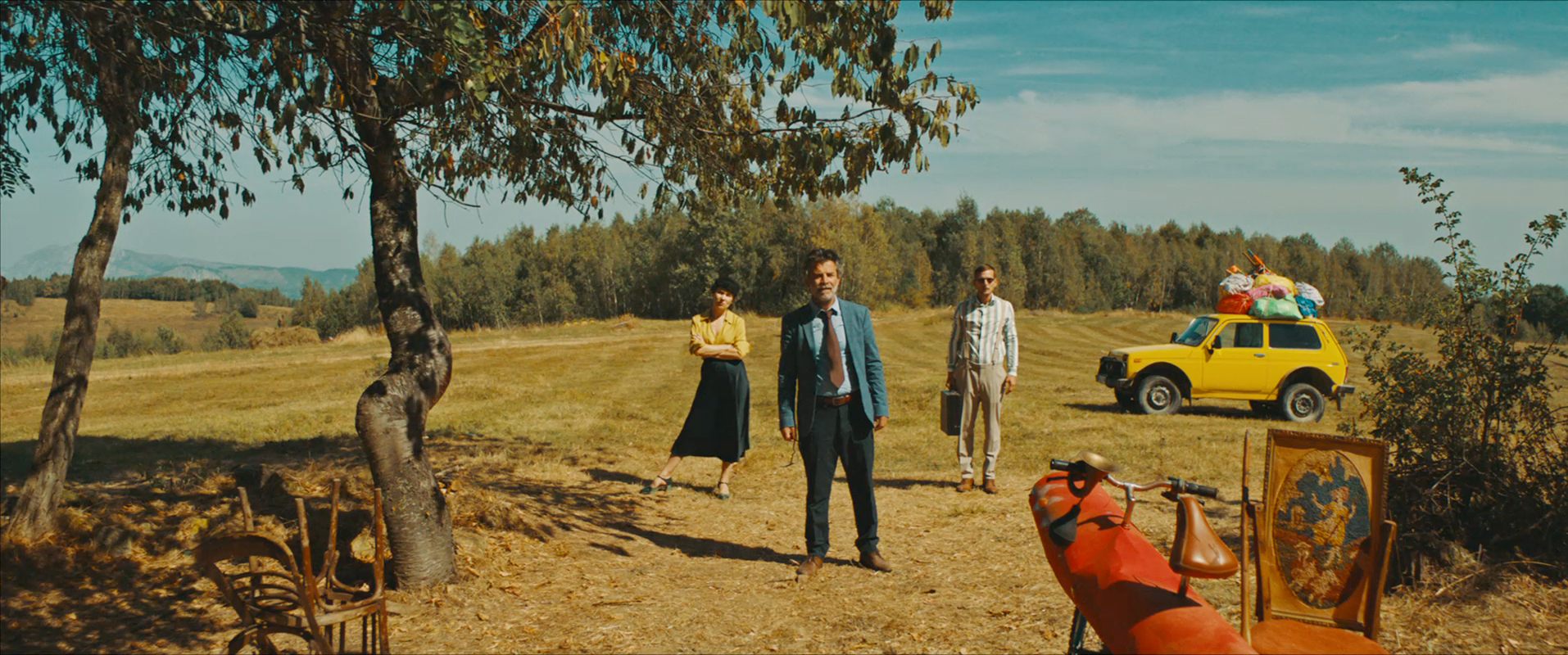
| Los Angeles, – The 21st annual edition of SEEfest (seefilmla.org), co-presented by ELMA (elma.org), foundation for European Languages and Movies in America, concluded on Wednesday evening May 6th at the Laemmle Royal Theatre in Los Angeles with awards ceremony honoring the new generation of filmmakers from South Eastern Europe, led by two outstanding debuts: Ioana Mischie’s poetic and humorous CATANE, unanimously hailed by the Jury as ‘vibrant, alive, relatable and deeply human,’ a gentle satire about a broken system and bureaucrats who find their groove; and Kukla’s FANTASY, cited by the Jury as a ‘love letter to friendship, blending urban grit with magical realism, and transforming a quiet Slovenian neighborhood into a landscape of infinite possibilities.’Awards presentation was followed by the North American premiere of Jakub Kroner’s ČERNÁK, the sequel to Slovak b.o. all-time hit MIKI, chronicling the rise and fall of the local mafia boss who ruled the turf in post-socialist vacuum. |
| The official juries of the 21st annual South East European Film Festival (SEEfest) (seefilmla.org), which ran April 29 – May 6, 2026, awarded films in seven competition categories. Additionally, Cinema Without Borders publication awarded two Bridging The Borders Awards. |
| SEEfest 2026 Jury Awards: |
| BEST FEATURE FILM, GRAND JURY PRIZE Jury: Adriana Trautman, Moneer Yaqubi, Christopher O’Conner GRAND JURY PRIZE CATANE Director: Ioana Mischie Country: RomaniaJury Statement: In a world overflowing with content, it’s rare to encounter a story that feels new. From the directing and cinematography, to the lighting and costume design. The winner of this competition invited us to experience cinema and storytelling in a way that felt vibrant, alive, relatable, and deeply human. CATANE reminds us why innovation and creativity in storytelling still matters. CATANE is as fascinating as it is magical. The story felt vibrant, relatable, and deeply human, touching on themes of survival, compassion, and forgiveness. It is refreshing and inspiring to see creativity win, especially when paired with what appeared to have been a talented team of filmmakers. |
| BEST ENSEMBLE FANTASY Director: KUKLA Country: Slovenia, North MacedoniaJury Statement: Kukla’s “Fantasy” is a luminous breakthrough in Slovenian cinema, expertly blending urban grit with magical realism to transcend the coming-of-age genre. This visionary work captures a yearning for liberation through a sensory-rich experience that is both local and universally poetic. The film’s success is rooted in its extraordinary ensemble cast. The raw intimacy of the core trio—Sina, Mihrije, and Jasna—is perfectly balanced by Alina Juhart’s magnetic performance as Fantasy, which serves as a transformative catalyst for the narrative. HONORABLE MENTION FANTASY Director: KUKLA Country: Slovenia, North MacedoniaJury Statement: At its core, “Fantasy” is a breathtaking love letter to the friends who help us see ourselves for the first time. Directed with immense soul by Kukla, the film captures that fragile, electric moment in youth when the world feels too small for the person you are becoming. It is more than just a movie; it is a shimmering exploration of the courage it takes to be soft in a hard world, transforming a quiet Slovenian neighborhood into a landscape of infinite possibility. |
| BEST CINEMATOGRAPHY IN A FEATURE FILM Jury: David Auner, David J. Frederick, Michael Stampler WINNER FATHER Director: Tereza Nvotová Cinematographer: Adam Suzin Country: Slovakia, Czech Republic, PolandJury Statement: FATHER was the most impressive in its scope of mastery of camera movement, lighting, and technical cinematography accomplishment. The stitching of the different shots on a few occasions was really so impressive. The continuous 360 degree camera shot efforts which supported the story, emphasized the tension and provided exciting expository needs of the script – all provided within excellent lighting and the cast performance. The cinematography in FATHER was top notch. Combining the elements of compelling camera composition and movement in continuous close ups as well as beautifully accomplished technocrane work fully exploring the film’s characters emotional journey through joy and crisis was powerful. The lighting was transparent and natural, the lens flares were appropriate and beautiful. A complete thumbs up.In FATHER, we loved that the visual aesthetics/photographic choices always felt informed by thematic intention and a subjective perspective. At the beginning, for example, before Domi’s death, the photography is not only handheld but it also looks to my eye like they probably used a small shutter angle to emphasize the choppiness of the frenetic movement. It feels visually hectic and uncomfortable, like you the viewer can’t get a stable handle on things. The camera here also wanders and gets distracted; it wanders off with Domi on the way to the car. These visual design choices reinforce the narrative content they’re representing (everybody’s late for work, there are big meetings today, there’s an unexpected change of plan in who’s taking Domi to school, etc.). The photography sets up a visual environment where it’s easy to understand the headspace of the father when he forgets that his child is in the car — they’ve approximated that headspace sensorily, visually.And of course this visual language is broken by the discovery of the death, which is the first time the camera goes into one of those large, sweeping, floating shots that become a visual motif (reiterated in the courtroom when the father is recalling the events of the death, and again at the end of the film). The use of camerawork that changes with the story arc and creates visual juxtaposition between different portions of the narrative deserves commendation. And the use of visual motif as a sort of punctuation (and connector of related scenes throughout the film) shows foresight in their storytelling.They also use the camera creatively to bridge time gaps, like when we push in on the fan in the office. That moment is also an example of the camera acting as its own subjective character and looking where it wants to for the singular purpose of leading the audience’s eye, instead of solely motivating camera movement with the movement of an on-screen subject. In doing so, though, the camera isn’t only being used to bridge time; it also directs our attention to a physical representation of the heat (the fan), which is what ends up killing Domi. It’s difficult to represent a physical sensation like heat visually — Do the Right Thing, for example, did so by painting buildings bright red and using warm tones in the cinematography (whether via filtration or printer lights — I’m actually not sure). Father represents heat instead by making the camera, seemingly of its own accord, take the audience by the hand and move us away from the character and towards an object that acts as physical indicator of the heat. It makes us hold there and look at just the fan for a moment. The camera itself forces our attention onto the heat that is tragically not at the forefront of the father’s mind, despite his experiencing it. It’s like the camera is having a private aside with the audience: “hey, this is going to be important.” And it does this somehow without feeling too on-the-nose. |
| HONORABLE MENTION OUR FATHER Director: Goran Stanković Cinematographer: Dragan Vildović Country: Serbia, Italy, Croatia, North Macedonia, Montenegro, Bosnia and HerzegovinaJury Statement: We were impressed with OUR FATHER for its natural look, the framing, and the compositions in the run-down treatment facility. The color palette was gorgeous. The cinematography was transparent and perfect. HONORABLE MENTION FANTASY Director: KUKLA Cinematographer: Lazar Bogdanović Country: Slovenia, North MacedoniaJury Statement: We were also quite taken with FANTASY. The coverage inside the bus, in the fight sequences, especially in the blue light night club sequences were all very well achieved with success and story service. Terrific film overall. Beautifully shot. |
| BEST DOCUMENTARY FILM Jury: Shiloh Strong, Sunil Sadarangani, Juli Juteau WINNER 9-MONTH CONTRACT Director: Ketevan Vashagashvili Country: GeorgiaJury Statement: The 9-MONTH CONTRACT is a heartfelt in-depth dive into the needs, desires and passionate beliefs of a mother who will do anything, including renting out her womb as a surrogate, to take care of her teenage daughter. This skilled cinema-verité style documentary invites the viewer to deeply empathize with the hardship circumstances this small family endures, while ending on a note of hope and possibility for both mother and daughter. HONORABLE MENTION MILITANTROPOS Directors: Yelizaveta Smith, Alina Gorlova, Simon Mozgovyi Country: Austria, Ukraine, FranceJury Statement: MILITANTROPOS presents a wonderful way to look at the experience of life at war. The film is a war documentary but in a new way that really stuck with us. There were some real moments that gave us a deeper understanding of the impact of constant war on a culture from new angles. |
| BEST CINEMATOGRAPHY IN A DOCUMENTARY FILM Jury: Claude Budin-Juteau, Shaley Brooks WINNER THE BEAUTY OF THE DONKEY Director: Dea Gjinovci Cinematographer: Maxime Kathari Country: Switzerland, Kosovo, France, USAJury Statement: The award for Best Cinematography goes to THE BEAUTY OF THE DONKEY, shot by Maxime Kathari. This lyrical hybrid documentary traces a daughter’s journey to reconnect with her father’s lost homeland, as Asllan returns with his daughter Dea to Makermal, the Kosovar village he left sixty years earlier. What stood out to us was the strength of the composition and lighting, which gave the film a striking visual impact throughout. The night footage is especially beautiful and memorable, and the careful handling of light shapes an aesthetic that lingers well beyond the final frame. Kathari’s cinematography doesn’t merely document a homecoming — it becomes the medium through which memory itself is recovered, mourned, and made luminous again. HONORABLE MENTION MILITANTROPOS Directors: Yelizaveta Smith, Alina Gorlova, Simon Mozgovyi Country: Austria, Ukraine, FranceJury Statement: In MILITANTROPOS, powerful imagery brings the realities of the war in Ukraine into sharp focus, capturing both the devastation and the resilience of those living through it. HONORABLE MENTION ELECTING MS. SANTA Director: Raisa Razmerita Cinematographer: Ion Gnatiuc Country: Moldova, RomaniaJury Statement: ELECTING MS. SANTA impressed us with its intimate photography of everyday life in Moldova, complementing a moving human story of one woman’s bid to transform her community through civic courage. HONORABLE MENTION MY DEAR THEO Director: Alisa Kovalenko Cinematographer: Alisa Kovalenko Country: PolandJury Statement: MY DEAR THEO drew us in with its striking combat imagery and quiet moments alike, deepening the emotional weight of a soldier-mother’s letters from the frontline and the bonds forged among those who share the trenches. |
| SHORT FICTION Jury: Gary Shapiro, Amanda Sweikow Smith, Katharina Nimmervoll WINNER PLACE UNDER THE SUN Director: Vlad Bolgarin Country: MoldovaJury Statement: PLACE UNDER THE SUN is a quietly powerful portrait of dignity, pride, and the fragile bond between a father and son. Set in a bustling Moldovan marketplace, it finds profound humanity in small, everyday moments of struggle and grace. With spare dialogue and sensitive visual storytelling, the film reveals a father’s shame, a child’s unwavering love, and the unspoken understanding between them. A simple gesture, buying a peach to restore his father’s sense of worth, becomes a moving expression of empathy and hope. For its tender storytelling, lyrical imagery, and genuine emotional warmth, we are proud to award PLACE UNDER THE SUN Best Short Fiction Film. HONORABLE MENTION ERASERHEAD IN A KNITTED SHOPPING BAG Director: Lili Koss Country: BulgariaJury Statement: ERASERHEAD IN A KNITTED SHOPPING BAG captures the intensity of childhood obsession and the resilience it inspires. From its opening frames, it establishes a rich, atmospheric visual language rooted in Ro’s inner world, one shaped by hardship, sibling tensions, and quiet cruelty. Within this reality, her determination and imagination becomes an act of resistance, culminating in a haunting fusion of viewer and cinema that reveals how deeply art can transform a young life.Both nostalgic and sharply observed, ERASERHEAD IN A KNITTED SHOPPING BAG evokes a specific cultural moment while speaking to a universal experience: the way a single image, story, or idea can become a lifeline. For its striking cinematography, distinctive voice, and its moving portrayal of how young people carve out meaning and hope on their own terms, we are proud to award it an Honorable Mention. |
| SHORT DOCUMENTARY Jury: David Fisch, Bryan Honig, Sarah Priestnall WINNER AROUND THE CLOCK Director: Marina Musulin Country: CroatiaJury Statement: With AROUND THE CLOCK, we were immediately hooked by the slice-of-life approach and how the filmmaker throws you into this woman’s life without explanation. Through observing moments of a humble life, it does an immensely effective job at highlighting the subject’s personality, passion, and willingness to get her hands dirty for those around her. It’s a credit to the filmmaker’s vision and the expertise of the editor that we come to learn, and care, so much about the subject without the use of title cards, interviews, or narration. The filmmaking approach complemented the subject and her day/life beautifully. HONORABLE MENTION PALACES OF MEMORY Director: Matlab Mukhtarov Country: AzerbaijanJury Statement: From the provocative initial image of a biscuit dissolving into tea to the stunningly-shot recreations of his first memory, PALACES OF MEMORY takes us on a journey through their own nostalgia and insecurity. The filmmaker’s choice to allow small details, like his mother spending a month’s salary for photos of her children (especially when the photos are somewhat mediocre), is a very effective way to highlight the lengths people go just to remember. After an in-depth exploration of self and memory, enhanced by emotion-led music choices, ending with the innocence of a young stranger Yusif, leaves the viewer with many questions about the importance of memory. Will this be Yusif’s first memory? Is it okay to not find the answers you are looking for within yourself? Is living in the moment more joyful? |
| SHORT ANIMATION Jury: C. Craig Patterson, Ron Holsey WINNER SILENT CINEMA Director: Krste Gospodinovski Country: North MacedoniaJury Statement: An ambitious, well-executed and beautiful cinematic achievement that uses clever stop-motion techniques executed with the utmost care. SILENT CINEMA manages to be evocative even using rough, homemade-feeling puppets with static faces. The lighting, art design and score are all excellent – and the single shot construction gives the film a dreamy, meditative quality. In addition to the technical competence of the film, the story was personally moving for members of the jury. The filmmaker crafted something that provides a narrative without answering everything for us. HONORABLE MENTION DISTURBIA Director: Mira Yankova Country: BulgariaJury Statement: An inspired and meticulously crafted stream of consciousness with absurdist and surreal morphs that take us on a thought-provoking journey. DISTURBIA was emotionally affecting and felt personal to the filmmaker. A visually stunning piece that felt at times like a psychedelic Guernica. HONORABLE MENTION FAČUK Director: Maida Srabovic Country: Croatia, SloveniaJury Statement: FAČUK is an allegorical and simple story told exceptionally well through its art. With inspired design, stunning backgrounds and affecting score, the film manages to be whimsical while dealing with difficult subject matter. The filmmaker masterfully integrates the naive art style into the film’s design and animation techniques. While it doesn’t shy away from its outlook or darkness, FAČUK is like a tale told on stained-glass windows – through broad stroke tableaus and painstakingly beautiful art. |
| AUDIENCE AWARDSFeature Film: OUR FATHER Director: Goran Stanković Country: Serbia, Italy, Croatia, North Macedonia, Montenegro, Bosnia and Herzegovina Documentary Film:THE BEAUTY OF THE DONKEY Director: Dea Gjinovci Country: Switzerland, Kosovo, France, USA |
| Other Awards:CINEMA WITHOUT BORDERS BRIDGING THE BORDERS AWARDWINNER FATHER Director: Tereza Nvotová Country: Slovakia, Czech Republic, PolandJury Statement: The Winner of Cinema Without Borders Bridging the Border Award goes to the film FATHER which depicts the tragedy of a father accidentally causing the death of his own child. The direction, the acting, and the script authentically illustrate the father’s gut -wrenching grief and the public’s condemnation. HONORABLE MENTION OUR FATHER Director: Goran Stanković Country: Serbia, Italy, Croatia, North Macedonia, Montenegro, Bosnia and HerzegovinaJury Statement: The Honorary Mention Award of Cinema Without Borders Bridging the Borders Award goes to the film OUR FATHER, the story of a priest’s extremely tough approach to rehabilitating drug addicts. The actors and the director force us through the unbearably hellish struggle of the addicts and those trying to save them. The winner of the Cinema Without Borders’ Bridging the Borders award, FATHER, Tereza Nvotová’s powerful film about the forgotten child syndrome, a family shattered by the death of a child, and father’s inescapable guilt.Honorary Mention goes to Goran Stanković’s OUR FATHER, a tragic story about a real-life rogue rehab center run by a self-proclaimed savior priest, whose brutal methods led to the death of one of the addicts.Jury: Ayat Najafi, Chale Nafus, Susan Morgan Cooper, Vladek Juszkiewicz, Abbas Yari.Trailers of nominated films, & Jury members bios:https://cinemawithoutborders.com/bridging-the-borders-award-nominees-and-jury-for-2026-seefest/ |
| About the South East European Film Festival (SEEfest): SEEfest presents cinematic and cultural diversity of South and Eastern Europe to American audiences and creates cultural connections through films, artistic and social events. It was founded in 2006 by Vera Mijojlić, long-time film critic and cultural entrepreneur. Films in competition come from 20 countries of South and Eastern Europe.SEEfest program and activities are supported, in part, by ELMA Foundation for European Movies in America; Romanian Cultural Institute, New York; UCLA Center for European and Russian Studies; Goethe-Institut Los Angeles; Blue Heron Foundation; Austrian-American Council West; Los Angeles Angeles County Board of Supervisors through the Los Angeles County Department of Arts and Culture; by a grant from the Department of Cultural Affairs, City of Los Angeles; Center for Slavic, Eurasian, and East European Studies, UNC-Chapel Hill, and Arts Project Grant from the City of West Hollywood’s Arts Division. seefilmla.org seefest2026.eventive.org/films seefilmla.org/reviews facebook.com/seefest x.com/seefilmla instagram.com/seefest/ #SEEfest2026 #EuropeanCinema #IndependentFilm #DocumentaryFilm #ImmigrantVoices #FilmFestival #SouthEasternEurope #CinemaCulture #GlobalStorytelling #LosAngelesArts |