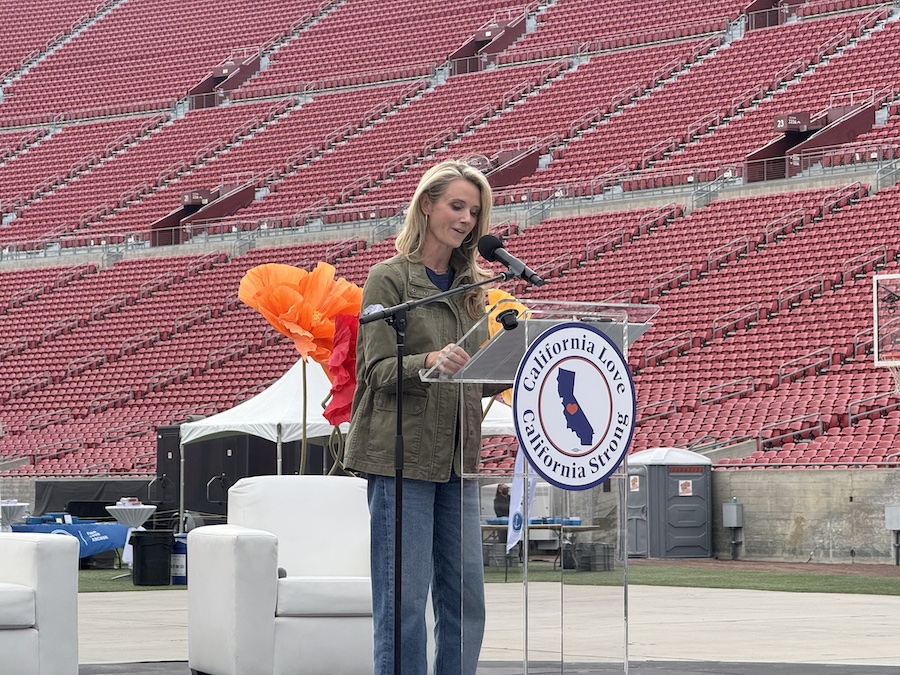
At a California Love, California Strong gathering in Los Angeles, youth voices and community leaders reframed mental health as a shared responsibility rooted in connection and access.
At a Los Angeles gathering to launch Mental Health Awareness Month, youth voices and community leaders confronted a growing crisis—and demonstrated how connection, not just care, is shaping California’s response.
On Sunday, May 3, the Los Angeles Memorial Coliseum filled gradually—students arriving in groups, families navigating the space together, and community organizations setting up tables stocked with information in multiple languages. The gathering, part of California Love, California Strong (CLCS)—led in partnership with the Office of Community Partnerships and Strategic Communications (OCPSC) and the Exposition Park Foundation—brought together state leaders, local partners, and hundreds of Los Angeles-area youth to kick off Mental Health Awareness Month.
Designed as a community-centered event rather than a traditional program, the gathering spotlighted youth mental health, social connection, and access to community-based resources—highlighting how collaboration between public agencies and local organizations can support work already happening on the ground.
Jennifer Siebel Newsom, California’s First Partner, delivered one of the event’s most resonant messages, addressing what she described as a growing loneliness epidemic affecting young people despite living in a hyperconnected digital world.
“Even though we are more connected than ever before because of technology,” she said, “too many people, especially our teenagers and young adults, are feeling very alone.”
Her remarks captured a defining contradiction of modern life. Young people today are constantly online—sharing, scrolling, messaging, and consuming endless streams of content—yet many continue to struggle with emotional isolation, anxiety, and disconnection at unprecedented levels.
For many attendees, the event itself became part of the solution.
Rather than functioning as a traditional political program, the gathering created space for community interaction, wellness activities, youth engagement, and direct access to local mental health organizations. Families connected with culturally responsive resources, while students participated in conversations centered on emotional well-being and belonging.
The atmosphere reflected California’s broader effort to rethink how mental health support reaches communities—especially young people who may not seek traditional care but still need consistent emotional support systems around them.
Jennifer Siebel Newsom emphasized that mental health should be treated with the same seriousness as physical health, pointing to California’s historic investments in youth behavioral health programs, school-based support services, and workforce development initiatives designed to strengthen long-term access to care.
But beyond policy, her message returned to something more human: presence.
“We are not alone,” she reminded the audience.
It was a simple statement, but one that carried weight in a time when anxiety, uncertainty, and social fragmentation continue to affect families across the country.
The gathering underscored a growing recognition among educators, advocates, and public health leaders that loneliness itself has become a public health challenge—particularly for teenagers and young adults navigating identity, academic pressure, social media, and an increasingly unstable world.
For immigrant and multicultural communities, those struggles are often compounded by cultural stigma surrounding mental health conversations. Many young people grow up balancing expectations of resilience and achievement while privately carrying emotional burdens they rarely discuss openly.
Events like this aim to shift that culture.
By centering community connection instead of crisis alone, California Love, California Strong presents mental wellness not only as a healthcare issue but as a collective responsibility rooted in belonging, trust, and shared humanity.
Throughout the day, that spirit was visible everywhere—from multilingual outreach tables to youth-led conversations and moments of spontaneous connection between strangers.
At a time when many people feel emotionally disconnected despite living in an always-connected world, the event offered a different vision of care: one built not only through services and systems but also through community itself.
And perhaps that was the most powerful message of all:
Healing begins when people feel seen.
#MentalHealthMatters #YouthMentalHealth #EndLoneliness #CaliforniaStrong #CommunityCare #ImmigrantVoices #PublicHealth #HealthEquity #LACommunities