He named the loneliness—and a community answered, showing how connection is becoming a central part of mental health care.
At a Los Angeles gathering to launch Mental Health Awareness Month, youth voices and community leaders confronted a growing crisis—and demonstrated how connection, not just care, is shaping California’s response.
On Sunday, May 3, the Los Angeles Memorial Coliseum filled gradually—students arriving in groups, families navigating the space together, and community organizations setting up tables stocked with information in multiple languages. The gathering, part of California Love, California Strong (CLCS)—led in partnership with the Office of Community Partnerships and Strategic Communications (OCPSC) and the Exposition Park Foundation—brought together state leaders, local partners, and hundreds of Los Angeles-area youth to kick off Mental Health Awareness Month.
Designed as a community-centered event rather than a traditional program, the gathering spotlighted youth mental health, social connection, and access to community-based resources—highlighting how collaboration between public agencies and local organizations can support work already happening on the ground.
Before any formal program began, music carried across the stadium. Beats by DJ Lady-Sha moved through the crowd, creating a rhythm that helped people settle in, greet one another, and feel less like attendees and more like participants.
The music did not stop once the program began. It continued throughout the afternoon—between speakers, across activity stations, and as conversations unfolded at resource booths—anchoring the space in a sense of continuity and ease.
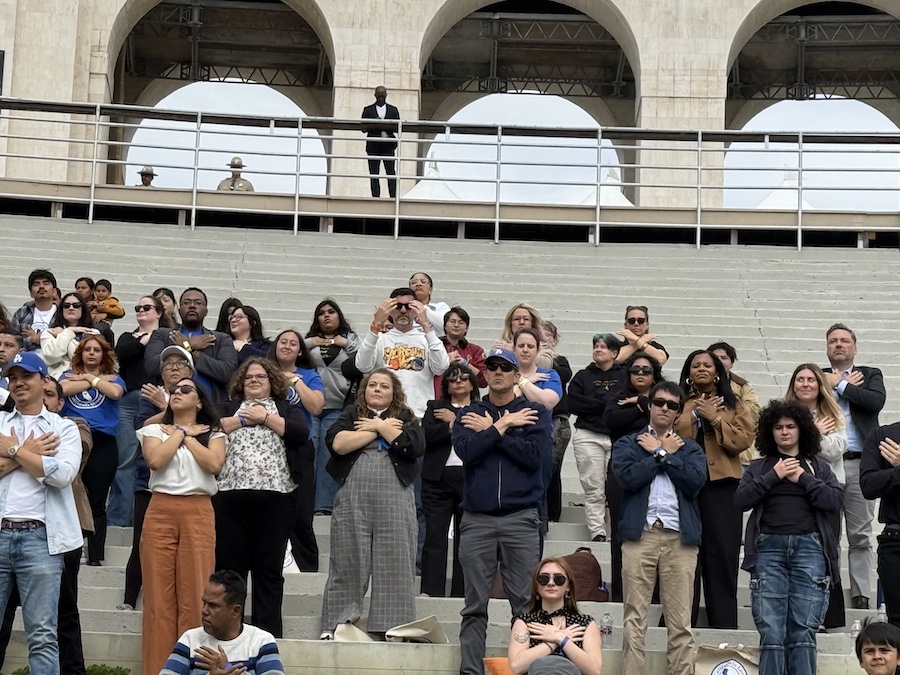
Shortly after, a guided meditation led by a spiritual facilitator invited the crowd to pause. For a few minutes, the noise softened. People stood still, eyes closed or lowered, breathing together. The exercise was simple, but it shifted the tone—signaling that the gathering was not only about information, but about presence.
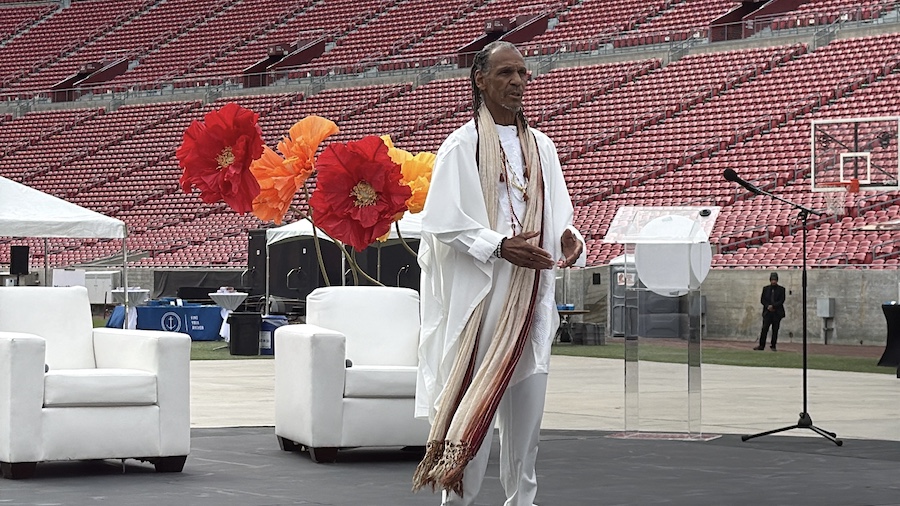
From there, the event unfolded across multiple points of engagement. Some joined self-care sessions, moving through stretching and light physical activity. Others participated in community service projects, working side by side in small groups. Families moved between booths, asking questions, picking up materials, and discovering services they had not previously known existed. Nearby, young people gathered informally around sports activities, using play as an entry point into connection.
For many attendees—especially those from immigrant and first-generation households where mental health conversations are often private or unspoken—the setting mattered. It made engagement feel less clinical, more familiar, and more accessible.
The structure of the day reflected a broader idea: connection is not a byproduct of care—it is part of it. The event also reflects a growing response to a global concern around loneliness and social disconnection, increasingly recognized as a public health challenge affecting young people worldwide.
That idea came into sharper focus when a UCLA medical student and youth advocate took the stage.
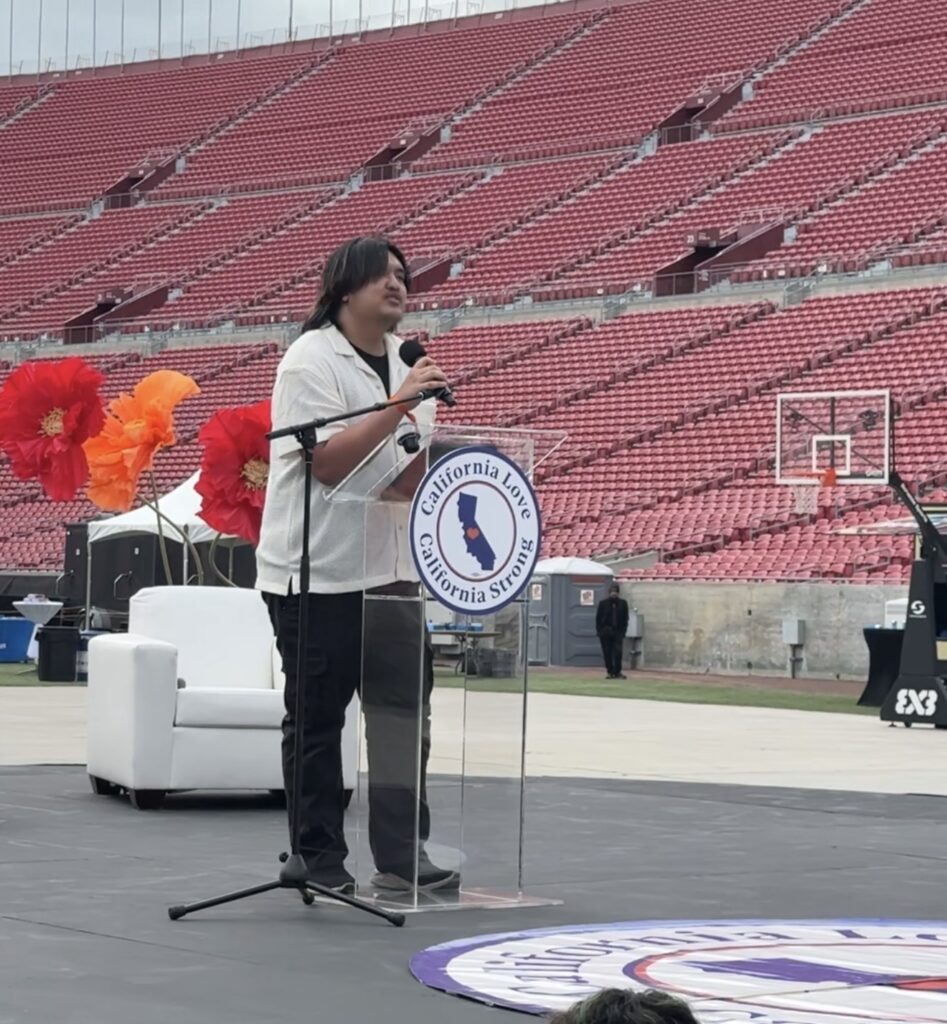
“I don’t think we give ourselves permission to admit that we are lonely.”
Speaking as a Vietnamese American, a queer young person, and someone who experienced homelessness, he reframed the conversation. His testimony shifted the focus from diagnosis to lived experience—naming loneliness as a central challenge for many young people navigating identity, instability, and transition.
Now preparing to graduate from UCLA, he also represents a growing group of youth leaders helping shape California’s behavioral health systems through initiatives like the Children and Youth Behavioral Health Initiative (CYBHI). His participation reflects a broader shift: young people are not only accessing services—they are influencing how those systems are built.
He pointed to a gap that continues to affect many: the lack of accessible “third places”—spaces outside of home and school where young people can build relationships and feel a sense of belonging. For those in immigrant communities, where distance, work schedules, and cultural expectations can limit social connection, that absence can be especially pronounced.
Other youth voices expanded on what access—and lack of it—looks like in practice.
A recent psychology graduate, now part of the Youth Mental Health Career Pathways program, described returning home after college and struggling to find entry-level work in the field she had trained for. Without connections or clear entry points, the path forward felt uncertain.
That changed when she joined AmeriCorps and later accessed training through the state-supported program. Through hands-on experience in peer support and mental health education, she moved from uncertainty to a defined professional pathway.
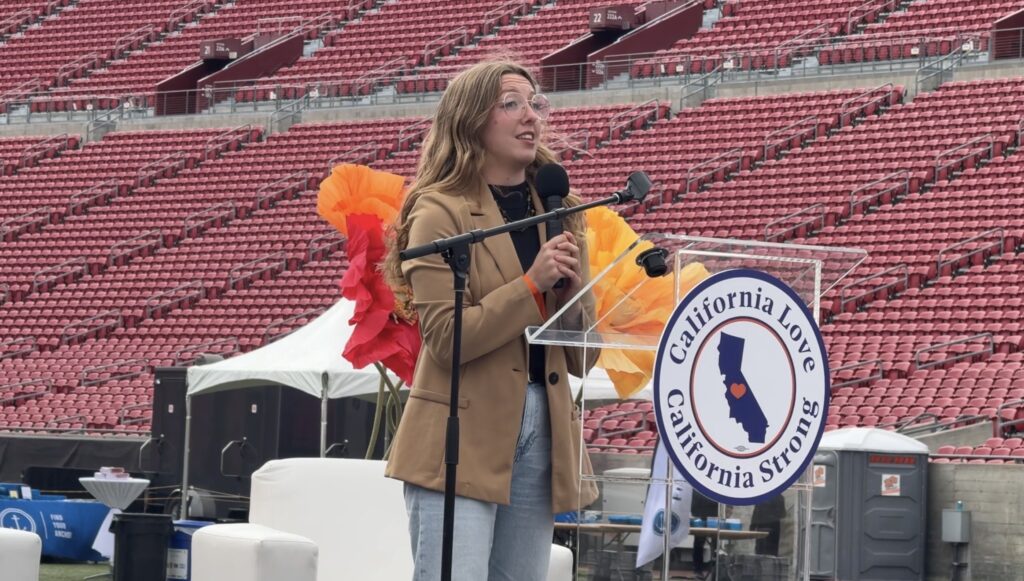
“[It] has offered me both the experience and… the certification to actually begin my career in mental health, which is a possibility I wouldn’t have even thought [of] a year ago.”
Her experience reflects a broader effort to expand the behavioral health workforce while making entry into the field more accessible—particularly for young people who may not have traditional networks or resources.
At the same event, 8-year-old Leonard Mendoza offered a different perspective—one grounded not in programs, but in place.
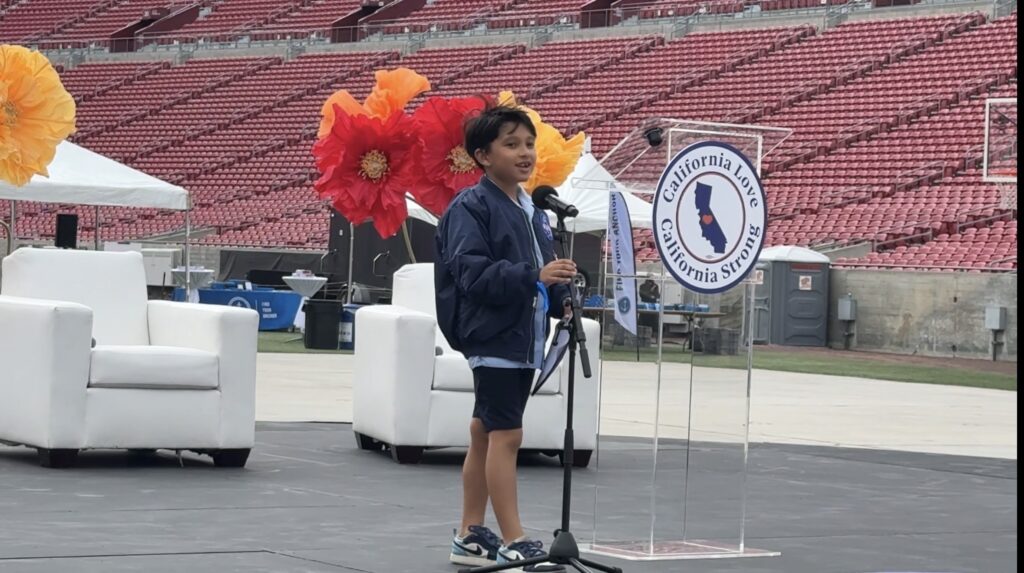
He described Exposition Park as a space where he feels “good,” where he can explore, play, and make new friends.
His remarks highlighted something often overlooked in policy conversations: mental health is shaped not only by services, but by environments. Access to safe, open, and welcoming spaces plays a direct role in how young people experience stress, connection, and belonging.
Andrea Ambriz, General Manager of Exposition Park, reinforced that connection. She spoke about the park not just as a venue, but as a community asset—particularly in South Los Angeles, where access to green space and recreational infrastructure has historically been limited. Her perspective underscores how physical space and community design contribute directly to well-being.
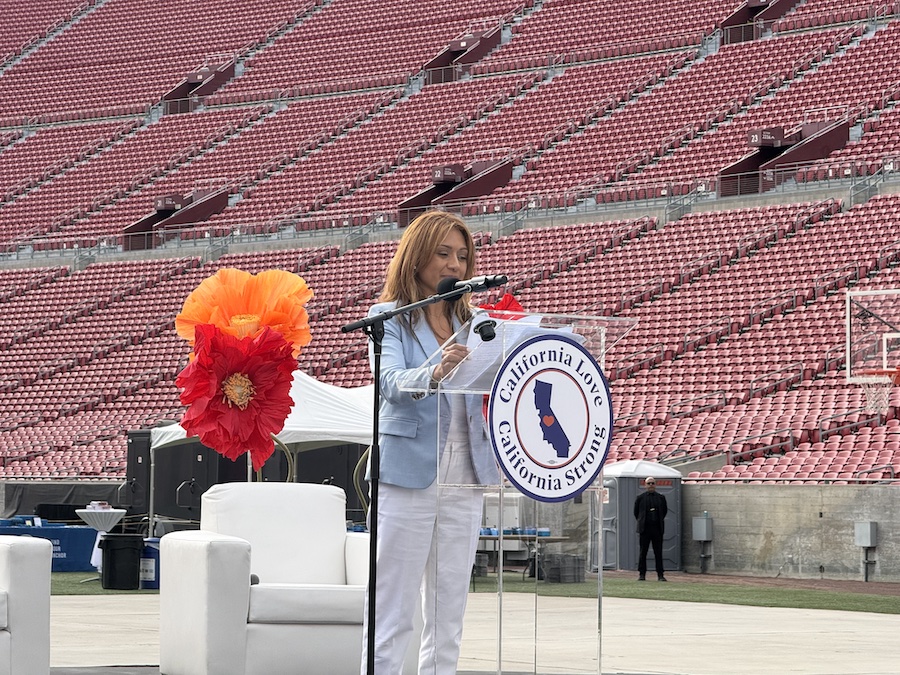
State leaders used the platform to connect these lived experiences to broader systems, while emphasizing partnership rather than authority.
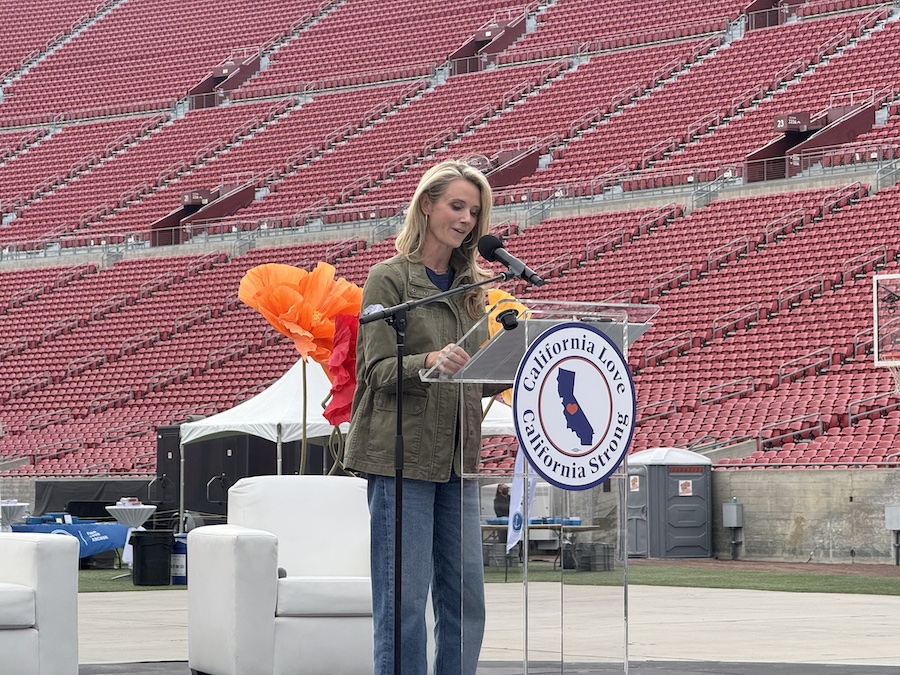
Jennifer Siebel Newsom, California’s First Partner, played a central role in convening and elevating the initiative. As a leading advocate behind California Love, California Strong, she framed the event within a broader vision for the well-being of all Californians—particularly young people facing increasing levels of isolation and mental health challenges.
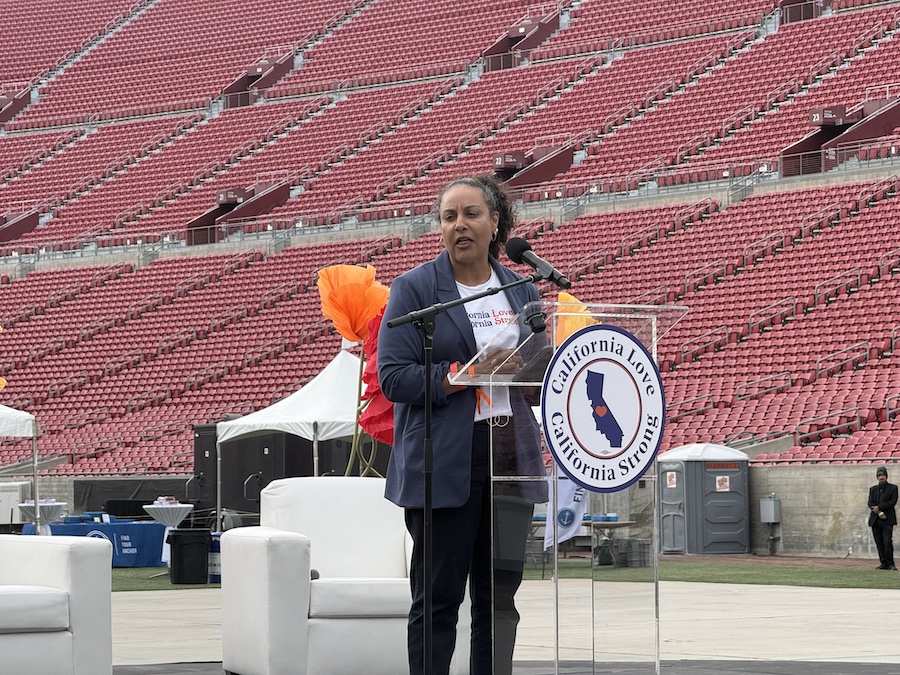
Kim Johnson, Secretary of the California Health and Human Services Agency, described the progress of that work, noting the expansion of the behavioral health workforce and the growing number of organizations delivering services across the state. She framed the effort as a shift from a “mental health moment” to a sustained “mental health movement,” driven by collaboration with local partners.
Josh Fryday, California’s Chief Service Officer, focused on the role of service in strengthening mental health outcomes. Through initiatives like the California Service Corps, young people are given opportunities to support others—building not only skills, but a sense of purpose and connection.
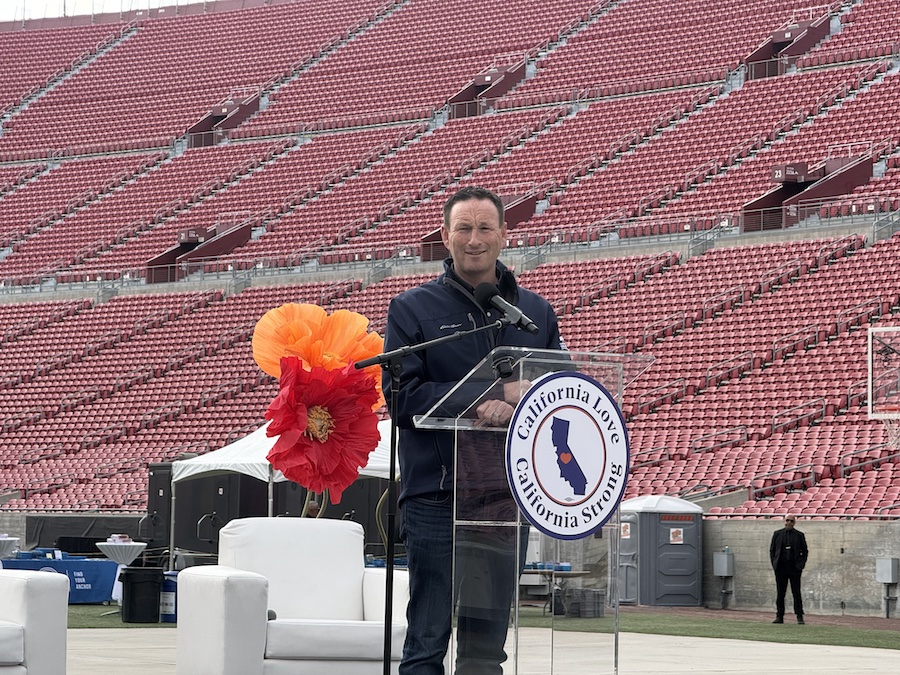
Audrey Fong, Acting Director of OCPSC, connected these ideas back to the design of the event itself. The combination of movement, reflection, service, and peer interaction was intentional—reflecting an approach that prioritizes accessibility, cultural relevance, and trust.
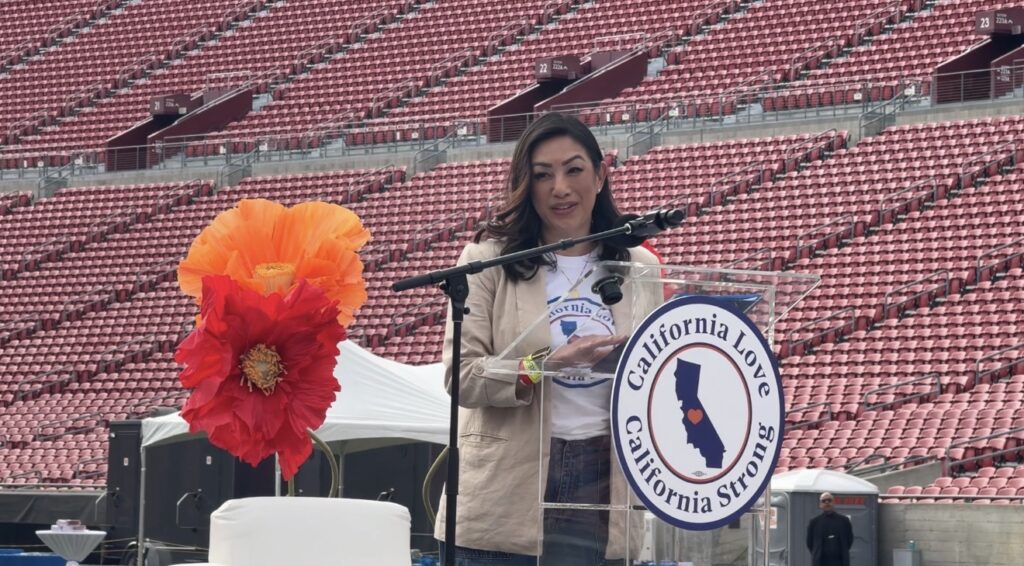
Taken together, the voices at the event outlined a multi-layered approach to youth mental health—one that integrates lived experience, workforce development, community infrastructure, and cross-sector collaboration.
Just as importantly, the gathering did not position government as the central actor. Instead, it highlighted a partnership model in which communities, youth leaders, and local organizations lead the work, with state systems supporting and expanding it.
For many attendees, the impact was immediate. Some left with contact information for services they had not previously accessed. Others identified pathways into careers or volunteer roles. Many experienced something less measurable, but no less important: a moment of connection.
As the UCLA student noted, those moments matter.
“That small moment can turn into something so much more.”
In communities where silence around mental health still persists, where loneliness often goes unnamed, and where access can feel out of reach, moments like these are not incidental.
They are entry points.
They are how trust begins.
They are how people find their way back to one another.
Where to Find Mental Health Support in Los Angeles
For families looking for support, the event also highlighted local and digital resources designed to make mental health care more visible and accessible.
San Fernando Valley & Verdugos
- Family Service Agency — (818) 365-3671
- Tarzana Treatment Center — (888) 777-8565
- The Center — (818) 781-2227
- Neighborhood Counseling Center — (818) 788-2735
- Didi Hirsch Community Center (Glendale) — (888) 807-7250
- Valley Family Center — (818) 365-8588
- Hillview Mental Health — (818) 896-1161
- West Valley Counseling Center — (818) 758-9450
- Foothills Family — (626) 993-3000
- California Family Counseling — (818) 907-9980
Central Los Angeles
- The Ness Counseling Center — (310) 360-8512
- The Relational Center — (323) 935-1807
- Silverlake Psychotherapy — (323) 244-2066
East Los Angeles
- Enki Health Services, Bell Gardens — (323) 647-6740
- Enki Health Services, Commerce — (323) 832-9795
- Human Services Association — (562) 806-5400 ext. 146
San Gabriel Valley
- Enki Health Services, El Monte — (626) 227-7001
- Enki Health Services, West Covina — (866) 227-1302
South Los Angeles
- Airport Marina Counseling Center — (310) 670-1410
- A Place Called Home — (323) 232-7653
Westside Los Angeles
- Colors LGBTQ Youth Counseling Center — (310) 574-2813
- The Maple Center — (310) 271-9999
- The Wright Center — (424) 371-5191
Free Support Lines
- 988 Suicide & Crisis Lifeline — Call or text 988
- CalHOPE Connect — (833) 317-4673
- California Hugspace Warmline — (800) 881-8502
- Mental Health Association Text Line — Text 741-741
- Teen Line — Text 839863
Specialized Hotlines
- LGBTQ+ Youth Crisis Line — (866) 488-7386
- National Sexual Assault Hotline — (800) 656-4673
- Runaway Safeline — (800) 786-2929
- Eating Disorders Hotline — (800) 931-2237
Free Digital Mental Health Tools
- Soluna — Free mental health support for ages 13–25
- BrightLife Kids — Free behavioral health coaching for children and families: https://www.brightlife.kids/
- TeenTalk — Peer connection and youth mental wellness support
Learn More About the Initiative
- California Love, California Strong — https://calovecastrong.com/
- Office of Community Partnerships and Strategic Communications (OCPSC) —https://ocpsc.ca.gov/
Simple Ways to Start Taking Care of Your Mental Health
- Take a walk or spend time outdoors
- Try breathing or mindfulness exercises
- Talk to someone you trust
Access is a critical part of mental health equity. These resources reflect the broader goal of initiatives like California Love, California Strong: making support visible, accessible, and rooted in the communities they are meant to serve.
#MentalHealthMatters #CaliforniaStrong #YouthVoices #EndLoneliness #CommunityCare #ImmigrantVoices #PublicHealth #LACommunities #DiasporaHealth