
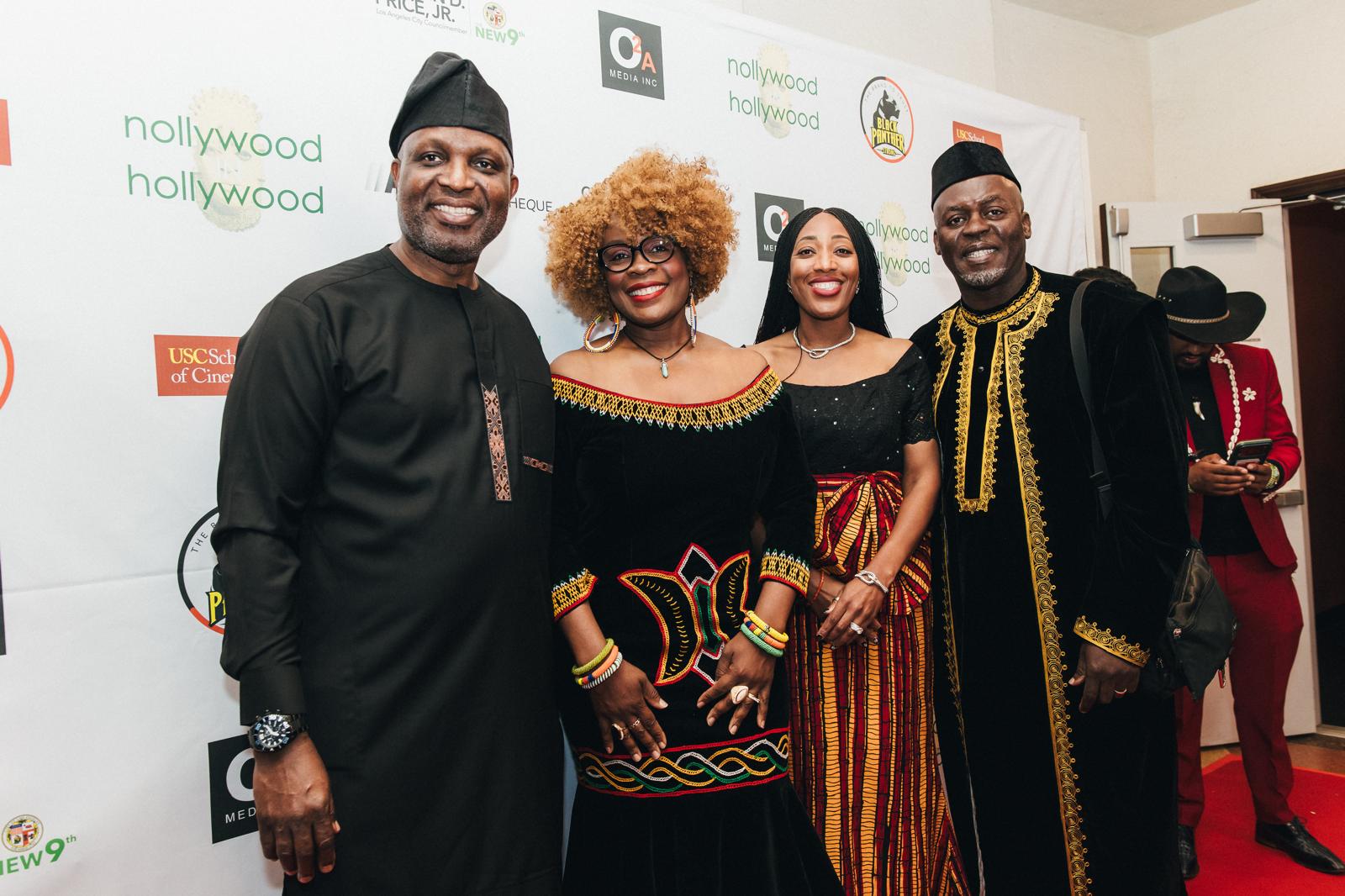
At a Los Angeles showcase, filmmakers, civic leaders, and global audiences converged as Nollywood asserted its place—not at the margins, but at the center of a shifting film industry.
Each year, Nollywood in Hollywood curates films that reflect the diversity, depth, and artistic ambition of Nigerian cinema—bringing some of the industry’s most compelling voices to Los Angeles.
Over time, the showcase has grown into more than a cultural event. Its selections have included films chosen by Nigeria’s Official Selection Committee for the Academy Awards’ Best International Feature category—positioning Nollywood not only as prolific but also as globally competitive. Its early advocacy has also contributed to a meaningful shift: expanding Nigeria’s presence within the Academy of Motion Picture Arts and Sciences beyond submission into participation as Nigerian filmmakers began receiving membership invitations.
Nigerian-American filmmaker Ose Oyamendan founded Nollywood in Hollywood in 2018 as more than a screening platform. Presented in collaboration with the American Cinematheque, the USC School of Cinematic Arts, and O2A Media, it has evolved into a working bridge—bringing filmmakers, industry professionals, and audiences into direct conversation.
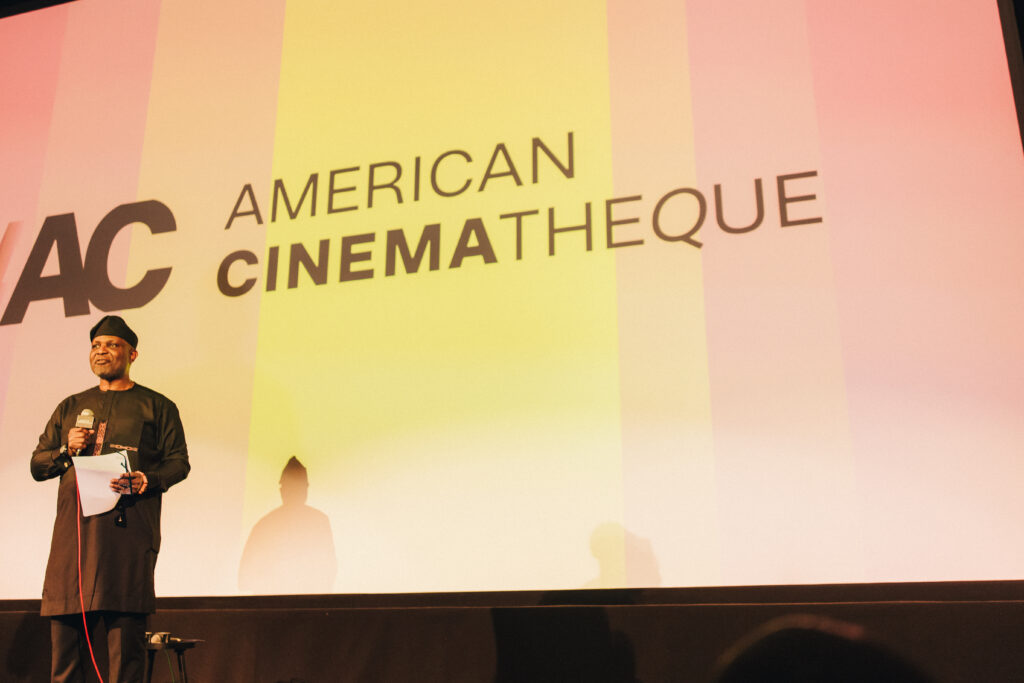
It has become part of the infrastructure behind Nollywood’s growing global visibility.
That context shaped what unfolded on opening night.
On a cool March evening in Santa Monica, the red carpet outside the Aero Theatre signaled something larger than a film premiere.
It signaled intent.
Guests arrived in bold, expressive style—filmmakers, actors, and cultural leaders greeting one another with familiarity and intent. Conversations carried a shared sense that something meaningful was unfolding.
This was not just a film event.
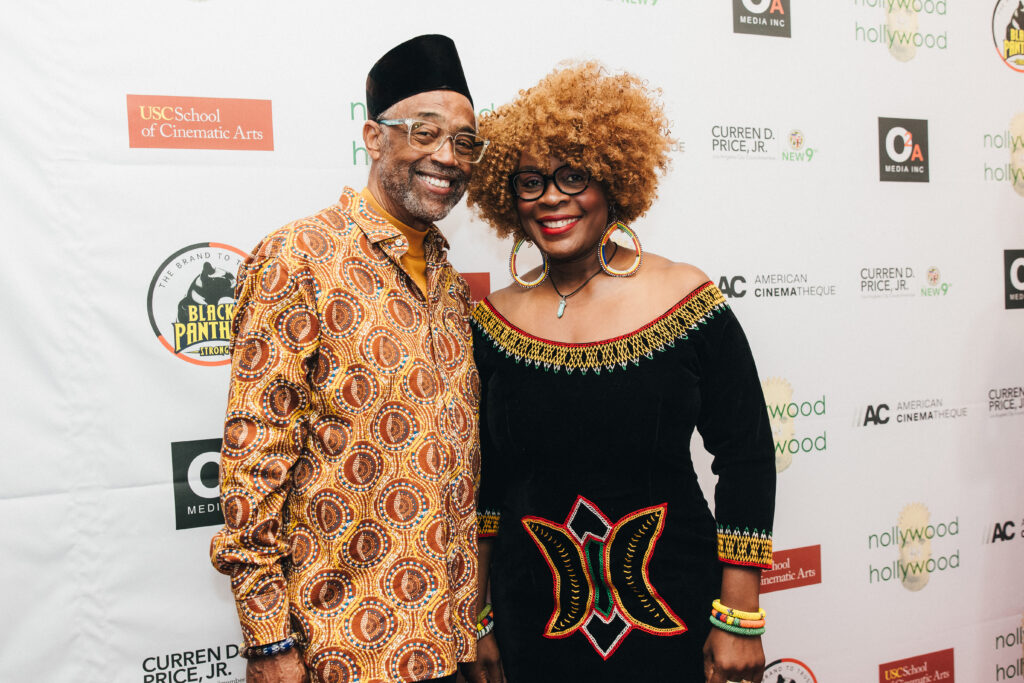
The Immigrant Magazine’s Founder, Pamela Anchang
It was positioning.
It was alignment.
It was an arrival.
Inside and around the theater, the room reflected the ecosystem Nollywood is building.
Los Angeles City Councilmember Curren Price, representing the Ninth District—The New Ninth—delivered opening remarks and later issued official certificates recognizing the filmmakers and organizers behind the showcase. His presence made the event part of the city’s culture, not an outlier.
Your Attractive Heading
Nearby were The Immigrant Magazine publishers Charles Anchang and Pamela Anchang, whose work has long focused on documenting immigrant experiences with depth and continuity. Their presence reinforced another layer of the evening: storytelling not just as entertainment but as record.
Also in attendance was award-winning Hollywood actor and producer Jimmy Jean-Louis—whose career spans Haiti, Hollywood, and international film—bringing with him a perspective shaped by multiple industries and identities.
Moving through the space as well were Pan African Film Festival founder Ayuko Babu and his wife, programmer Asantewa Olatunji, figures whose work has long created pathways for African and Black cinema in the United States. Their presence connected this moment to a longer history of cultural advocacy.
Taken together, the room reflected something shifting.
The shift was not solely about visibility, but also about the structure of the event.
The opening film, Stitches, set the tone.
Directed by Shirley Frimpong-Manso, the film follows a working-class fashion designer navigating entry into Lagos’ elite circles, where ambition and intimacy are complicated by secrets that refuse to stay buried.
But it was the conversation after the screening that gave the evening its weight.
On stage, Jimmy Jean-Louis sat with Nigerian actress Dakore Akande.
The discussion moved quickly beyond the film.
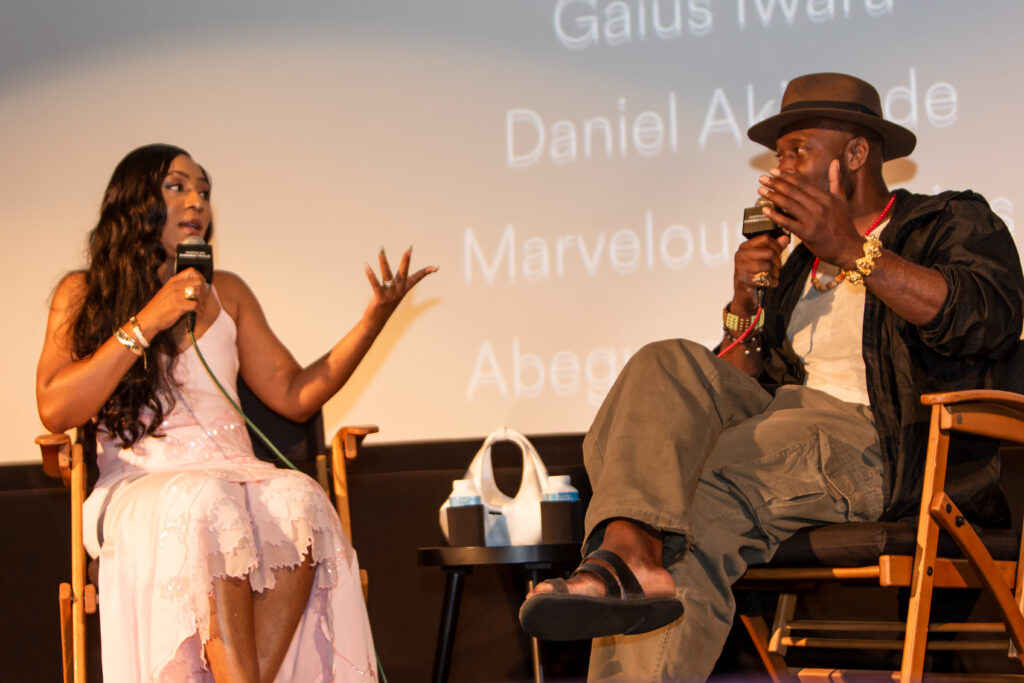
Akande spoke of Lagos—not as a backdrop, but as reality. Production schedules shaped by traffic. Scenes delayed by noise. Dialogue reconstructed later because silence cannot be guaranteed.
“You can’t squeeze water out of stone,” she said.
There was a quiet recognition in the room.
And then the conversation shifted.
From production to access.
“It’s been very difficult. The doors are not open.”
“It’s very much that we’re in our world and they’re in their world.”
Nollywood has scale. It has an audience. It has cultural reach.
What it does not yet fully have is access to financing pipelines, distribution networks, and global positioning.
Akande spoke of navigating that gap personally—working in Los Angeles while carrying recognition at home, but encountering uncertainty in spaces that did not fully understand where she fit.
Celebrated at home.
Uncertain abroad.
And yet, her conclusion marked a shift.
“We’re going to keep doing what we’re doing… regardless.”
By the second day, the tone had changed.
At the Norris Theatre at the University of Southern California, the pace was quieter, but the engagement was deeper.
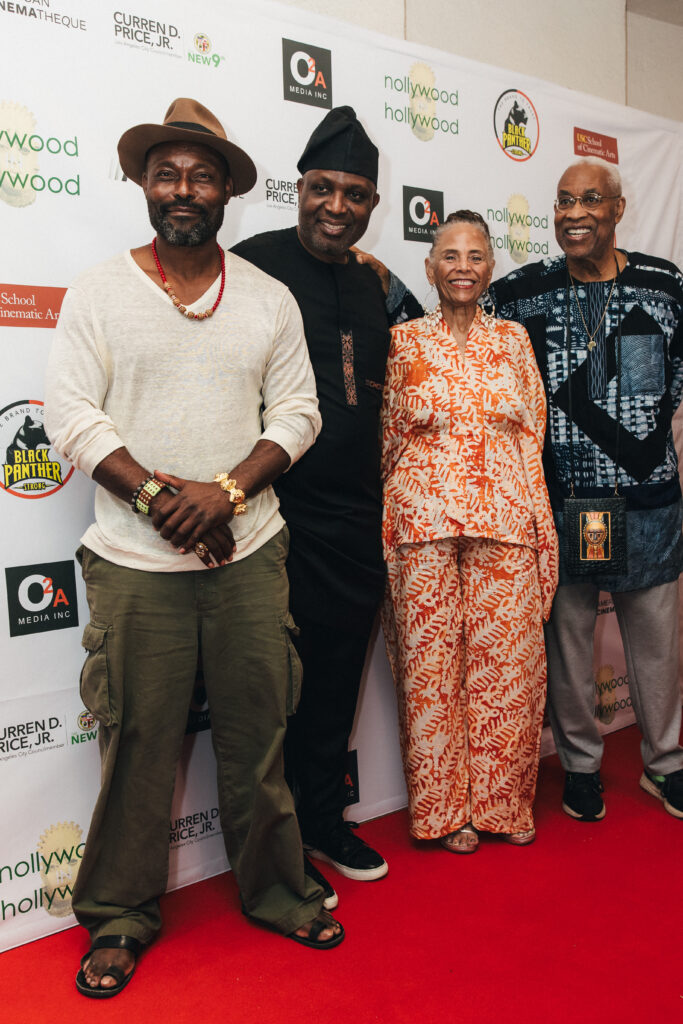
Ayuko Babu and his wife, Programmer Asantewa Olatunji
When Nigeria Happens drew a visibly emotional response. Audience members remained seated through the credits, some still processing what they had just experienced.
“It’s just really nice… that’s home here,” one attendee said.
Another described the film as “gut-wrenching,” pointing to its portrayal of ambition, survival, and artistic struggle in Lagos.
These responses pointed to something fundamental.
Nollywood’s strength is not only in production.
It is in connection.
The audience were not discovering these stories—they were recognizing them.
And in that recognition, something else became clear:
The diaspora is not just an audience.
It is part of the system.
Even so, the limitations remained visible.
Some filmmakers were unable to attend due to visa restrictions—a familiar challenge that continues to shape global creative exchange.
Films move easily across borders.
The people who make them often do not.
By the final screening—To Adaego With Love, a historical drama set against the backdrop of post-conflict Nigeria—the arc of the weekend had come into focus.
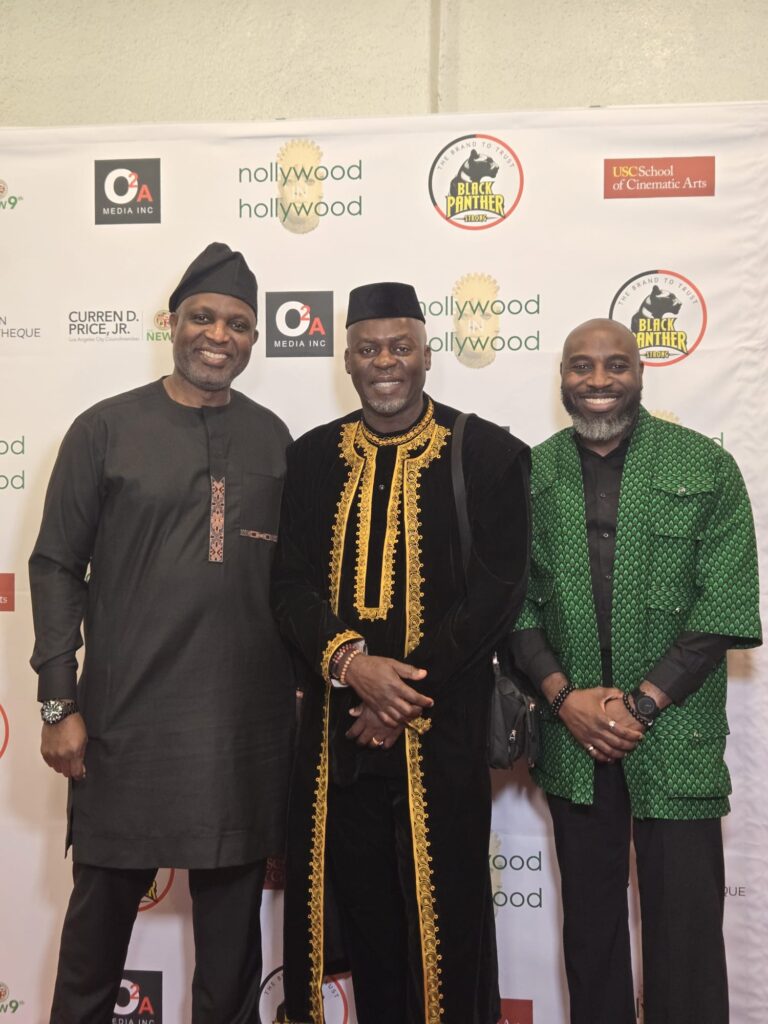
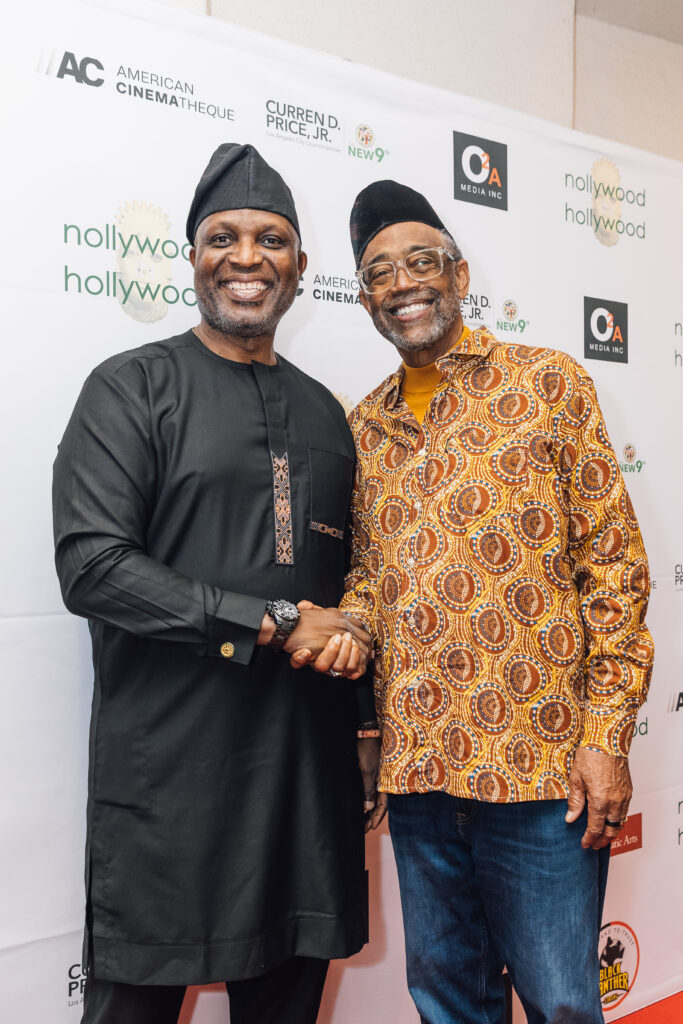
Charles Anchang, CEO, The Immigrant Magazine Inc.;
& Peter Lentini, Founder, Ankara Festival LA
Founder Ose Oyamendan addressed the audience directly.
“It’s been a great two days,” he said. “We want to keep it going with your support.”
His remarks were brief—but the message was clear.
This platform is still being built.
What took place over those two days in Los Angeles was not just a successful showcase.
It was evidence of a shift already underway—one that no longer depends on permission or proximity to traditional centers of power.
Nollywood is not waiting to be integrated into Hollywood. It is building its own pathways, strengthening its audiences, and expanding its global reach on its own terms. And in rooms like these—where filmmakers, policymakers, and communities gather with shared purpose—that future is no longer abstract.
It is already taking shape.
#NollywoodInHollywood #NigerianCinema #AfricanCinema #DiasporaVoices #GlobalFilm #BlackCinema #FilmIndustry #Hollywood #CulturalPower



2 Comments. Leave new
Yo, just checked out x03betgame – seems like a decent spot. Nothing too flashy, but the games are running smooth. Give x03betgame a whirl if you’re bored!
Alright folks, jumped into 115bet for a quick session. Not bad, got a few games that caught my eye. Could be where I end up betting next check out my experience on 115bet.