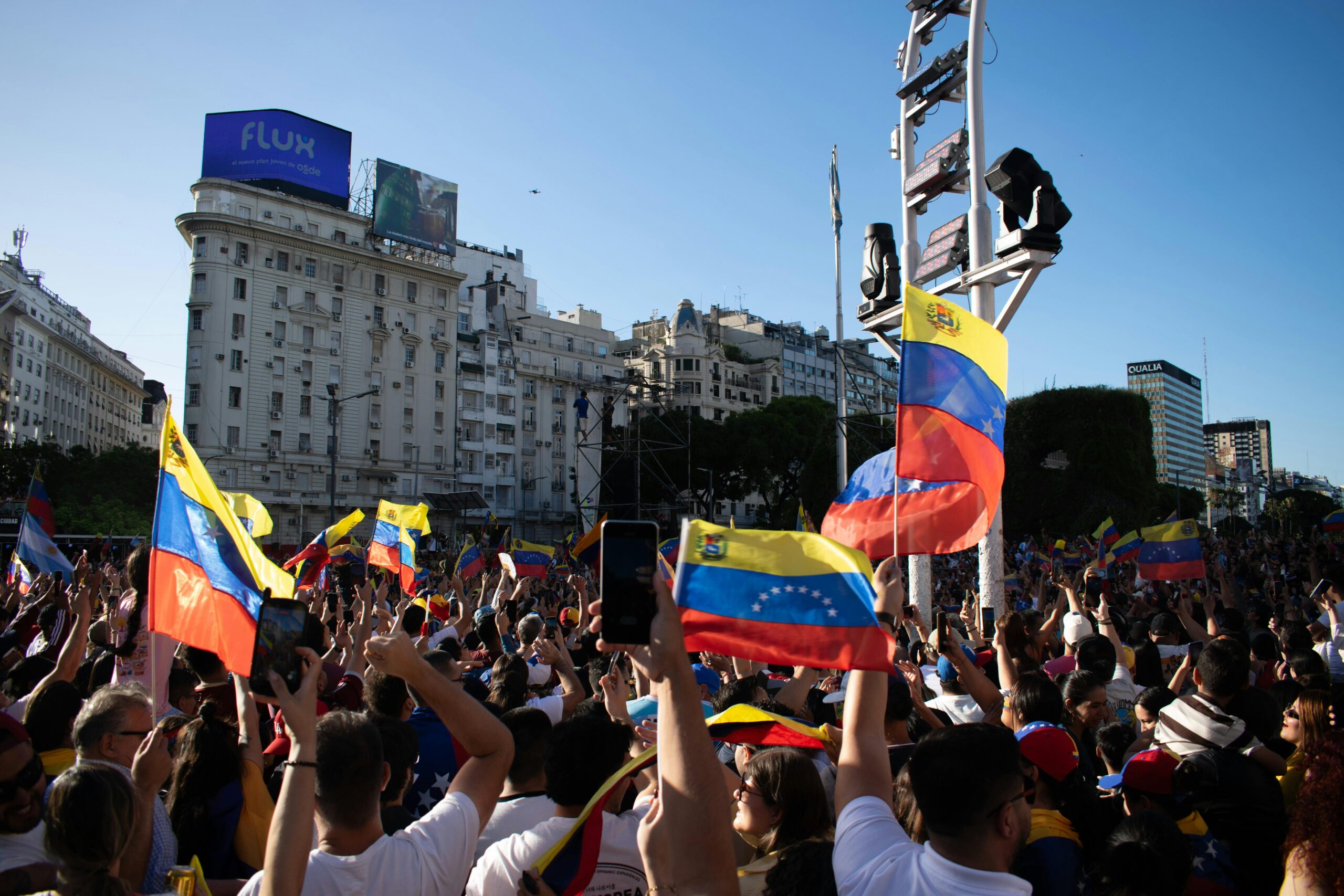
No one expected the silence to be this loud.
Days after U.S. forces ousted Venezuelan President Nicolas Maduro, there was no roadmap, no press conference announcing the dawn of democracy, and no plan offered to the people whose country had just been upended.
Instead, ethnic media were left to fill in the gaps.
At a special briefing hosted by American Community Media (ACOM), a coalition of journalists and policy experts took on the task. What began as a space for analysis quickly became something more urgent: a civic intervention.
Veteran journalist Pilar Marrero moderated the conversation with a firm hand. “We are in a dangerous moment of pause,” she said. “And we need to name what’s happening.”
The panelists included NYU historian Alejandro Velasco, Venezuelan lawyer Mariano de Alba, and national security expert Roxana Vigil.
Anxiety, and a Strange Silence
Alejandro Velasco, a Venezuelan historian at NYU, laid it bare. “People feel anxiety, confusion, and yes, a cautious sense of change—but not necessarily hope.”
He reminded us that while Maduro is gone, the same inner circle holds the reins. “This isn’t a clean break. It’s a shift of players, not of power.”
Even more sobering: the language coming from Washington. “There’s no real talk of democracy—just deals.”
A Legal Line Crossed—Again
Mariano de Alba, a Venezuelan lawyer with international credentials, was blunt. “This operation violated international law. Full stop.”
No UN approval. No legal basis. No precedent that doesn’t come from a darker chapter of history. He warned, “This isn’t about Maduro’s legitimacy—it’s about whether force can become normalized policy.”
And in typical U.S. fashion, he noted, the narrative is being softened with drug charges and anti-immigrant rhetoric. But the playbook is old. And so is the damage.
The Migrant Smear and the Oil Mirage
De Alba dismantled Trump’s repeated lie—that Venezuela exported criminals and mental patients. “Most Venezuelan migrants are economic refugees. Hard-working. Resilient. What they aren’t is a threat.”
Roxana Vigil pushed the lens wider. The oil argument? Weak. The promise of investment? Hollow.
“Venezuelan oil is barely 1% of global supply,” she explained. “And refining it is expensive. It’s not about supply—it’s about control.”
The U.S. is enforcing a naval blockade. Not for democracy. For oil routes.
Who Controls the Money? Not Venezuelans
Here’s where it gets raw: the oil revenue won’t go to the Treasury. Won’t go through any transparent channel. It’ll sit in offshore accounts, far from oversight—and even farther from the Venezuelan people.
Vigil asked the hardest question: “Who gets to decide how these funds are used? Because it’s not the opposition. And it’s certainly not the Venezuelan public.”
No Democracy Without Voice
None of the panelists believed democracy was anywhere near the table. Velasco said it best: “You can’t say you support democracy while acting like you own the country.”
De Alba added, “This is a transactional state. That’s who the U.S. is dealing with—not a people’s movement.”
What Comes Next?
The panel closed with one shared concern: the silence around democratic restoration isn’t an oversight. It’s policy.
Velasco: “The U.S. must stop projecting ownership.”
De Alba: “The real fix requires institutions, not oil leases.”
Vigil: “If Venezuelans don’t guide the recovery, it’s not a transition—it’s another takeover.”
The U.S. removed a man, not a regime. It took the podium, not the people. And unless we demand more than headlines, we’ll mistake this strike for salvation.
The real work—of healing, rebuilding, and reckoning—belongs to Venezuelans. All they need is for the world to stop speaking for them.
VenezuelaSpeaks #ImmigrantMedia #USInLatinAmerica #MaduroRemoved #OilOverDemocracy #EthnicVoices #ACOMNews