Top 10 Migration Issues of 2025

A woman and child watch airplanes. (Photo: iStock.com/JNemchinova)
International migration in 2025 was shaped by a series of converging pressures, as governments in many high-income countries struggled to reconcile international protection obligations and labor and skills needs with public anxieties about immigration and border control.
Though work, economic opportunity, and family reunification are the chief reasons that people cross borders, many of the notable trends of 2025 related to humanitarian protection. That in part reflected the rising levels of conflict globally and underscored that many countries remained unsettled on how and to whom to provide asylum.
Yet 2025 was not solely defined by restrictionism or international discord. The number of forcibly displaced individuals declined for the first time in years, the landscape for certain workers diversified, and some regional blocs continued their marches towards greater integration.
The annual list of Top 10 migration issues of the year reviews what MPI sees as the major trends and dynamics of 2025.
Navigate to each issue by clicking on the title:
1. Foreign Aid Cuts Cripple Humanitarian Efforts and Raise Prospect of New Displacement
2. U.S. Relationship with Immigration and Immigrants Altered under Trump
3. Refugee Norms Erode as the Protection System Faces New Stresses
4. As Labor Demands Rise amid Demographic Change, Under-the-Radar Policies Seek to Fill Gaps
5. Big Brother Hits the World of Immigration Full Force
6. Countries in Latin America and Beyond Adjust to U.S. Mass Deportations Campaign
7. Amid a Global Restrictionist Turn, Irregular Migration Drops—But Will It Last?
8. The Beginning of the End of Syria’s Long-Running Displacement?
9. With Armed Conflict on the Rise, Crises Endure
10. A Mixed Record for Regional Cooperation on Migration Management
1. Foreign Aid Cuts Cripple Humanitarian Efforts and Raise Prospect of New Displacement

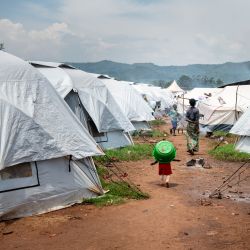
A child walks through a refugee camp in Burundi. (Photo: IOM/Alexander Bee)
Governments across high-income countries slashed tens of billions of dollars in foreign aid and development support in 2025, in what the United Nations described as the sharpest funding cuts to international humanitarian efforts in history. The reductions had immediate and potentially irreversible impacts on humanitarian and migration organizations and the people they serve worldwide.
By midyear, humanitarian aid globally was down 40 percent from the prior year, leading to steep downsizing. While cuts affected all manner of humanitarian projects, billions of dollars targeted migration-related issues.
For refugees and other forcibly displaced people, the cuts resulted in reduced food, closed health facilities, and greater exposure to natural disasters, among other impacts. To take just one example, at the world’s largest refugee settlement, in Myanmar, most schools were temporarily shuttered midyear, cases of children with acute malnutrition rose by 11 percent from January to September, and reports of child marriage and child labor rose. Elsewhere, refugees were left stranded at the borders of Chad and South Sudan because aid workers did not have the money to bus them to safer locations. In Kenya’s Kakuma refugee camp, reduced food rations led to violent protests and prompted more than 6,000 South Sudanese refugees to return to their homeland.
In coming years, the funding changes are projected to lead to significantly more deaths than would have otherwise occurred. As many as 14 million deaths by 2030 could be attributable to the effective shuttering of the U.S. Agency for International Development (USAID), according to one study.
The cuts in foreign aid were made across the U.S. federal government, which has historically been the world’s top aid provider, as well as by Canada, the United Kingdom, European Union countries, and South Korea. Although official development assistance had already been trending downward, the 2025 cuts were transformative. The UN High Commissioner for Refugees (UNHCR) planned to trim its budget by one-quarter and by October had laid off nearly 5,000 staffers. The World Food Program was working to reduce staff by more than one-quarter by 2026, resulting in the elimination of some 6,000 posts. Similar dynamics affected agencies and organizations of all sizes.
Political leaders justified the reductions by saying the foreign aid did not serve taxpayers’ interests, had to be reduced to offset increased defense spending, or was otherwise unnecessary. In several cases, governments cut humanitarian assistance while boosting funds for stiffer immigration enforcement. The U.S. Congress for instance allocated more than $170 billion over four years for immigration enforcement purposes, an unprecedented increase and roughly similar to the $173 billion that had gone to USAID over the prior four fiscal years. In Europe, governments sought to pivot their migration-related spending from focusing on humanitarian and integration issues to reducing irregular movement.
In the long run, the cuts could lead to new displacement, UN High Commissioner for Refugees Filippo Grandi warned, as tensions in migrants’ origin locations are exacerbated and transit countries lack the capacity to effectively accommodate migrants in need. Danish Refugee Council analysis suggested that U.S. cuts alone could be responsible for as many as 3.9 million more people displaced in 2025, effectively doubling the number of newly displaced people this year. At the same time, heightened border restrictions (see Item 7. Amid a Global Restrictionist Turn, Irregular Migration Drops—But Will It Last?) in many high-income countries and global withdrawal from offering legal avenues for refugees (see Item 3. Refugee Norms Erode as the Protection System Faces New Stresses) meant that many forcibly displaced people were left with few options.
Notably, some of the eliminated foreign aid programs had been designed to prevent unauthorized migration or bolster support in transit countries. At least $200 million in grants and funds terminated by the Trump administration were focused specifically on deterring irregular migration from Central America, according to Migration Policy Institute (MPI) analysis. In Ecuador, the loss of international aid was cited as a reason for canceling the government’s planned offer of regularization to Venezuelan migrants, amid a broader regional change in tone towards displaced Venezuelans.
While jarring on its own, the shift was especially notable given its break from a recent trend towards addressing the “root causes” of migration, in order to reduce the appeal of irregular movement in the first place. Given the breadth of the impact and the fact that multiple aid organizations are planning for even starker budget shortfalls in 2026, the cuts may amount to a wholesale remaking of the humanitarian and development assistance system for years to come.
2. U.S. Relationship with Immigration and Immigrants Altered under Trump

U.S. immigration authorities arrest a man in Florida. (Photo: ICE)
President Donald Trump returned to office in January intent on profoundly altering the United States’ relationship with immigration, and quickly got to work retooling U.S. policy and seeking to reshape public attitudes towards immigrants and immigration. Within hours of his swearing-in, Trump began pursuing an historic number of deportations, reshaping the legal immigration system to be significantly more exclusive, reducing services to resident immigrants and their U.S.-born children, and reconfiguring how the United States—long home to more immigrants than any other country—considers the foreign born as part of its collective identity.
Most visible by far was the campaign for mass deportations. The administration pledged to remove 1 million unauthorized immigrants per year (although the total in 2025 will likely be closer to 600,000), and it corralled virtually every arm of the sprawling U.S. federal government to assist. Officials from U.S. Immigration and Customs Enforcement (ICE), U.S. Customs and Border Protection (CBP), and other agencies were surged to U.S. cities from coast to coast, engaging in high-profile and often confrontational operations in neighborhoods, workplaces, and previously off-limits locations including schools and faith-based organizations. Congress allocated $75 billion for ICE over four years, transforming it into the largest federal law enforcement agency and prompting a quick scaling-up of detention space. The administration also terminated or allowed the expiration of multiple temporary statuses that had previously protected millions of unauthorized immigrants from being deported and allowed them to work legally.
U.S. officials were keen to highlight the punitive nature of the operations—including with memes and jokes—as part of an apparent effort to encourage unauthorized immigrants to “self-deport.”
While less sensationalist, policy changes affecting new legal arrivals and the millions of people in immigrant families—including large numbers of U.S.-born children—may prove to be even more impactful in years to come. The administration restricted or barred arrivals from 19 countries, imposed bonds of up to $15,000 for visitors of certain other nationalities, toughened the test for immigrants looking to become U.S. citizens, and added a $100,000 fee for new H-1B high-skilled visas, among other changes. The administration also began more closely policing noncitizens’ words and actions, including university student Mahmoud Khalil and other green-card holders whom the administration sought to deport for their pro-Palestinian advocacy, as well as visa holders who had posted negative comments about slain conservative activist Charlie Kirk. A vast web of government data, newly handed over to immigration enforcement, is helping facilitate the vetting and serve the broader deportation agenda (see Item 5. Big Brother Hits the World of Immigration Full Force). The administration is making all 55 million holders of a U.S. visa subject to “continuous vetting,” including of their social media, and in December proposed requiring applicants for visa-free travel to provide five years’ of social media activity.
Other changes did not explicitly target the foreign born but promised to have sweeping effects on people of immigrant backgrounds. Most symbolic was the effort to end the promise of birthright citizenship, which is widely understood to be enshrined to the Constitution and was quickly paused by the courts (the Supreme Court will review the order in 2026). Other moves—such as making English the country’s official language, suing states offering in-state college tuition to some residents who are unauthorized immigrants, trying to cut funding for early childhood centers and other initiatives seen as “woke,” and further reducing access to public benefits—sought to more broadly make a distinction between people with a long ancestry in the United States and those with a more recent history.
“America is not a nation of immigrants,” a senior Department of Homeland Security (DHS) official claimed in November, illustrating the government’s posture and refuting a widely held narrative in place since at least the 1950s. “We are a nation of citizens. And it is because of those citizens that we are an exceptional nation.”
As result of this shift in tone, many immigrants’ fear their relationship with their adopted country is changing. Large numbers of immigrants—including many naturalized citizens—told pollsters they feared being arrested and deported, and modified their daily habits to be less visible. Enrollment of new international students at U.S. universities dropped by 17 percent in fall 2025 compared to the prior year, as many opted for other destinations (see Item 4. As Labor Demands Rise amid Demographic Change, Under-the-Radar Policies Seek to Fill Gaps). International travel to the United States also appeared to decline, for the first time since the COVID-19 pandemic in 2020.
It remains too early to tell whether the Trump administration’s approach will lead to a fundamental shift in the size and composition of the U.S. immigrant population. But after one year in power, the outcome certainly seemed possible.
3. Refugee Norms Erode as the Protection System Faces New Stresses

A young girl crossing the border into Afghanistan. (Photo: IOM/Mohammad Osman Azizi)
Long-agreed norms against pushing people back to places where they might be subject to harm underwent further backsliding in 2025. The prohibition on returning refugees and other people to precarious situations is decades old, but nonetheless seemed to be skirted or outright ignored in some cases this year; elsewhere, governments made express calls to rewrite international human-rights frameworks.
No place was this clearer than in the return this year of more than 2.7 million Afghans to their Taliban-controlled homeland, where residents face harsh restrictions on daily life and roughly half the country is confronting some sort of economic or environmental crisis. UN officials have repeatedly warned that returnees face serious human-rights threats, including the possibility of torture.
The overwhelming majority of Afghan returnees arrived from Iran or Pakistan, which have long been among the world’s largest refugee hosts but have grown more restrictive amid economic downturns and security concerns. Both countries have been running formal campaigns to encourage or force returns since 2023; these kicked into high gear this year. Germany began deportation flights to Afghanistan in 2024; Austria followed suit in 2025, and pressure increased for returns from more EU Member States. Under the Trump administration, the United States ended Temporary Protected Status (TPS) for Afghans in July and in some cases detained Afghans who had previously assisted U.S. military operations in the country. The U.S. government’s approach turned particularly stiff in the aftermath of the late November shooting of two National Guard members in Washington, allegedly committed by an Afghan national who arrived in 2021.
Elsewhere, a new asylum law in Egypt that transfers responsibility for refugee status determination from the UN High Commissioner for Refugees (UNHCR) to the Egyptian government was reportedly linked to an uptick in arrests and deportations of asylum seekers and others fleeing civil war in Sudan—including individuals with UNHCR legal documents. And while many people returned to Syria voluntarily, sizable numbers were also deported there—including from the European Union—or otherwise compelled to return in the months following the late 2024 overthrow of the Assad regime, amid a wide diplomatic rapprochement with the new leadership in Damascus (see Item 8. The Beginning of the End of Syria’s Long-Running Displacement?).
In other cases, the United States and other countries stretched the limits of the humanitarian protection system by shipping individuals to third-country destinations of questionable repute. U.S. officials deported asylum seekers and other unauthorized immigrants to places such as El Salvador, where some were swiftly locked in the notorious Terrorism Confinement Center (CECOT) prison and allegedly tortured. Others were sent to a range of countries particularly in Africa, including South Sudan, which only recently emerged from a protracted civil war.
Similar proposals in Europe struggled to get off the ground, but rarely for lack of trying (see Item 10. A Mixed Record for Regional Cooperation on Migration Management). Migrant holding centers built by Italy in Albania, in which migrants were set to wait while their asylum claims were handled by Italian officials, were opened in 2024 but sat empty for large portions of 2025 after courts intervened. EU and British leaders also considered sending migrants whose asylum claims were denied to third countries to which they have no prior ties, known as “return hubs;” the European Council established the legal grounds for creating these facilities in December.
Meanwhile, refugee resettlement globally fell sharply. By mid-2025, just one-third as many refugees had been resettled as in the same period in 2024, a decline partly attributable to the United States, which has historically been the world leader in refugee resettlement. The U.S. program was suspended indefinitely in 2025, after President Donald Trump returned to office and embraced a more restrictive immigration approach (see Item 2. U.S. Relationship with Immigration and Immigrants Altered under Trump). Later in the year, the United States granted entry to a small number of White South Africans and said that it would accept no more than 7,500 refugees from South Africa or other homelands engaging in “illegal or unjust discrimination” in fiscal year (FY) 2026, down from a ceiling of 125,000 the previous year. The administration redirected a reported $250 million from the U.S. refugee resettlement program to encourage “self-deportations.”
In some cases, governments are seeking to rewrite the international rules undergirding national policies. On the sidelines of the UN General Assembly in September, U.S. officials made a soft pitch for dramatically rethinking the 1951 Refugee Convention, notably not including a mention of upholding the principle of nonrefoulement, which prevents return to a location where someone might face persecution. Although the Trump administration had reportedly considered withdrawing the United States from the Refugee Convention, it now appears to be eyeing amendments to the Convention through a new Protocol.
Several governments in Europe meanwhile sought to either modify or reinterpret the European Convention on Human Rights, which has in the past been interpreted to prevent efforts by France, Greece, and other nations to tighten asylum laws. In May, leaders of nine EU Member States called for the Convention to be reinterpreted to loosen restrictions on repatriating migrants convicted of criminal offenses, seemingly to allow for return of those individuals to countries deemed unsafe; in December, more than two dozen countries said it was “imperative” that the framework “is fit to address today’s challenges” on managing migration and asylum.
Collectively, the trends suggest the steady winnowing of access to asylum is here to stay and may accelerate.
4. As Labor Demands Rise amid Demographic Change, Under-the-Radar Policies Seek to Fill Gaps

A man on a desktop computer. (Photo: iStock.com/Tirachard)
While the story of migration in 2025 was generally speaking one of tightened borders and stricter enforcement, several under-the-radar trends showcased how countries with aging populations and shrinking birthrates are seeking to fill labor market and skills gaps, particularly in high-skill sectors. Governments rolled out new visas for these workers, in some cases keying off policy changes in other countries to make themselves more competitive.
Even as it tightened restrictions on some types of immigration, the United Kingdom planned to double the number of high-skilled visas for foreign workers. China meanwhile unveiled a new K visa targeting young high-tech workers and researchers who meet certain criteria, in what was seen as a response to U.S. hardening of its policies for high-skilled immigrants. And the European Union plotted a new visa strategy to help the bloc fill skills and labor shortages.
Some of these moves were inspired by the tightening of policies in the United States (see Item 2. U.S. Relationship with Immigration and Immigrants Altered under Trump), particularly a new $100,000 fee for incoming H-1B high-skilled workers, the announcement of which caused panic and confusion among current visa holders. Most clearly, in the days after the U.S. change was announced, Canada promised an “accelerated pathway” for some H-1B holders, as part of a C$1.7 billion campaign to recruit more than 1,000 skilled researchers.
But there were other factors at work, too. The median global population has aged considerably in recent years. As residents especially of high-income countries live longer, they have grown increasingly reliant on the foreign born for care and other work.
Although Italian Prime Minister Giorgia Meloni has been one of the continent’s leading architects of restrictions on humanitarian immigration (see Item 3. Refugee Norms Erode as the Protection System Faces New Stresses), her government this year approved a decree that will allow nearly 500,000 non-EU workers to arrive over the next three years—an increase over the prior three-year period. Spain has been more vocal about its openness towards many immigrants, including Latin Americans who might in other circumstances have gone to the United States. This year Madrid enacted new regulations easing family reunification and access to legal status, among other measures, as part of an approach widely seen as helping to reverse Spain’s population decline and boost the economy. On the other side of the world, in New Zealand, the government made moves to lure digital nomads, create new pathways for skilled workers, and streamline the entry of seasonal workers.
New Zealand also relaxed rules for its Active Investor Plus visa, which offers residence to foreign nationals who make a sizable investment, resulting in a surge of new applications. Vietnam rolled out a similar “golden visa” offering ten years of legal residence to deep-pocketed individuals. And the United States unveiled a “Trump gold card” offering residence to people able to pay a $1 million fee.
In the Caribbean, a new free-movement regime came into effect, allowing nationals of Barbados, Belize, Dominica, and St. Vincent and the Grenadines to freely live and work in each others’ countries (see Item 10. A Mixed Record for Regional Cooperation on Migration Management). The arrangement was a big step for Caribbean Community (CARICOM) efforts at regional integration, and was at least partially intended to reduce brain drain of highly educated professionals.
For international students, changes in the United States—the top destination for overseas study—further diversified a landscape that had already started to shift. The number of new international students at U.S. higher education institutions dropped 17 percent in fall 2025 compared to the prior year, as it and other traditional destinations—Australia, Canada, and the United Kingdom—imposed new barriers. Many students are opting for alternative destinations, including several in East and Southeast Asia, which have sought to capitalize on the trend.
In their approaches to these workers and students, governments that have otherwise seemed immigration averse are seeking to thread the needle. Many are trying to emphasize that their openness to certain immigrants is about selectivity; to maintain a sense of control, they are trying to dictate not just who cannot enter the country, but who can.
5. Big Brother Hits the World of Immigration Full Force

A U.S. deportation officer takes an individual’s fingerprints. (Photo: Erica Knight/ICE)
Authorities worldwide in 2025 increasingly relied on advanced technologies to surveil, police, and process newly arriving migrants and settled immigrants. In some cases, technology is being used to identify, arrest, and remove noncitizens; in others, the systems are touted as ways to make travel more efficient, frictionless, and safer.
The Trump administration’s expanded deportations effort, for instance (see Item 2. U.S. Relationship with Immigration and Immigrants Altered under Trump), is being powered in part by immigration authorities’ access to a vast array of once off-limits government data, including tax and health-care information. U.S. officials now are using digital tools, many of them artificial intelligence (AI)-assisted, to monitor social media activity, perform facial recognition, track license plates, and scan irises, among other methods. Separately, the U.S. government has contracted with Palantir to build information systems that can identify removable noncitizens and help manage their detention and removal. To further the mission, the Department of Homeland Security (DHS) has proposed being able to collect biometric data including voice prints, facial imagery, iris scans, and potentially even DNA samples from immigrants of all ages. It has also offered at least one facial recognition tool to state and local authorities.
The United States is by no means alone. Russia in 2025 passed a law requiring some immigrants to use a special mobile app that tracks their location and other data. The United Kingdom began piloting a system that matches faces from a live camera feed to check against a watchlist. The United Arab Emirates and other Gulf countries have long relied on digital tools to monitor migrants; in 2025, the Emirates unveiled a new AI-backed system to speed up review of work permits.
Large portions of the European Union’s external borders have increasingly been policed by a network of AI systems, drones, and other high-tech surveillance tools designed to prevent irregular migration. Efforts ramped up, including in the asylum process, in what officials have promised would help reduce the burden on overstretched systems. The bloc also began rolling out a new Entry-Exit System (EES) for many short-term visitors, which swaps traditional passport stamps for biometric screenings. The EES was designed in part to better track foreign nationals and combat visa overstays.
Many of the efforts were criticized by privacy advocates, who fear the consequences of government overreach and warn that surveillance and vetting tools used today against immigrants will eventually be turned on all residents. Border officers in Canada also worried that their government’s embrace of border process automation, which has been ongoing since 2022, could create security gaps.
Still, the innovations pointed to the promise of swifter, faster-moving immigration systems. If successful, the processes could help people obtain protection, legal residence, work permits, and other benefits more quickly.
They also could work in other contexts. Advanced systems to forecast disaster-related displacement, which hit a high in 2024, have been growing in popularity among researchers and aid workers, and could allow both individuals and organizations to better prepare for upcoming disasters.
While many digital tools were used in 2025 to surveil, arrest, and remove people, their potential application could be much broader in the years ahead.
6. Countries in Latin America and Beyond Adjust to U.S. Mass Deportations Campaign

A mother and her child who have been returned to Haiti. (Photo: IOM/Antoine Lemonnier)
The fallout from the rapid-fire immigration policy changes in the United States was global and often unpredictable. Cooperation on deportation became a precondition for diplomatic engagement with Washington, and multiple countries were left reeling with the consequences of deportations and a stiffer U.S. border.
Patterns of movement through the Americas were particularly shaken up. Crossings of the treacherous Darien Gap between Colombia and Panama plummeted precipitously, down from more than 520,000 in 2023 to fewer than 3,000 in the first nine months of 2025. Multiple months saw fewer than a dozen travelers making the trek northward through the jungle. Meanwhile, more than 18,000 migrants—the vast majority of them Venezuelan—had passed through Panama southbound as of September, in a reverse flow.
Large numbers of U.S.-bound individuals were also left stranded in transit, including in Mexico, which had already seen a growing number of migrants decide to put down roots. Asylum requests in Mexico surged in the weeks after the inauguration of Donald Trump; while new arrivals fell off sharply over the year, a much larger share of these migrants sought protection in Mexico than had in years past.
Mexico and northern Central American countries—the origins of most unauthorized immigrants in the United States—also contended with high numbers of returning nationals, and developed new reintegration programs or leaned on pre-existing ones. In many cases, however, returnees struggled all the same. Some reintegration challenges were compounded by the sharp dropoff in global aid funding (see Item 1. Foreign Aid Cuts Cripple Humanitarian Efforts and Raise Prospect of New Displacement). Remittance trends to these countries went in divergent directions, as immigrants in the United States faced the threat of deportation: Financial transfers rose sharply to Central America, where they sometimes account for sizable portions of countries’ economies, but declined to Mexico.
The consequences for running afoul of the Trump administration’s restrictionism could be measured in higher tariffs and loss of diplomatic stature. In January, Colombia’s government refused to accept deportees arriving on U.S. military planes, but ultimately backed down amid a brewing trade war. The threat of steep tariffs similarly seemed to help convince countries such as Costa Rica, Panama, and several in Africa to accept U.S. deportees of other nationalities, seemingly resolving Washington’s problem of what to do with nationals of “recalcitrant” countries that refuse to accept their return—though such third-country deportations have been very small to date.
The U.S. pressure was not always successful. In October, Burkina Faso declined to accept third-country deportees, and shortly thereafter the United States halted issuing visas to its citizens. Nigeria similarly refused the offer, around the time that new visa rules tightened Nigerians’ ability to travel to the United States. Mali also announced that visiting U.S. citizens would have to post a $10,000 bond, similar to a measure Washington temporarily imposed on Malians.
Farther afield, tensions between the United States and South Korea escalated following the arrest of more than 300 Korean workers at a Hyundai plant in Georgia. Some individuals detained in the operation were reportedly working legally.
Meanwhile, disputes partially rooted in migration tensions began to slowly remake overarching regional and multilateral forums. The Summit of the Americas was postponed until at least 2026, the United States boycotted the Group of 20 (G20) summit in South Africa, and the Los Angeles Declaration on Migration and Protection was effectively abandoned. Combined, the trends suggest that change in Washington was not merely a temporary shift affecting a few countries, but a trigger for a much broader restructuring.
7. Amid a Global Restrictionist Turn, Irregular Migration Drops—But Will It Last?

Barbed wire along the border of the Czech Republic. (Photo: iStock.com/kodda)
Border restrictions, including on asylum seeking, appeared to have their desired effect in some countries in 2025, as irregular migration rates declined. The trend, which was not universal, may support the claim that transit and destination countries can deter spontaneous arrivals of asylum seekers and others—but it could also point to deferred migration aims or different patterns of movement, if migrants turn to alternate destinations or simply delay their journey for a period.
The clearest illustration of the trend was along the U.S.-Mexico border, which saw the lowest level of unauthorized arrivals since 1970, amid Trump administration hardening (see Item 2. U.S. Relationship with Immigration and Immigrants Altered under Trump) and a period of increasingly muscular enforcement, including by Mexico.
In the European Union, irregular migration dropped by more than one-fifth through the first ten months of the year and the number of arrivals across the Mediterranean was roughly half that of 2023. Much of the European Union’s efforts involved cooperation with countries in North Africa. For instance, Tunisia, which has promised Europe that “it will not become a transit zone,” had put about 10,000 irregular migrants in a voluntary return program by November, a significant increase over the 7,200 in 2024. The trend was also partly a reflection of the sharp decline in asylum applications from Syrians amid changes in their homeland (see Item 8. The Beginning of the End of Syria’s Long-Running Displacement?).
To be sure, the trend was not universal. Irregular migration to the United Kingdom grew over 2025 and neared a record as of this writing, even as the Starmer government began implementing a new arrangement with France designed to stop asylum seekers and other migrants from crossing the English Channel in small boats.
It is far too early to declare border-hardening policies a permanent success. Unauthorized crossings of the U.S.-Mexico border similarly plummeted when Trump first entered office in 2017, but soon thereafter began to rise. As researchers have seen in the past, harsher consequences for irregular migration tend to have the long-term effect of pushing movement further underground and making it more dangerous, potentially empowering cartels and smugglers. And while it may redistribute movement—as seen recently with rising U.S. enforcement prompting some migrants to remain in their transit location or even return to their starting point (see Item 6. Countries in Latin America and Beyond Adjust to U.S. Mass Deportations Campaign)—it is also possible that migrants will head north in the future.
In many cases, recent border restrictions have resulted in large numbers of asylum seekers and other migrants stuck in what had previously been transit countries such as Mexico and Libya. Rights advocates contend that could have serious consequences, for example in Libya, where two mass graves believed to contain the bodies of dozens of migrants were discovered in February.
Humanitarian organizations also worry about the reduced ability for asylum seekers to access protection in countries around the world.
As political leaders in Europe and the United States race to limit border arrivals and expand returns of already present irregular immigrants, they may at some point feel the downstream economic consequences of actions that are not accompanied by expanded legal pathways for in-demand workers. Declining unauthorized immigration could have resulted in as much as a 1 percent reduction in U.S. economic growth in 2025, the Federal Reserve Bank of Dallas estimates.
8. The Beginning of the End of Syria’s Long-Running Displacement?

Girls in Syria. (Photo: IOM)
A glimmer of hope emerged in Syria after 14 years of civil war that had spawned perhaps the defining displacement crisis of the 21st century so far, with as many as 7 million Syrians forced from their country and a similar number displaced within it. The late 2024 overthrow of dictator Bashar al-Assad led to cautious optimism from the international community and prompted millions of Syrians to return to their homes.
By early December, nearly 1.3 million Syrians abroad and another 2 million internally displaced people had returned to their places of origin. Nearly one-fifth of Syrian refugees said in June that they planned to return over the next year, and four-fifths planned to go back eventually.
Neighboring countries, which have experienced strains from years of hosting Syrians, were eager to help facilitate the return movement. Turkey, home to the largest number of displaced Syrians, unveiled a “go-and-see” policy allowing individuals to head to Syria and then return without fear of losing temporary protection, as would have happened previously. Lebanon, which is host to the highest number of refugees per capita globally, helped facilitate the voluntary return of many Syrians, working with UN agencies to organize convoys of buses and trucks to transport them across the border.
The returns were a major driver in the notable decline of displacement globally in 2025, after nearly a decade of consistent growth.
While many Syrians returned by choice, some were forced to go back. Austria in July became the first EU Member State to carry out deportations to Syria since 2011, and other countries planned to follow, as part of a broader shift in norms of humanitarian protection (see Item 3. Refugee Norms Erode as the Protection System Faces New Stresses). The United Kingdom and EU countries halted processing asylum applications for Syrians, and the United States sought to terminate Temporary Protected Status for Syrians (although the effort had been blocked by a court as of this writing).
The returns accompanied a general change in international posture towards Syria, which had for many years been a pariah state. International sanctions against the country were lifted over the course of the year, and in September President Ahmed Al-Sharaa became the first Syrian leader to address the UN General Assembly in nearly six decades.
Although these developments marked a dramatic turnaround, steep challenges remain in Syria. Episodes of violence continued well into 2025, and vast swaths of the country depended on humanitarian aid. Nearly 4 million Syrians were registered refugees abroad and another 7 million remained internally displaced. A new era may have dawned in Syria, but it remains in its infancy.
9. With Armed Conflict on the Rise, Crises Endure

People fleeing Sudan arrive in South Sudan. (Photo: Jesuit Refugee Service)
Emerging from what was described as the most conflict-heavy year on record, the world in 2025 was beset by protracted crises resulting in mass displacement. More state-based armed conflicts were recorded in 2024 than ever before; while several peace agreements were struck in 2025 and overall displacement declined slightly, more than 117 million people were displaced at midyear (both internationally and within their own countries), the second highest number on record.
Trends were at times multidirectional. Sudan remained the world’s largest displacement crisis, even though the number of internally displaced people shrank from 11.5 million in January to 9.6 million in September. More than 2 million people returned to Khartoum, the civil war-stricken capital, out of a total of 5 million people displaced from the city during the worst fighting. Still, it was too soon for optimism; reported atrocities in Darfur’s el-Fasher, where the paramilitary Rapid Support Forces (RSF) was accused of committing war crimes, prompted more than 106,000 people to flee in just a handful of weeks
Elsewhere in Africa, ministers from the Democratic Republic of the Congo and Rwanda signed a peace agreement in June aiming to bring calm to Eastern Congo, where years of clashes between government forces and Rwanda-backed rebels have killed thousands and displaced millions. Yet violence persisted throughout the year, and in September a UN fact-finding mission concluded that all participants have committed serious abuses that could amount to war crimes and crimes against humanity.
Displacement in West Africa’s Sahel region crept higher, amid violent conflict and natural disasters. As Western forces withdrew and regional collaboration broke down, violent extremist groups seemed to expand into the vacuum (see Item 10. A Mixed Record for Regional Cooperation on Migration Management). Instability was especially pronounced in Mali, where the al Qaeda affiliate Jama’at Nusrat al-Islam wal-Muslimin (JNIM) made rapid gains and prompted “unusual refugee flows” to Côte d’Ivoire.
An unprecedented 1.4 million people were also internally displaced in Haiti, where gang violence has spread rapidly since the 2021 assassination of President Jovenel Moïse. Restrictions in nearby countries prevented many Haitians from fleeing internationally, in line with broader tightening of the protection system (see Item 3. Refugee Norms Erode as the Protection System Faces New Stresses). The Dominican Republic, the sole country sharing a land border with Haiti, carried out more than 150,000 deportations in the first five months of the year. The United States is the top destination for Haitian migrants; after entering office, the Trump administration canceled a U.S. humanitarian parole program for Haitians, Cubans, Nicaraguans, and Venezuelans (CHNV) and also sought to end Temporary Protected Status (TPS) for Haitians, removing deportation protections from several hundred thousand people (a federal court temporarily blocked the termination of TPS).
A fragile ceasefire in Gaza followed efforts by Australia and Canada to offer special humanitarian visas to Palestinians with connections to those countries, although relatively few people were in position to take advantage. The United States went in the opposite direction, halting all visitor visas for Palestinians from Gaza amid a backlash from the far right. Gazans have long faced intense challenges in leaving their territory, due to Israeli and Egyptian blockades and the high costs of leaving.
In many cases, conflict-related dangers were exacerbated by environmental catastrophes. For many, the situation only deteriorated over the course of the year, amid a string of typhoons, wildfires, earthquakes, and other events around the globe. Amid a changing climate, steep cuts to foreign aid budgets (see Item 1. Foreign Aid Cuts Cripple Humanitarian Efforts and Raise Prospect of New Displacement) meant many displaced individuals in these situations had little international support to ease their suffering.
10. A Mixed Record for Regional Cooperation on Migration Management

People ride on top of a car in Niger. (Photo: IOM/Aïssatou Sy)
Regional free-movement blocs in Europe and West Africa experienced some struggles in 2025, even as a new regime came into effect in the Caribbean that allows more people to live and work freely across borders. While the practicalities of regional cooperation resulted in mixed results during the year, the concept continues to have broad appeal.
Forty years after coming into being, Europe’s free-movement zone faced intense pressure. Leaders from nearly a dozen European nations imposed some form of internal border controls. Several cited national security or the prospect of heightened irregular migration, and reflected the embrace by some on the continent of far-right political concerns. Germany, which has been at the forefront of stiffening borders within the 29-member Schengen Zone, introduced new rules in May and had turned away nearly 18,600 people by November.
The European Union also faced internal tensions as it moved ahead with implementing the New Pact on Migration and Asylum. After a month-long delay, the European Commission in November announced which Member States will be eligible to receive financial and other support to handle asylum pressures, and which will be exempted from providing support. The solidarity pool, as the mechanism is known, was criticized from some corners and could point to new fractures in the future.
All the same, membership in the bloc and free movement between Member States proved to be as attractive as ever. Bulgaria and Romania formally entered the Schengen Zone on January 1, an EU-UK deal will bring down the border between Gibraltar (a British Overseas Territory) and Spain, and Cyprus (which is already an EU Member State) set a goal of fully joining Schengen in 2026. While complete consensus on Europe’s migration challenges seemed unattainable, integration had at least a continued allure.
The future looked slightly less bright in West Africa’s Economic Community of West African States (ECOWAS), which Burkina Faso, Mali, and Niger formally left in January. The three countries are led by juntas that took power in a series of coups since 2021, and have seen worsening displacement and humanitarian situations in the years since (see Item 9. With Armed Conflict on the Rise, Crises Endure). The “Sahelexit” was a blow to regional collaboration, including on migration, and ushered in a series of ad hoc bilateral efforts on issues such as cross-border infrastructure projects and security.
Meanwhile, regional collaboration was on the rise in the Caribbean. Starting in October, nationals of Barbados, Belize, Dominica, and St. Vincent and the Grenadines have been able to freely live, work, and access public services such as education and health care in each other’s countries. The arrangement was a big step forward for efforts by the Caribbean Community (CARICOM) to achieve regional integration; it complements a free-movement system in the Organization of Eastern Caribbean States (OECS) that has been operational since 2011. Dominica and St. Vincent and the Grenadines are OECS members; Barbados and Belize are not.
Support for expanding free movement was largely framed in economic terms. Joining the Schengen Area was predicted to lead to a collective windfall for Bulgaria and Romania of as much as 3 billion euros annually. For many countries struggling with rapidly changing labor markets and demographic change (see Item 4. As Labor Demands Rise amid Demographic Change, Under-the-Radar Policies Seek to Fill Gaps), the promise of free movement of workers and others can be an appealing one.