
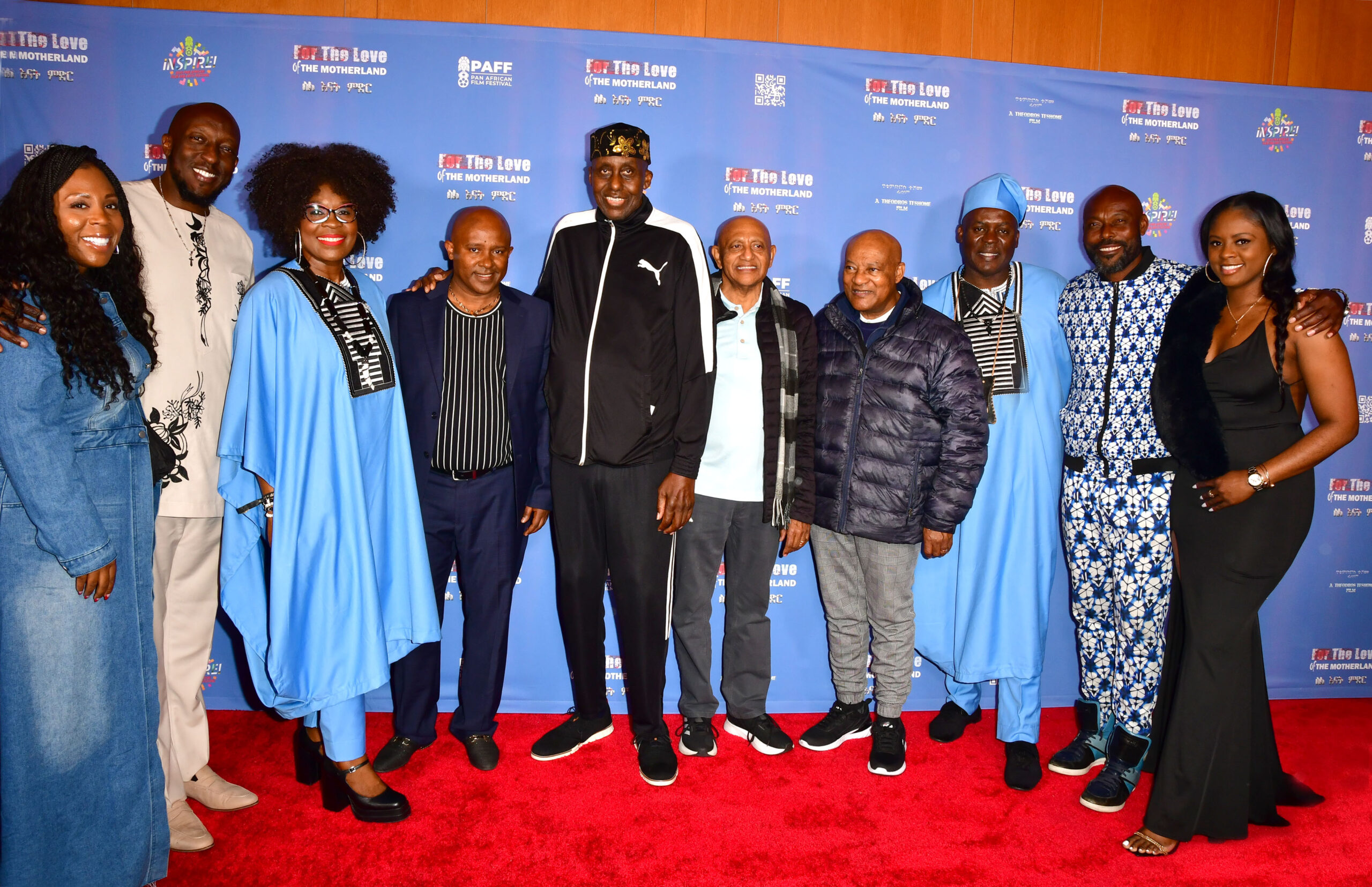
Pictured above, Actor Bill Duke and Director Theodros Teshome Kebede with members of the African Diaspora.
Magazine, Entertainment, STOP THE HATE
Bill Duke received the prestigious Ja’Net DuBois Lifetime Achievement Award at the Pan African Film & Arts Festival (PAFF) Centerpiece, held at the Directors Guild of America in Los Angeles on Thursday, February 15. Formerly known as the Pan African Film Festival Lifetime Achievement Award, this accolade was renamed in honor of the late “Good Times” actress and PAFF co-founder Ja’Net DuBois. Recognizing individuals who have made remarkable contributions to the arts, culture, and society, Bill Duke’s illustrious career of over 40 years undoubtedly aligns with the award’s criteria.
Renowned for his versatility as an actor, director, producer, and humanitarian, Duke has left an indelible mark on Hollywood with iconic roles in films such as “Predator,” “American Gigolo,” “Car Wash,” and “Menace II Society.” Notably, he broke barriers as the first Black director on various television shows, including “Falcon Crest” and “Miami Vice.” In 1991, Duke’s directorial debut, “A Rage in Harlem,” earned a prestigious selection at the Cannes Film Festival, marking the commencement of his prolific directing career. Beyond entertainment, he has served on the National Endowment of Humanities, held positions at the American Film Institute and Howard University, and contributed to the California State and Film Commission appointed by Former Governor Arnold Schwarzenegger. In 2010, Duke received a Lifetime Achievement Tribute from the Directors Guild of America’s African-American Steering Committee. In the digital realm, he launched the YOUNITE Network and Duke Media Entertainment, offering quality “Edutainment” globally. Duke’s commitment to mentoring talents is evident in successful actors like Taraji P. Henson, Anthony Anderson, and Shemar Moore, who have benefited from his guidance.
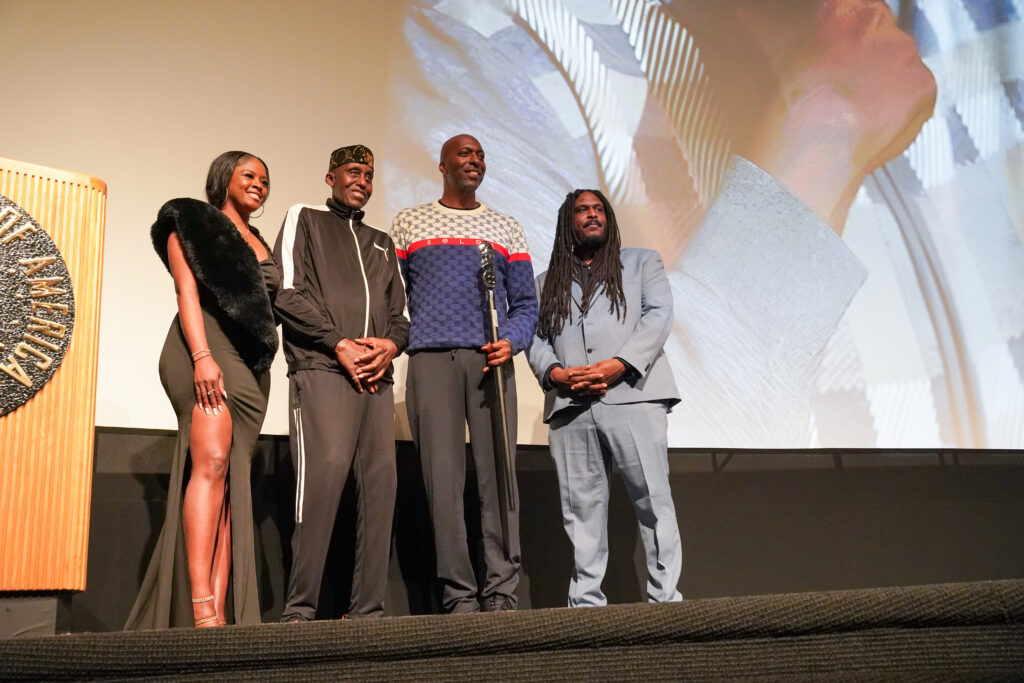
Actor Bill Duke is honored at PAFF by retired NBA champion John Salley
The honor bestowed upon Bill Duke at the Pan African Film & Arts Festival stands as a testament to his enduring impact on the entertainment industry and his dedication to using media as a tool for education and empowerment.
While celebrating Bill Duke’s remarkable achievements at the heart of the Pan African Film & Arts Festival (PAFF) Centerpiece, the event showcased the world premiere of the thought-provoking Ethiopian epic war film, “For the Love of the Motherland.” Crafted by the talented Theodros Teshome Kebede, this cinematic masterpiece delves deep into the intricacies and human experiences surrounding the Tigray War in Ethiopia. Despite facing accusations of being perceived as war propaganda, the screening, hosted at the prestigious Directors Guild of America, garnered attention from both the Ethiopian diaspora and a global audience.
As the centerpiece of the 32nd Pan African Film & Arts Festival, this powerful film uncovers the multifaceted perspectives of those directly impacted by the Tigray War—a conflict that has tragically claimed the lives of an estimated 162,000-378,000 people. The screening not only celebrated the film’s exploration of the human cost but also shed light on the intricate dynamics within the Ethiopian diaspora and captured the attention of international audiences.
The intimate love story of Hayelom and Lielt takes an unexpected turn when Tigray militants invade the Amhara region, compelling the lovers to take opposing sides. Featuring stellar performances by Debebe Eshetu, Getahun Hailu, and Tsigereda Bekele, the film provides a gripping portrayal of the profound personal and societal consequences of war, adding a layer of complexity to the narrative.
Despite the controversy surrounding the film, the world premiere drew attention not only from the Ethiopian diaspora but also from international audiences and media outlets. The screening shed light on one of the most pressing humanitarian crises of our time.
The 32nd Annual Pan African Film & Arts Festival Centerpiece screening and world premiere of “For The Love Of The Motherland” at the Directors Guild Of America was attended by notable figures such as retired NBA champion John Salley, who curated the Q&A post-screening, Mr. Ayuko Babu (Co-founder of PAFF), and esteemed celebrities and guests from the diaspora, including Haitian-born actor Jimmy Jean Luis, Consul General of Kenya, Thomas Kwaka, and The Immigrant Magazine Publishers Pamela and Charles Anchang, community partners from the Stop The Hate Against Black Immigrants campaign.
During the Q&A session, a passionate outburst from an attendee, seemingly of Tigrayan descent, underscored the raw emotions encapsulating the Tigray War. This poignant moment served as a tangible manifestation of the onscreen narrative, leaving other moviegoers deeply divided and conflicted about discerning the truth. The exchange in the theater illuminated the stark reality that extends beyond the realm of fiction and cinematic artistry—a nation profoundly fractured and yearning for healing. This incident resonates as a stark reminder that diaspora relationships within black immigrant communities must grapple not only with hate stemming from the broader context of race relations in America but also with the complex ramifications of internal conflicts within the same race, nation, continent, or tribes.
In its poignant opening, the film’s writer, John Steinbeck, profoundly asserts, “All war is a symptom of man’s failure as a thinking animal.” Director Theodros Teshome Kebede, after years of meticulous research and craftsmanship, disclosed during the Q&A that the film holds the distinction of having the highest net budget ever to come out of Africa, with an estimated 30,000 extras involved. Kebede elaborated on the filmmaking process, emphasizing the use of authentic soldiers and real guns, devoid of computer-generated imagery. The challenging backdrop of the ongoing war extended the production timeline to two years, requiring Kebede to revisit and rewrite scenes based on real-time events unfolding during the conflict.
The confluence of honoring Bill Duke’s lifetime achievements and unveiling the world premiere of “For the Love of the Motherland” underscores the unwavering commitment of the Pan African Film & Arts Festival to present impactful narratives that resonate globally, even when grappling with controversial and challenging subjects. Theodros, renowned for spearheading the revival of the Ethiopian film industry in the early 2000s and catalyzing a cinematic boom in the country, concluded the evening by emphasizing that, regardless of fault, the central message of war is always a tragic one. In the context of Ethiopia, the film sheds light on the plight of soldiers who were compelled to choose between loyalty to the motherland or their region, becoming unwitting pawns sacrificed to fulfill the agendas of avaricious politicians. Theodros passionately expressed that the world misunderstood the events in Ethiopia just three years ago, and as a filmmaker and citizen of this impoverished nation, he bears the responsibility to authentically share the underlying narrative of the war.
Theodros Teshome Kebede is the owner of Teddy Studios, a leading film production company in Ethiopia, as well as Sebastopol Entertainment PLC (Sebastopol Cinema), overseeing the largest network of private cinemas in Addis Ababa and various cities across Ethiopia. This dual leadership position affords him substantial control over both the creation and distribution of films in the country.
#BillDuke #PanAfricanFilmFestival #ForTheLoveOfTheMotherland #PAFFCenterpiece #EthiopianFilm #CinematicEpic #WarFilm #FilmPremiere #CulturalCelebration #DiversityInFilm #BlackExcellence #HumanitarianImpact #GlobalCinema #FilmIndustry #PanAfricanArts #AfricanDiaspora #Storytelling #FilmFestival #LegacyHonored #EntertainmentNews
This resource is supported in whole or in part by funding provided by the State of California, administered by the California State Library in partnership with the California Department of Social Services and the California Commission on Asian and Pacific Islander American Affairs as part of the Stop the Hate program. To report a hate incident or hate crime and get support, go to CA vs Hate.